West African country joins Russia and China in voting against a US-backed bill on Iran’s nuclear stocks
The West African state of Niger has found itself at odds with the United States and many Western nations after voting against a US-supported resolution condemning Iran at the International Atomic Energy Agency (IAEA).
 Black News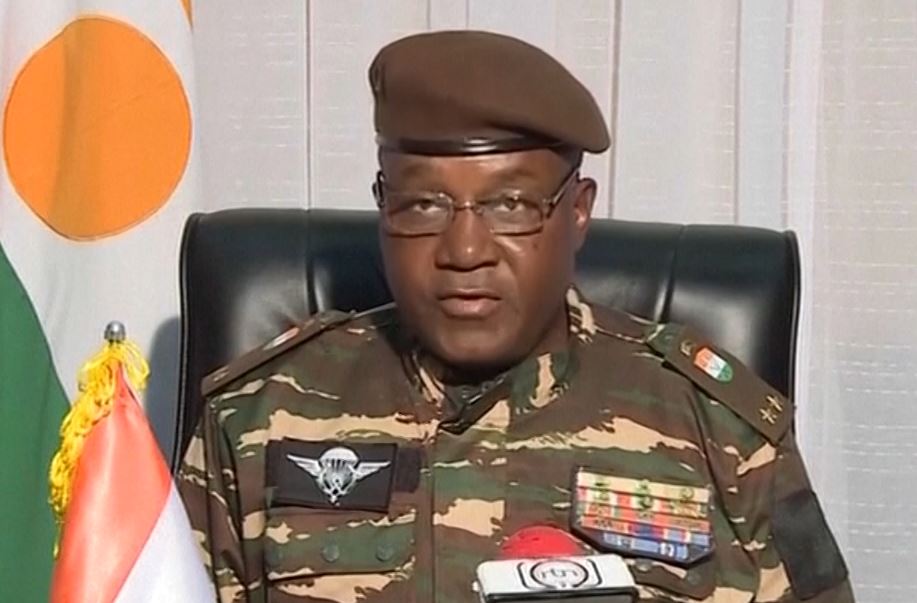
![West African country joins Russia and China in voting against a US-backed bill on Iran’s nuclear stocks [Bloomberg]](https://ocdn.eu/pulscms/MDA_/9e77b8ab8b173d4e96e944bc8790878a.jpg)
The West African state of Niger has found itself at odds with the United States and many Western nations after voting against a US-supported resolution condemning Iran at the International Atomic Energy Agency (IAEA).
- Niger voted against a US-supported IAEA resolution urging Iran to reveal and verify its enriched uranium stocks, joining China and Russia in opposition.
- The resolution was backed by 21 of 35 IAEA board members, with 10 abstaining, highlighting Niger's diverging stance from Western nations.
- Since the 2023 coup, Niger's military-led government has distanced itself from the West and strengthened relations with Russia and other non-Western states.
- Iran rejected the resolution, accusing the US of 'whitewashing military aggression' and blaming recent attacks for disruptions in IAEA oversight of its nuclear program.
The resolution, endorsed by the IAEA's 35-member Board of Governors, urged Iran to reveal the status of its residual enriched uranium stocks and allow inspectors access to verify the material's location.
As seen on Reuters, 21 of the 35 member states supported the motion, with only Niger, China, and Russia voting against it, while 10 nations abstained.
The vote pits Niger, which is now controlled by a military-led regime following the 2023 coup, against two major global powers that have repeatedly opposed Western viewpoints on Iran and other geopolitical concerns.
This resolution was passed amid escalating tensions regarding Iran's nuclear program.
Niger's decision to oppose the bill could draw notice, given the country's shifting foreign policy stance. Since the military takeover, Niamey has distanced itself from key Western partners while expanding ties with non-Western states, particularly Russia.
DON’T MISS THIS: Russia helps ward off an attack on Niger close to French-linked nuclear materials
The vote also reflects altering diplomatic dynamics in Africa, where African states are increasingly taking independent stances on big international issues rather than automatically siding with Western powers.
International investigators have been looking for answers about what happened to the uranium reserves that remained after military attacks devastated numerous Iranian nuclear sites last year.
Western nations claim that transparency is required to guarantee that the materials are not diverted for military use.
The resolution said Iran should "provide the Agency with complete information on nuclear material inventories" and grant the IAEA the access it needs to verify that "without delay".
Iran’s response
While the United States spearheaded the initiative, Iran has characterized the move as "whitewashing military aggression," contending that inspectors were granted access before the strikes.
"The Israeli regime's and America's attacks on Iran's nuclear facilities halted verification activities and forced Agency inspectors to leave Iran for safety reasons," Iran's Deputy Foreign Minister Kazem Gharibabadi said on X before the vote by the Board of Governors.
"Now, America seeks to turn the consequences of its illegal attack into a case against the Islamic Republic of Iran," Gharibabadi added.
Iran's mission to the IAEA had warned the board to be "cautious on the path forward".