Will Abiy Ahmed be Ethiopia’s Bismarck or its Mandela?
Africa has long served as fertile ground for distinctive forms of leadership to emerge. Figures such as Nelson Mandela, Kwame Nkrumah, Haile Selassie, and Julius Nyerere, among others, represent the “Mount Rushmore” of African leadership, having left an enduring imprint on the continent’s history and beyond. Notably, some of these leaders’ political trajectories bear a striking resemblance to those of their Western counterparts. To cite, Nkrumah and Charles de Gaulle both pursued national grandeur and strategic autonomy for their respective countries. Similarly, Thomas Sankara shared Franklin D. Roosevelt’s revolutionary image and rhetoric, alongside a deep commitment to state-led modernization, social […] The post Will Abiy Ahmed be Ethiopia’s Bismarck or its Mandela? appeared first on African Arguments.
 Black News
Africa has long served as fertile ground for distinctive forms of leadership to emerge. Figures such as Nelson Mandela, Kwame Nkrumah, Haile Selassie, and Julius Nyerere, among others, represent the “Mount Rushmore” of African leadership, having left an enduring imprint on the continent’s history and beyond. Notably, some of these leaders’ political trajectories bear a striking resemblance to those of their Western counterparts. To cite, Nkrumah and Charles de Gaulle both pursued national grandeur and strategic autonomy for their respective countries. Similarly, Thomas Sankara shared Franklin D. Roosevelt’s revolutionary image and rhetoric, alongside a deep commitment to state-led modernization, social reform, and anti-elite discourse.
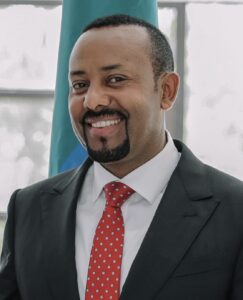
Abiy Ahmed, Ethiopian’s Prime Minister
Yet, a more compelling and analytically rigorous dyadic comparison can be drawn between Germany’s Otto von Bismarck and Ethiopia’s current PM Abiy Ahmed. This parallel is particularly evident in their approaches to pragmatic power balancing, selective reforms, nationalism, and the consolidation of state authority amid geopolitical tensions.
Two conservatives who became state-builders
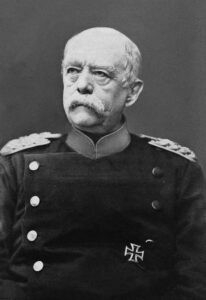
Otto von Bismarck, German’s Chancellor (1871-1890)
At the age of 25, Otto von Bismarck emerged onto the political stage in the late 1840s as an ultra-conservative defender of the Prussian monarchy and the Junker aristocracy. Similarly, Abiy Ahmed exhibited strong nationalist and establishment-defending traits during the early stages of his political career, particularly through his affiliation with the Oromo People’s Democratic Organization (OPDO) in 2010 and the broader Ethiopian People’s Revolutionary Democratic Front (EPRDF) coalition. They both initially positioned themselves as defenders of the established political order before embarking on ambitious projects of state transformation upon attaining supreme power.
As they moved deeper into the political fray, a shared ultimate objective became apparent: the consolidation of state authority and the centralization of political power. However, their starting points were fundamentally different. Bismarck sought to unify disparate, independent German states under Prussian leadership. In contrast, Abiy inherited a state that was already territorially unified, first under the Ethiopian Empire, and later as a federal republic, but was deeply fragile. Consequently, Abiy’s primary task has not been initial unification, but rather reintegration following the deeply entrenched ethnic federalist system of the EPRDF era (1991–2018).
To achieve this centralization, both leaders employed a mix of calculated diplomacy and coercive statecraft, albeit in divergent contexts. Rooted in Realpolitik, Bismarck engineered carefully targeted wars designed to isolate Austria and rally independent German states. To do so, he partnered with Austria in the war against Denmark over Schleswig and Holstein, an action that later advanced Prussia’s long-term geopolitical objectives while reshaping Central Europe’s balance of power.
Analogously, Abiy launched comprehensive reform initiatives, most notably the 2018 peace agreement with Eritrea. This strategic move simultaneously altered Ethiopia’s regional posture and weakened the political leverage of the Tigray People’s Liberation Front (TPLF), which Abiy soon framed as a principal obstacle to national unity that must either integrate into his new Prosperity Party or face marginalization.
This strategic manoeuvring extended to how both leaders managed their rivals. Following the Danish campaign, Bismarck established an initially unstable joint-governance arrangement to facilitate a future confrontation with Austria. Yet, after defeating Austria in 1866, he opted for a lenient peace settlement to ensure Austrian neutrality in subsequent conflicts, preserving a balance of power conducive to Prussian interests. In a similar vein, Abiy did not seek to entirely eradicate the TPLF from Ethiopia’s political equilibrium after the Tigray war, instead, he treated it as a residual balancing factor in relation to Eritrea, despite the fact that Eritrea had been a major belligerent collaborating with Abiy during the Tigray war in 2020 against the TPLF. This strategic alliance resembles Bismarck’s famous ‘blood and iron’ policy, which relied on external, short, decisive, and expansionary wars.
The uses of an enemy abroad
Furthermore, both leaders understood the utility of external pressure to forge domestic consensus. By provoking France into declaring war through the edited Ems Dispatch, Bismarck created a common external enemy. The resulting nationalist fervor persuaded the southern German states to unite with Prussia which soon accelerated German unification. In a comparable manner, Abiy has leveraged external pressures, particularly tensions with Egypt over the newly constructed Grand Ethiopian Renaissance Dam (GERD) to forge domestic consensus across Ethiopia’s nine ethno-linguistically defined federal regions, home to over 80 diverse ethnic groups.
This brings us to the management of internal diversity, analogous to Bismarck’s Kulturkampf. Just as Bismarck fought Catholics and Socialists before eventually co-opting them, Abiy faces the monumental challenge of managing various ethnic groups within a constitutionally entrenched ethnic federalist system. His government has detained prominent ethnic-nationalist figures (e.g., Jawar Mohammed), dissolved certain regional special forces, and attempted to forge a single national party through the Prosperity Party (established in 2019). However, unlike Bismarck, who never faced secessionist wars, Abiy’s aggressive domestic centralization efforts have triggered armed rebellions in several regions which has highlighted the severe limits of coercive reintegration.
The Mandela alternative
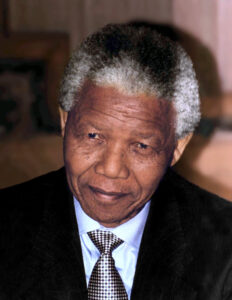
Nelson Mandela, first president of South Africa (1994-1999)
Despite parallels between Abiy’s method of statecraft and Bismarck’s, Nelson Mandela’s approach to national healing and democratic consolidation profoundly contrasts with Abiy’s. Mandela inherited a South Africa that was a deeply fractured society defined by institutionalized apartheid, while Abiy assumed power in a country torn apart by ethnic polarization and state violence. Both leaders emerged as particularly salient figures in ending such division with visions of unity: Mandela’s “Rainbow Nation” and Abiy’s “Medemer” (synergy). Their early initiatives represented a deliberate rupture from their predecessors, which soon earned them the Nobel Peace Prize. This, nonetheless, was not the case for Bismarck during his lifetime, as he died in 1898, three years before the first Nobel Peace Prize was awarded to Jean-Henri Dunant in 1901.
Mandela and Abiy’s trajectories sharply diverge in the execution of these ideals. For instance, Mandela’s vision was very much rooted in inclusive reconciliation, institutionalized power-sharing, and a civic nationalism that embraced diversity without coercive assimilation. Most notably, he voluntarily relinquished power after a single term to cement democratic norms. However, Abiy’s response to Ethiopia’s fractures has increasingly mirrored Bismarck’s coercive centralization rather than Mandela’s conciliatory embrace, which unified through magnanimity and democratic consensus.
In short, nearly two centuries later, few paradigms in the conduct of political statecraft display such convergence in policy and practice. Following the precedent of Bismarck’s highly successful statecraft who proclaimed the birth of the German Empire in January 1871 amid very fierce geopolitical rivalry, can Abiy unify the nation under a centralized state, finally resolving what scholars have characterized as Ethiopia’s “a state without nation” anomaly? Following a landslide victory in the June 2026 elections, Ethiopia’s Nobel laureate leader faces a historic crossroads: either unify the nation through pragmatic coercion, akin to Otto von Bismarck, or through inclusive reconciliation, in the mold of Nelson Mandela.
The prognosis for the Ethiopian political landscape is thus intimately tied to the future trajectory of Abiy’s political behaviour, specifically, whether he would pivot toward collaborative, win-win strategies or remains locked in distributive, zero-sum conflicts. All else being equal, if Abiy can achieve the former, he may not become the “Bismarck of Africa”. Instead, he could rightfully be hailed as “Ethiopia’s Mandela”, echoing the South African leader who won the Nobel Peace Prize for establishing a “rainbow nation” of diverse ethnicities within a single, unified homeland.
The post Will Abiy Ahmed be Ethiopia’s Bismarck or its Mandela? appeared first on African Arguments.