WIEDERHOEFT
JACKSON WIEDERHOEFT: THEATER IN THE THREADS words by Teneshia Carr Some designers make clothes, while others build entire worlds. Jackson Wiederhoeft belongs to the latter. He’s an artist whose work sits at the intersection of costume, couture, theater, and dream logic. His pieces feel inhabited, as if a character has just slipped out of the […] The post WIEDERHOEFT appeared first on Blanc Magazine.
 Black News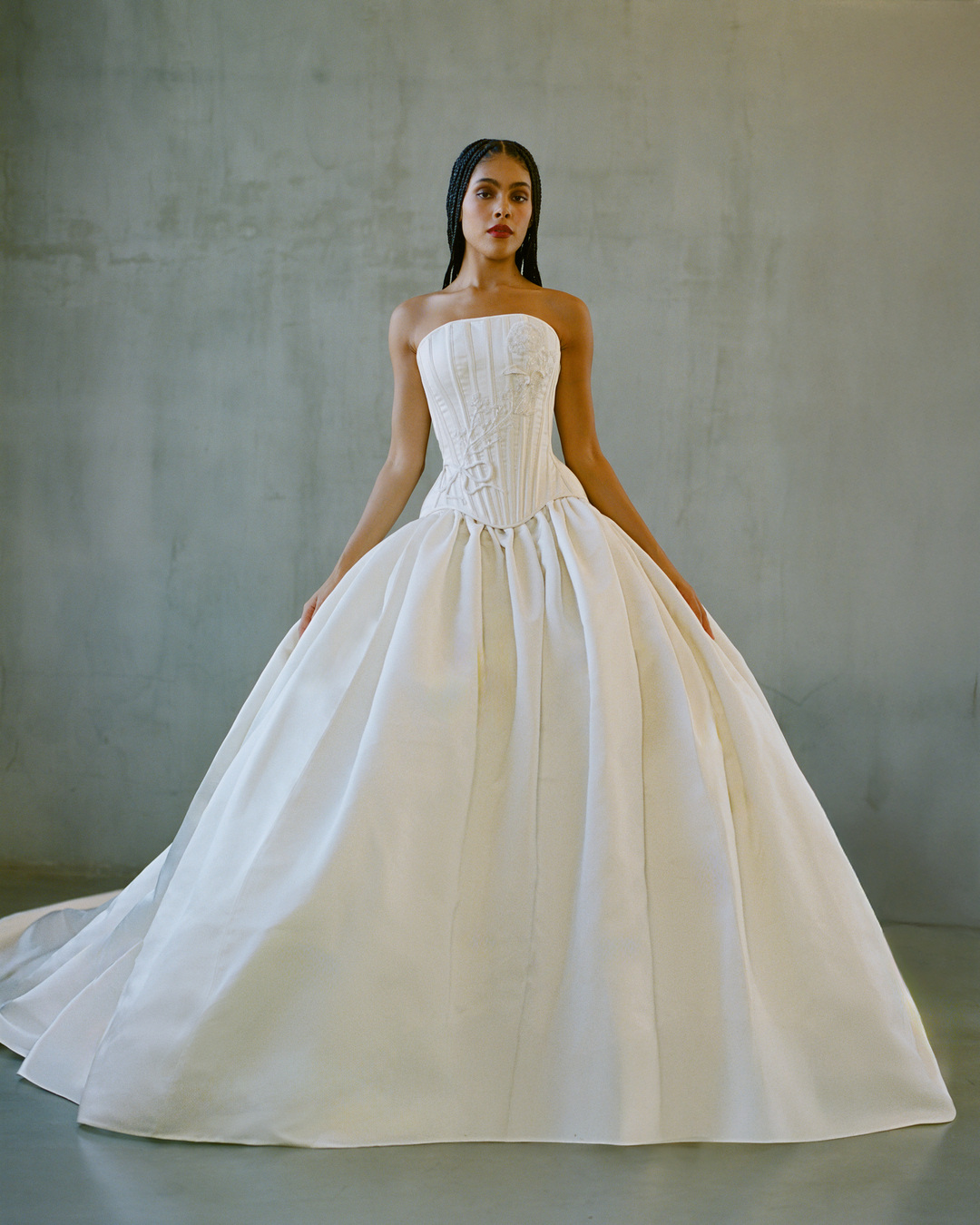
JACKSON WIEDERHOEFT: THEATER IN THE THREADS
words by Teneshia Carr
Some designers make clothes, while others build entire worlds. Jackson Wiederhoeft belongs to the latter. He’s an artist whose work sits at the intersection of costume, couture, theater, and dream logic. His pieces feel inhabited, as if a character has just slipped out of the room, leaving their atmosphere behind. To encounter a Wiederhoeft garment is to be drawn into a world where drama is a language, and craftsmanship is its own kind of devotion.
Meeting him, though, what surfaces first is not the theatricality but a gentle, grounded sincerity. “It’s always been more about the world,” he tells me, reflecting on his creative process. “Some designers can just sketch a dress. But for me, it’s like—what’s the context? I can’t have an idea unless I see the world around it.” Even early on, his instinct was to imagine the universe before the garment. It explains the uncanny completeness of his collections: every silhouette feels like part of a larger mythology.
Wiederhoeft grew up in Houston, Texas, surrounded by a culture he describes as far removed from the artist he would become. “I also went to an all-boys Catholic school,” he says with a half-smile. “Kind of the opposite of everything I’ve come to love about New York.” He moved to the city at 18 to study at Parsons, and the change was immediate. “It was literally the first time in my life I wasn’t wearing a uniform,” he says. “You can be anyone anytime in New York. Everything opened up.”
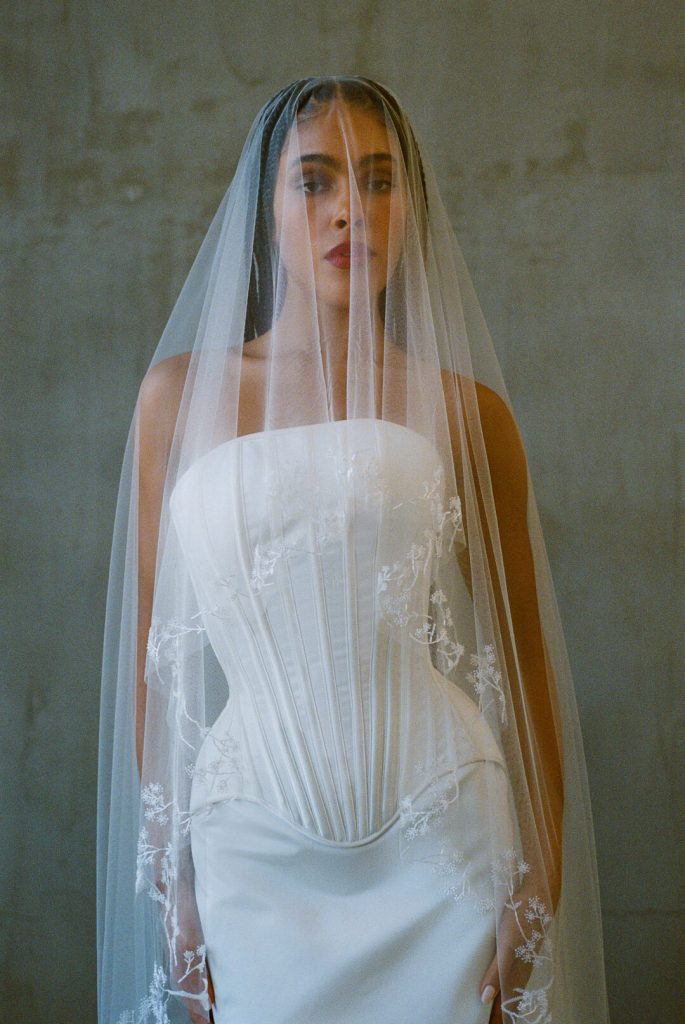
What opened up, most of all, was the space to create without constraint. Before he was a designer, he was a maker—someone drawn to touch, structure, and the mechanics of building. “My Nana taught me how to crochet,” he recalls. “It was the first handcraft I ever did. I loved working with my hands and making something three-dimensional. That’s just how my brain works.” His love of geometry, engineering, and physical problem-solving comes alive most clearly in his corsets, which have become a hallmark of his brand. “There’s so much engineering in corsetry,” he says. “It’s like a puzzle. That combination of science and creativity is where I find so much joy.”
His references are wide-ranging and deeply personal, pulled from a lifetime of myth, memory, and Catholic iconography. “There’s always so many references that come out of nowhere,” he says. “I work in a design collage mindset.” A look from a past season embroidered with the biblical phrase Noli me tangere—”don’t touch me”—came from his favorite line attributed to Jesus. Other collections have woven together Greek myth, visions of hell, or half-remembered stories from childhood. Even when the influences tangle, the results feel impossibly coherent once filtered through his sensibility. “In costume design, context is everything,” he explains. “Fashion is similar—just storytelling about ourselves.”
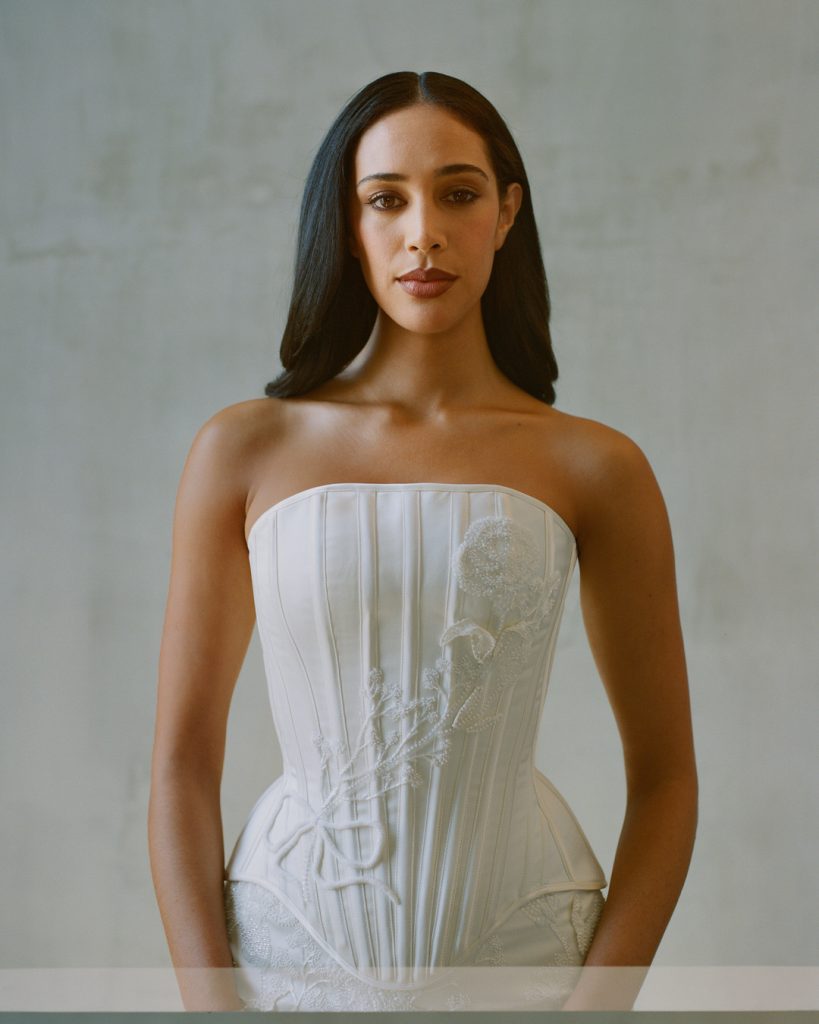
And for Wiederhoeft, clothing is inseparable from performance. He comes alive describing the sensation of watching opera singer Anthony Roth Costanzo take the stage. “It must feel so good to express yourself that way,” he says. “To project emotion physically.” He relates to that feeling, just through a different medium. “When I make a garment I’m really pleased with, I feel that same visceral expression,” he says. And he wants that experience for the wearer. He describes clients trying on his pieces for the first time: “Sometimes I see it in their eyes. Something switches. The script flips. They’ve seen themselves become powerful in that moment. They’re not transformed—the volume is just turned up.”
This belief in emotional expression shapes every decision he makes, including the structural decisions behind the business itself. Bridal, unexpectedly, has become the backbone of his label and a place where luxury craftsmanship, sustainability, and financial viability intersect. “I didn’t intend to do bridal,” he admits. “But doing bridal in this demi-couture, made-to-order way is such a sustainable model. We don’t create waste. We don’t carry stock.” It also allows him to source high-quality materials and work with vendors he trusts. “It’s a luxury to get to create luxury responsibly,” he says. Bridal clients, he adds, are willing to invest emotionally and financially in a way ready-to-wear customers often aren’t with emerging designers.
When asked when things finally “clicked,” Wiederhoeft resists the myth of the singular breakthrough. “My autobiography might be called A Thousand Breaks,” he says. “There’s never one big moment. It’s a thousand little big breaks.” Dressing Taylor Swift. Designing a theatrical production at Little Island. Hosting a show in his bridal salon that felt “like inviting people into my home.” The moments accumulate, each with its own thread in a larger tapestry.
What is clear is that he is in no rush. At 31, he is building something expansive, multidimensional, and startlingly ambitious. Footwear, denim, knitwear. Theater and film. Interior design. Long-term collaborations with artists and comedians. A future New York store that reflects the city the way his collections reflect his imagination. “I want to try everything,” he says, smiling. “It’s world domination era, you know?”
He says it lightly, but the vision is real. The world of Wiederhoeft is growing—lush, theatrical, and deeply human, stitched from myth, memory, craft, and pure creative electricity. And while he may be building it piece by piece, break by break, the universe he imagines is already here, shimmering with drama and intention, waiting for its next chapter.
The post WIEDERHOEFT appeared first on Blanc Magazine.