Zimbabwe's top industrial city at risk of suffering the same fate as one of the US’s top factory towns
Zimbabwe’s leading industrial city, Bulawayo, is currently facing a challenge prevalent in developing municipalities globally: the increasing burden of city taxes.
 Black News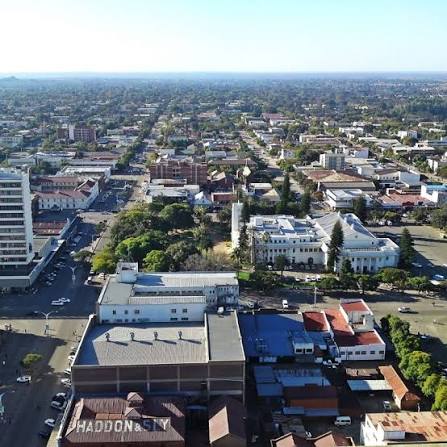

Zimbabwe’s leading industrial city, Bulawayo, is currently facing a challenge prevalent in developing municipalities globally: the increasing burden of city taxes.
- Bulawayo, Zimbabwe's leading industrial center, is struggling with increasing city taxes that hurt businesses and deter investment.
- A report by the local chamber of commerce highlights systemic errors and inconsistencies in how municipal taxes are calculated and applied.
- Businesses claim Bulawayo faces higher commercial property taxes than affluent areas in Harare, which is undermining their viability.
- Opaque billing practices by the city council make it difficult for businesses to identify or contest charges, increasing frustration and uncertainty.
Companies operating in the industrial zone are now pushing back on what seems to be a consistently growing challenge.
DON’T MISS THIS: Zimbabwe turns to its precious metals and critical minerals to shield itself from the US war
Their grievance was detailed in an 80-page report by the Bulawayo Chapter of the Zimbabwe National Chamber of Commerce, revealing that taxes are affecting enterprise, discouraging investment, and fast-tracking the city's industrial dip.
According to some business leaders, the long-delayed Zambezi Water Project is partly to blame for the city's prevalent challenges, including companies shutting down or relocating to other regions like Harare, rising unemployment, and the deterioration of Bulawayo's once-thriving industrial base.
"A serious concern has been raised regarding rates and taxes levied on commercial properties in certain parts of Bulawayo being higher than those charged in top-end residential and commercial neighbourhoods in Harare, including Borrowdale," the chamber said.
"This anomaly points to a systemic failure in how the council calculates and applies its rates formulae," it added.
The report also deduced that companies have uncovered what appears to be a systemic error in rate computation, with the council's standard formula not being used accurately or consistently, as seen on Bulawayo24.
"The result is that some commercial properties in Bulawayo, a city facing significant economic challenges, are being charged more than equivalent or superior properties in Borrowdale, Harare, one of Zimbabwe's most affluent neighbourhoods.
This is not only inequitable but is actively destroying the commercial viability of affected businesses," the report states.
Businesses objected to the layout of municipal bills, stating that bundled costs make it impossible for ratepayers to know exactly what they are paying for or to verify whether calculations are right.
"Council bills include bundled charges that obscure the true breakdown of what businesses are being charged for. This lack of transparency makes it impossible for ratepayers to verify whether they are being charged correctly, to identify erroneous items, or to dispute specific charges. The bundling of costs is an opaque practice that undermines accountability," the report said.
Bulawayo's current situation is similar to one faced by some of the world's major industrial cities, such as Manchester, Cleveland, and Detroit.
Among these, Detroit stands out as possibly the clearest illustration of how rising municipal costs, when combined with broader economic and infrastructure challenges, can hasten the decline of a once-dominant manufacturing powerhouse.
Industrial trend in the Motor City
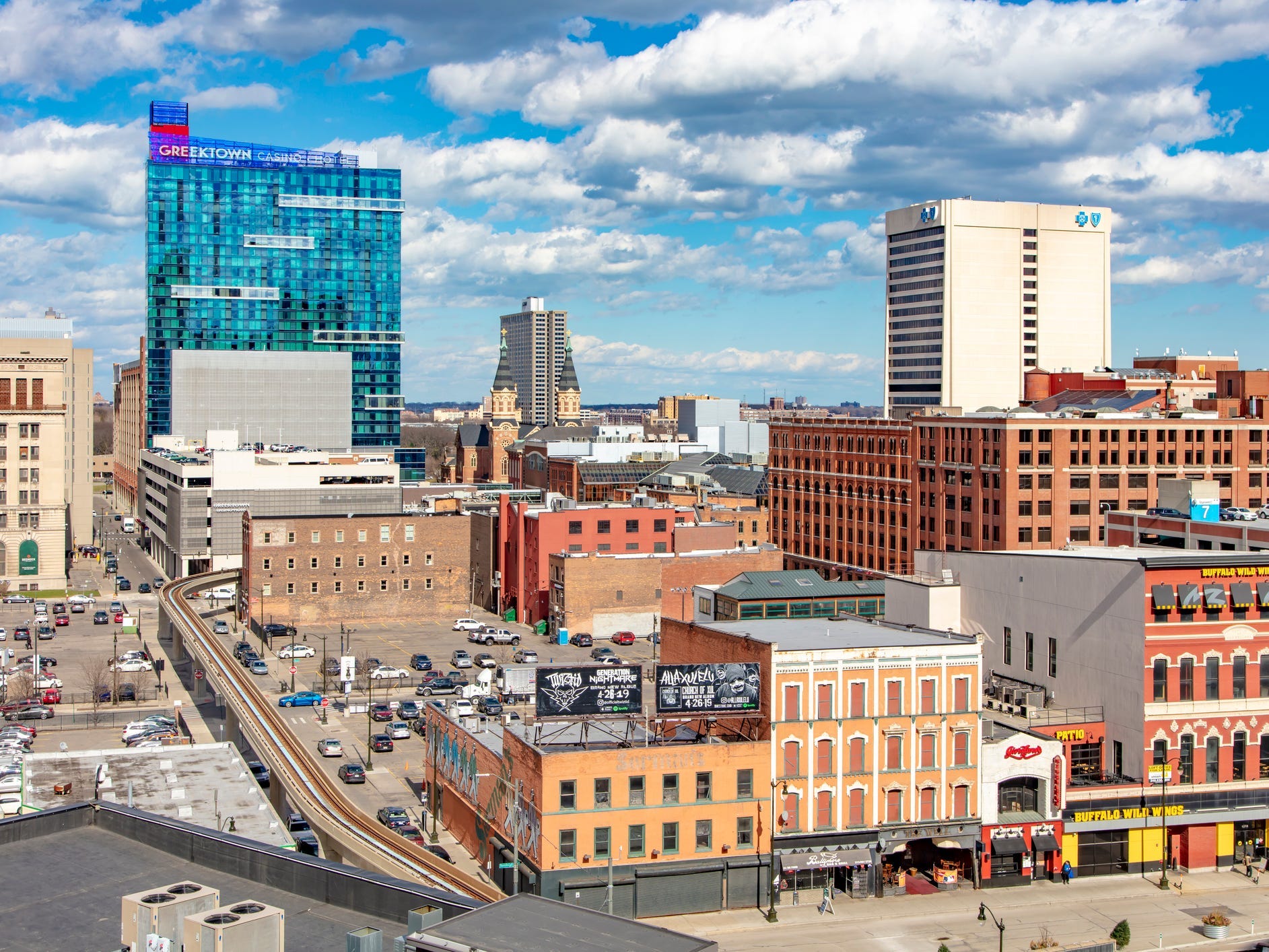
For most of the twentieth century, Detroit was the unchallenged powerhouse of American industry. Nicknamed the "Motor City," it was home to automotive behemoths General Motors, Ford, and Chrysler, which produced millions of automobiles each year and helped establish the United States as the world's economic powerhouse.
By the 1950s, the city employed about 200,000 manufacturing workers, while 61% of all manufacturing employment in the Detroit metropolitan region was situated within the city itself, emphasizing its status as America's industrial powerhouse.
Today, Detroit has around 23,000 manufacturing jobs, a decrease of more than 90% from its postwar high.
Manufacturing currently provides for only around 10% of overall employment in the city, demonstrating how dramatically its industrial base has shrunk over the last 70 years.
Detroit's population peaked at 1.85 million in 1950 before dropping to 639,111 in 2020, leaving the city with a considerably smaller tax base while still sustaining infrastructure designed for almost three times as many people.
“The population of the city of Detroit has declined more drastically over time from a peak of 1.8 million in 1950 to about 700,000 today; the city filed for bankruptcy in 2013,” a report by the Federal Reserve Bank of Chicago reads.
While the Detroit metropolitan area remains one of America's greatest industrial hubs, with over 250,000 manufacturing jobs, most of that activity now takes place outside of the city as businesses migrate to suburban communities.
Similar to Bulawayo, the decline observed in Detroit is partially attributable to municipal costs; however, additional factors such as global competition, aging infrastructure, and automation have also significantly contributed to this trend.