$13m U.S.-funded Ebola facility put on hold as Kenya bows to court order
Kenya has ordered an immediate halt to the construction of a controversial U.S.-backed Ebola quarantine facility after a court found Health Minister Aden Duale in contempt for failing to comply with earlier suspension orders.
 Black News
![$13m U.S.-funded Ebola facility put on hold as Kenya bows to court order [Photo by Patrick van Katwijk/Getty Images]](https://ocdn.eu/pulscms/MDA_/855abfb2df8f31efdb3c5bb8e1071d95.jpg)
Kenya has ordered an immediate halt to the construction of a controversial U.S.-backed Ebola quarantine facility after a court found Health Minister Aden Duale in contempt for failing to comply with earlier suspension orders.
- Kenya has ordered an immediate stop to the construction of a U.S.-funded Ebola quarantine facility after a court found the Health Minister in contempt of suspension orders.
- The facility was intended to house American personnel exposed to Ebola in the Democratic Republic of Congo, backed by $13 million from the U.S.
- Local residents and activists protested the project, claiming they were not adequately consulted and questioned the risk to their community.
- Protests over the facility led to legal challenges and deadly unrest, ultimately forcing the courts to suspend construction.
The decision marks the latest twist in a project that has sparked legal battles, public protests and growing scrutiny over Kenya's role in hosting Americans potentially exposed to Ebola during an ongoing outbreak in the Democratic Republic of Congo (DRC).
According to Reuters, Duale appeared before the court on Tuesday, where he said he had instructed authorities to stop all construction work at the site, located at Laikipia Air Base near the central town of Nanyuki.
DON'T MISS THIS: Kenya secures $13.5 million support package amid agreement to host U.S.-linked Ebola facility
The facility, backed by approximately $13 million in U.S. funding, was designed to accommodate American personnel exposed to Ebola while operating in the DRC.
Justice Patricia Nyaundi Mande discharged Duale without punishment but warned him against any further disobedience of court orders.
The ruling comes despite evidence that work on the facility had continued after the court's initial suspension order.
Project triggers public backlash
The quarantine facility was conceived as part of a U.S.-supported Ebola preparedness effort following the resurgence of the disease in eastern DRC, where more than 1,000 cases have been recorded.
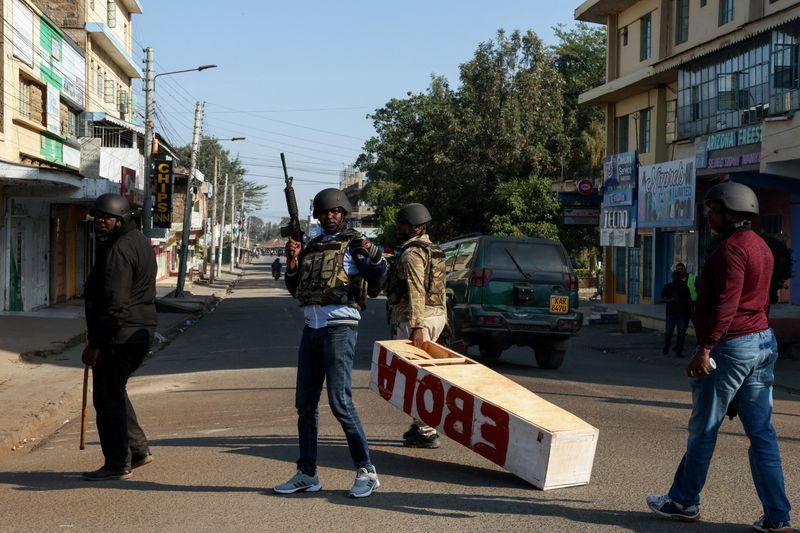
Under the arrangement, Kenya would host a temporary quarantine and monitoring centre for Americans who may have been exposed to the virus while working in the outbreak zone.
DON'T MISS THIS: Approximately 20 flights filled with experts and supplies have landed in Kenya despite protests
However, the project quickly became politically sensitive.
Residents and activists in some parts of Kenya argued that the government had failed to adequately consult local communities before approving the facility. Critics also questioned why Kenya should assume the risks associated with housing potentially exposed foreign nationals, despite the substantial U.S. financial commitment attached to the project.
The controversy escalated into protests that turned deadly, prompting legal challenges that ultimately led to a court-ordered suspension of construction activities.
Earlier in the dispute, an autopsy confirmed that 17-year-old Sylvester Ndung’u died from a gunshot wound sustained during demonstrations against the facility in Nanyuki. At least three people have reportedly been killed in the protests.
The deaths have intensified tensions in Kenya and drawn both local and international attention to the project, sustaining pressure on the government and elected leaders from the region as scrutiny over the facility continues.
DON'T MISS THIS: Ruto defends US-backed Ebola facility as court battle and backlash grow in Kenya
The latest court intervention raises fresh questions about the future of the facility and whether the Kenyan government can proceed with the project without addressing local concerns and legal objections.
For now, work has been halted, dealing a significant setback to a U.S.-funded initiative that was intended to strengthen regional Ebola preparedness but instead became one of Kenya's most contentious public health projects in recent years.