49 Die of Thirst in Niger’s Desert: How Labor and Migration Routes Between Mali and Niger Became an Open-Air Graveyard
A new humanitarian tragedy in northern Niger has exposed the often-overlooked dangers facing travelers, seasonal workers and migrants crossing the Sahara, after 49 people died of thirst in a remote desert area near the Malian border. The disaster highlights not only the vulnerability of those traveling across one of Africa’s harshest environments, but also the […] ظهرت المقالة 49 Die of Thirst in Niger’s Desert: How Labor and Migration Routes Between Mali and Niger Became an Open-Air Graveyard أولاً على African Percentions.
 Black News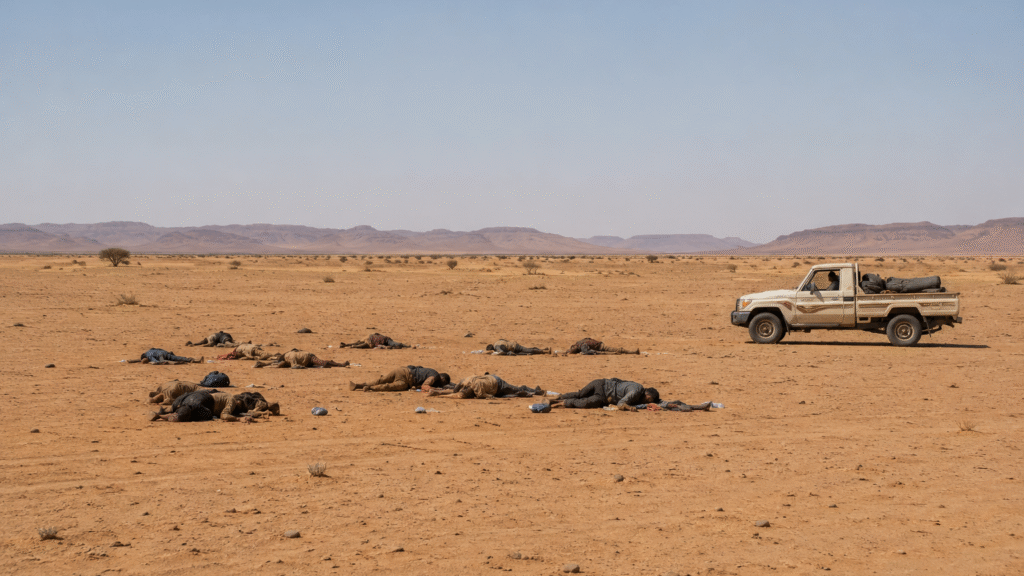
A new humanitarian tragedy in northern Niger has exposed the often-overlooked dangers facing travelers, seasonal workers and migrants crossing the Sahara, after 49 people died of thirst in a remote desert area near the Malian border.
The disaster highlights not only the vulnerability of those traveling across one of Africa’s harshest environments, but also the growing risks associated with changing migration and transport routes throughout the Sahel.
Far from being an isolated incident, the tragedy underscores the intersection of insecurity, economic hardship, migration pressures and environmental extremes that continue to shape human mobility across the region.
Seasonal Workers Returning Home
Contrary to initial assumptions that the victims were migrants attempting to reach Europe, available information suggests that most were Nigerien citizens returning from Mali, where they had been working in activities such as artisanal gold mining, trade and manual labor.
They were reportedly traveling back to their home communities to celebrate Eid al-Adha with their families when their vehicle became stranded in a remote desert area.
With temperatures regularly exceeding 45 degrees Celsius in northern Niger at this time of year, the passengers quickly found themselves trapped without access to water or assistance.
What began as a routine journey turned into a desperate struggle for survival, ending in the deaths of dozens from dehydration and heat exhaustion.
A Second Disaster Narrowly Avoided
During the rescue operation launched by Nigerien authorities, emergency teams made an unexpected discovery.
Approximately 60 kilometers from the border town of Assamaka, rescuers found another truck carrying more than 60 people stranded in the desert after a mechanical failure and the depletion of their water supplies.
The passengers had reportedly been trapped for three days.
Rescue teams reached the group in time, providing emergency assistance and transporting them to safety before they suffered the same fate as the victims of the first vehicle.
The incident highlighted how easily another large-scale tragedy could have unfolded in the same region.
Mass Burial in the Desert
The harsh environmental conditions created additional challenges for local authorities.
Because of extreme temperatures and the remoteness of the accident site, officials were forced to bury the 49 victims near the location where they were found.
Transporting the bodies over long distances was considered impractical and potentially unsafe under the prevailing conditions.
The decision illustrates the logistical difficulties facing rescue and recovery teams operating across vast and isolated stretches of the Sahara.
Why Are People Dying in This Desert?
The tragedy reflects broader structural challenges affecting mobility across the Niger-Mali-Algeria corridor.
In recent years, tighter security controls and increased surveillance along major transportation routes have pushed transporters and smugglers toward alternative desert tracks that bypass official checkpoints.
These routes often pass through remote areas lacking water sources, communication networks or emergency services.
In such environments, even a minor mechanical failure can quickly become life-threatening.
Without water, shelter or communication, stranded passengers may have only a short window of survival, particularly during the hottest months of the year.
Assamaka: Gateway for Returnees and Deportees
The border town of Assamaka has become a critical transit point in the regional migration system.
It serves as the primary reception center for thousands of migrants returned from Algeria each year and remains an important crossing point for workers and travelers moving throughout the Sahel.
Humanitarian organizations report that many deported migrants are forced to walk long distances through the desert before reaching reception facilities and assistance centers.
These journeys frequently result in cases of severe dehydration, heatstroke and death, particularly during the summer season.
Unsafe Transportation Practices
The vehicles used for these journeys are often cargo trucks designed to transport goods rather than passengers.
Travelers are frequently packed together alongside luggage, fuel containers and supplies, with little regard for safety standards.
When a vehicle breaks down in a remote area, passengers are immediately exposed to extreme heat and rapidly diminishing water reserves.
Humanitarian workers note that many desert journeys rely on carefully calculated amounts of fuel and water, meaning that any delay or deviation from the planned route can quickly escalate into a life-threatening emergency.
A Death Toll Larger Than Official Records Suggest
International organizations believe that the number of deaths recorded in the Sahara represents only a fraction of the actual toll.
According to the International Organization for Migration (IOM), more than 17,000 deaths and disappearances have been documented along desert migration routes since 2014.
However, organizations tracking missing migrants argue that the real figure is likely far higher.
Many incidents occur in isolated areas where no survivors remain to report what happened.
In countless cases, bodies disappear beneath shifting sands and are never recovered, making the Sahara one of the world’s deadliest and least visible migration corridors.
Conclusion
The deaths of 49 people in northern Niger demonstrate that the dangers facing those who cross the Sahel extend far beyond armed conflict and political instability.
They also include extreme environmental conditions, inadequate transportation systems and increasingly hazardous desert routes shaped by changing security dynamics.
While rescuers managed to save dozens of stranded travelers from a second potential disaster, the tragedy serves as a stark reminder that thousands of people continue to cross the Sahara every day in search of work, safety or a better future.
For many, the difference between survival and death may be no more than a mechanical failure in one of the most unforgiving landscapes on earth.
Unless governments and humanitarian organizations expand rescue capabilities, emergency infrastructure and support services along key desert corridors, similar tragedies are likely to continue across a region where the journey itself has become one of the greatest risks.
ظهرت المقالة 49 Die of Thirst in Niger’s Desert: How Labor and Migration Routes Between Mali and Niger Became an Open-Air Graveyard أولاً على African Percentions.