Aaron Mair, Sierra Club’s first Black president, says internal crisis is about governance, power
In the second installment of The OBSERVER’s series, former Sierra Club president Aaron Mair argues that recent departures of Black leaders reflect deeper issues of governance, power and institutional culture. He describes a “pattern of disposal,” where Black leadership is elevated publicly but undermined internally, raising broader concerns about authenticity and accountability within the environmental movement. The post Aaron Mair, Sierra Club’s first Black president, says internal crisis is about governance, power appeared first on AFRO American Newspapers.
 Black News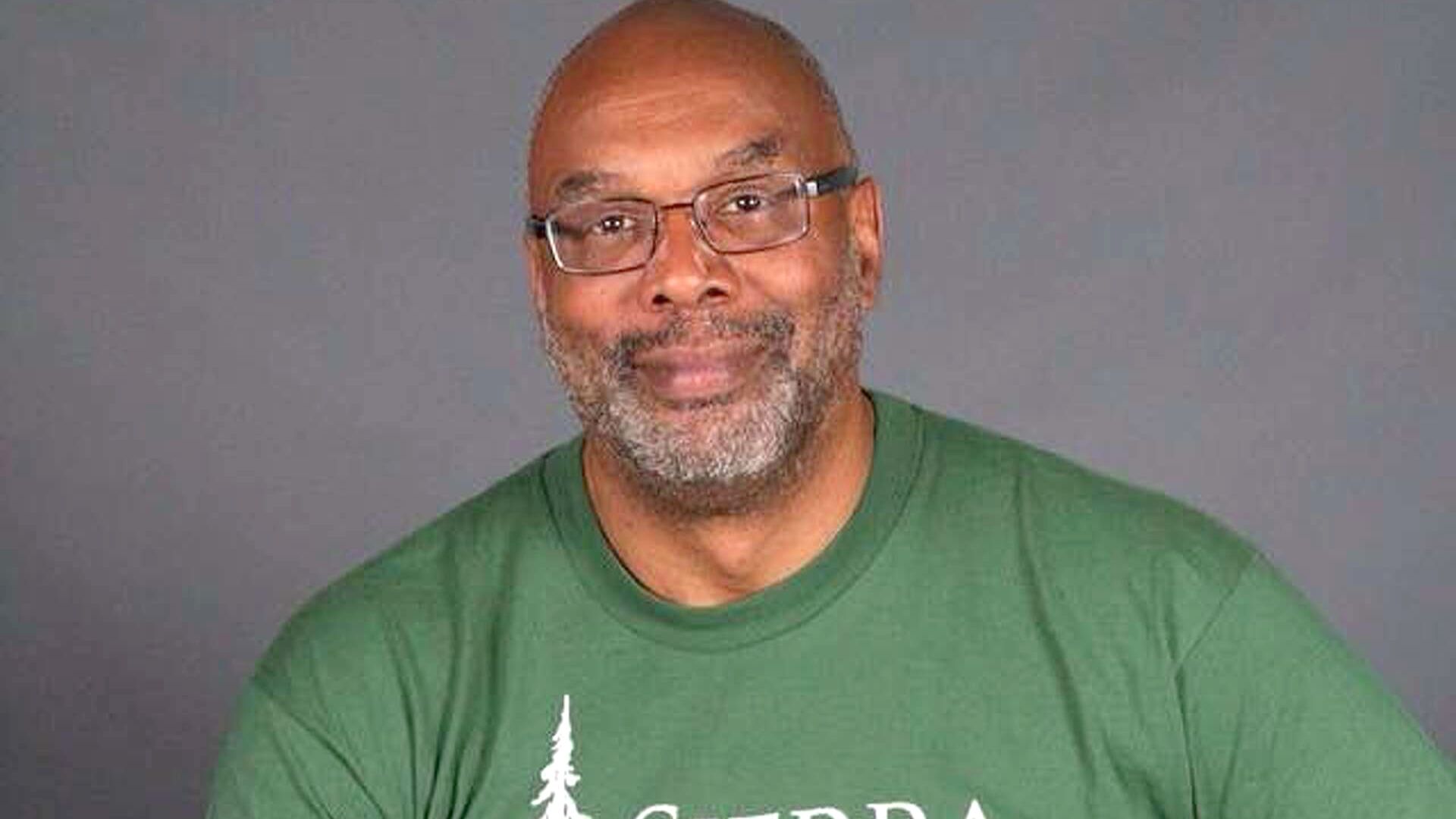

By Dr. Angelo A. Williams
The Observer
EDITOR’S NOTE: This interview is the second part of The OBSERVER’s series investigating the departures of nine African-American leaders from the Sierra Club and the Sierra Club Foundation in less than five years. READ MORE

A Jan. 29 complaint filed in Alameda County by former Sierra Club Foundation director, Pedro da Silva, alleges discrimination, retaliation, defamation and a broader institutional pattern of recruiting Black leaders, elevating them publicly and then pushing them out when they challenge internal culture.
To understand the longer arc behind those allegations, The OBSERVER spoke with Aaron Mair, the Sierra Club’s first Black president. Mair rose through the organization’s volunteer ranks after helping lead a long fight against a polluting incinerator in Albany, later served as the club’s environmental justice chair, and in 2015 became the first African American to lead the Sierra Club. He served as president from 2015 to 2017 and later remained active on the national board before rotating off ahead of the final phase of the Jealous dispute.
This interview has been edited for length and clarity. Responses are reconstructed from interview notes and reflect Mair’s account in his words.
Observer: What prompted you to author your open letter and speak out publicly about Ben Jealous and the Sierra Club?
Aaron Mair (AM): I did not write because this was just about one man or one personnel fight. I wrote because I have watched this organization wrestle with authenticity for years. The Sierra Club has long carried the image of a traditional White, middle-class environmental institution, and I have spent my career trying to show that land use, toxics, waste siting, race and Black community survival are environmental issues too.
What I saw with Ben fit a larger pattern: bring in Black leadership, celebrate it in public, then recoil when that leadership is independent, forceful or unwilling to play a symbolic role. You cannot use Black struggle as a seal of approval and then make it impossible for Black leaders to survive.
Observer: You told The OBSERVER this story is bigger than one personnel dispute. What do you mean by that?
AM: The deeper fight is over what kind of organization the Sierra Club wants to be. My argument was never that the club should stop being about conservation. My argument was that conservation and environmental justice have to be honestly harmonized. If a landfill is placed in a Black neighborhood, if toxic waste is sited where poor people live, if land-use policy treats some communities as disposable, that is environmentalism too.
What I saw instead was a struggle between authentic mission and institutional branding. In my view, the club tried to turn itself into something broader and more fashionable without doing the hard work of governance, respect and accountability that real transformation requires.
Observer: How does your own history shape the way you see this moment?
AM: I come to this through a civil rights and labor tradition. My father taught me that if you are going to fight oppression, you have to scale up. You have to organize. You have to become an institution. My own path into the Sierra Club came through fighting an incinerator placed in the heart of my community, poisoning Black residents and, in my view, harming my own family. To win, I had to build alliances. Sierra Club volunteers were among the people who helped organize our community, and I never forgot that. I told myself that if we won, I would come back and help make the organization more worthy of the people it claimed to serve. That is how I joined, rose through the ranks and eventually led it.
Observer: What is your assessment of Ben Jealous’ tenure?
AM: Ben was not some naive social justice mascot who could be led by the nose. That is where some people badly misread him. He grew up in the Club. He understood wilderness, conservation and the culture of the organization, in addition to everything he brought from civil rights leadership. He also walked into an institution that was already in real financial trouble. In my view, he did what any serious executive director would do: he looked at where money was being hemorrhaged, where staffing had outgrown the budget and where the organization needed to be stabilized. That made him unpopular. But unpopular is not the same thing as wrong. A lot of what was later used against him, I believe, began with the fact that he could not be controlled.
Observer: You spoke at length about labor politics and board control. What changed, in your view?
AM: What changed was governance. For most of the club’s history, there was a real balance between volunteers, chapters and staff. In my view, that balance shifted hard in recent years. Labor-backed and staff-backed political machinery became much more influential in board elections and internal power. Independent candidates were squeezed out. By the time Ben was fired, I believed the board had become overwhelmingly shaped by that influence. Once the people who are supposed to oversee the executive director are themselves captured by an internal power bloc, that executive director is in a nearly impossible position. That is my reading of what happened.
Observer: What do you believe happened to local chapters and volunteer power?
AM: The Sierra Club I came up in was grassroots to its core. Chapters raised money. Chapters hired staff that fit their state’s needs. Volunteers with nine-to-five jobs did the organizing work they could not do during business hours by relying on staff they had helped fund and direct. That model let each state build an environmental program shaped by local conditions. In my view, that has been turned upside down. National control over staffing, budgets and priorities has grown, and chapter leaders no longer have the same authority over the people doing the work in their own states. That is not a minor administrative change. That is a fundamental change in the identity of the organization.
Observer: Did your own relationship with the organization deteriorate before you left the board?
AM: Yes. The cracks were already there. I saw it in the way dissent was handled, in the way history was being rewritten, and in the way governance questions were managed. When I challenged the organization’s treatment of John Muir and what I believed was a revisionist and performative handling of that history, I saw how quickly disagreement could become grounds for punishment rather than dialogue. In my view, that was part of a larger pattern: delay or suppress a full airing of difficult questions until the people most likely to challenge the process are no longer in the room. That is one reason I do not see the Jealous fight as an isolated episode.
Observer: Why should Black readers care about what is happening inside the Sierra Club?
AM: Because environmental policy is Black life. It is asthma. It is poisoned water. It is where the waste transfer station goes. It is who gets access to parks, clean air and safe neighborhoods, and who gets treated as disposable. Too often, Black media has been taught to think of environmental stories as somewhere off to the side, as if they belong to wilderness pages instead of the front page of Black survival. I do not see it that way at all. These fights are about health, dignity, land, power and whether our communities get to shape the conditions under which we live.
Observer: What, ultimately, do you think this moment says about the Sierra Club?
AM: It says the organization is in a struggle over authenticity. You cannot use Black people as cover. You cannot invoke our pain as branding. You cannot hire a Black leader to rescue an institution in crisis and then turn on him because he understands too much, asks too many questions or refuses to play the role written for him. If racial justice is only language and not governance, only optics and not power, then the institution will eventually expose itself. That is what I believe people are watching now.
The OBSERVER reached out several times to the Sierra Club and Sierra Club Foundation for comment. The organization had not responded by publication time.
This article was reprinted with permission from The OBSERVER.
The post Aaron Mair, Sierra Club’s first Black president, says internal crisis is about governance, power appeared first on AFRO American Newspapers.