Africa needs two Dangote-scale refineries as fuel demand surges- AFC
Africa will need at least two refineries the size of the Dangote facility to meet surging fuel demand, according to the Africa Finance Corporation’s State of Africa’s Infrastructure Report (SAIR) 2026 that highlights a deepening gap between the continent’s resources and its industrial capacity.
 Black News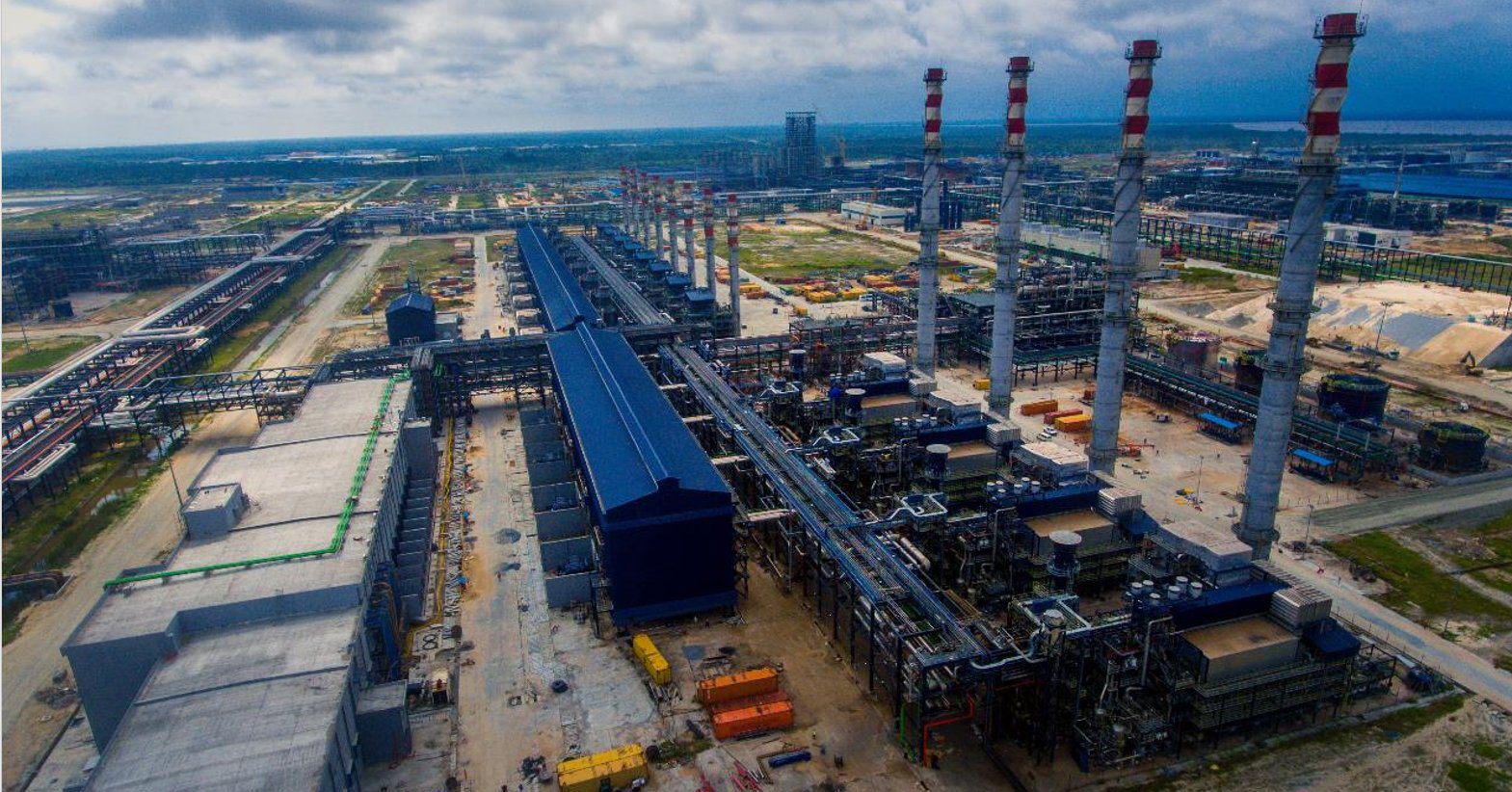

Africa will need at least two refineries the size of the Dangote facility to meet surging fuel demand, according to the Africa Finance Corporation’s State of Africa’s Infrastructure Report (SAIR) 2026 that highlights a deepening gap between the continent’s resources and its industrial capacity.
- Africa will need at least two mega refineries to meet rising fuel demand by 2040.
- The continent still imports about 70% of its refined fuel, exposing it to global shocks.
- Over $4 trillion in domestic capital exists but is not effectively invested.
- AFC says weak systems, not resources, are now Africa’s biggest constraint.
The report, launched on Thursday estimates that demand for refined fuels will rise by 56% by 2040.
That increase, according to Rita Babihuga-Nsanze, chief economist and director of Research and Strategy at AFC, is expected to create a supply shortfall of about 86 million tonnes, equivalent to building at least two large-scale refineries similar to the Dangote refinery in Nigeria, the largest in Africa.
Despite being a major crude oil producer, Africa still imports around 70% of the refined fuel it consumes.
“In refined fuels, around 70 percent of Africa’s consumption is imported, exposing the continent to global supply shocks and chokepoints. Demand is projected to grow by 56 percent by 2040, creating an import gap of 86 million tonnes, equivalent to at least two additional Dangote-sized refineries.
"The opportunity to build refining capacity is particularly strong in East Africa, where infrastructure remains limited,” she said while presenting the report at the Africa We Build Summit in Nairobi, Kenya.
This leaves many economies exposed to global supply disruptions, price swings, and foreign exchange pressure, risks that have become more visible amid recent volatility in global energy markets.
The report argues that this imbalance reflects a broader structural issue. African economies largely export raw materials and import finished products at higher cost, limiting value creation and industrial growth.
But the constraint is no longer capital, according to the AFC.
The report estimates that more than $4 trillion in domestic capital exists across the continent, including funds held by banks, pension schemes, insurers, and sovereign institutions.
Much of it, however, is not deployed into long-term infrastructure or industrial projects.
At the same time, external funding is becoming less reliable. Official development assistance to Africa dropped by 23% in 2025, marking the sharpest decline on record.
Energy infrastructure remains a key bottleneck. Africa is adding between 6.5 and 8 gigawatts of power annually, far below the roughly 20 gigawatts needed to support economic expansion.
Weak transmission networks and fragmented national grids continue to limit efficiency and scale.
The AFC says the solution lies in building integrated systems, linking energy, transport, and industrial capacity across borders rather than developing them in isolation.
This shift is also needed in transport. The report criticises the long-standing “pit-to-port” model, where infrastructure is designed mainly to export raw commodities.
Instead, it calls for networks that connect resources to local industries and regional markets, especially under the African Continental Free Trade Area.
Opportunities also exist in sectors such as fertiliser production. Although Africa holds about 80% of global phosphate reserves, it produces only around 20% of phosphate-based fertilisers, leaving the continent dependent on imports despite strong underlying demand.
In digital infrastructure, mobile coverage has expanded rapidly, reaching roughly 85% of the population. But limited usage and weak supporting systems mean the economic benefits remain uneven.
African Union officials say the findings reinforce the need for coordinated, continent-wide infrastructure planning. Existing initiatives, including a single air transport market and plans for an integrated electricity network, have made progress but remain slow to scale.
AFC President Samaila Zubairu said the continent must move beyond fragmented systems and rethink how it uses its resources.
He warned that continued reliance on imported fuel is increasing vulnerability to global shocks, even as Africa holds the raw materials needed to build its own supply chains.
The report’s central conclusion is clear: Africa’s challenge is no longer about access to capital or resources, but about building the systems needed to turn both into industrial growth at scale.