Africa’s $240 Billion Mobile Economy: A Checkpoint on Africa’s Digital Transformation Journey
Mobile connectivity has quietly become one of Africa's most powerful economic forces. Not through headline-grabbing infrastructure projects, but through the steady way it is reshaping how people work, transact, access services, ...
 Black News
Mobile connectivity has quietly become one of Africa’s most powerful economic forces. Not through headline-grabbing infrastructure projects, but through the steady way it is reshaping how people work, transact, access services, and participate in the digital economy.
The GSMA Mobile Economy Africa 2026 report, a comprehensive annual assessment of the mobile sector, confirms that mobile is creating significant economic value across Africa. Yet it also highlights a critical reality: the biggest challenge is no longer building networks. It is ensuring that people can afford and use them.
In this #TechTalkThursday article, we checkpoint the report, unpacking the numbers that define Africa’s digital economy today, the trends reshaping how operators do business and the policy choices that will determine whether mobile’s projected growth translates into genuine, inclusive transformation for the continent.
The Numbers: Africa Is Punching Above the Global Average
One statistic from the report deserves attention.
Globally, mobile technologies and services contributed 5.8% of GDP in 2024. In Africa, that figure reached 7.8% in 2025. In relative terms, mobile contributes more to Africa’s economy than it does globally.
The numbers are substantial. Mobile generated $240 billion in economic value across Africa in 2025, supported approximately 13 million jobs, and contributed $45 billion in public revenues. Operator revenues stood at $60.5 billion and are expected to reach $90.3 billion by 2030.
The sector is projected to contribute $290 billion to Africa’s economy by the end of the decade, supported by $76 billion in planned network investment between 2025 and 2030.
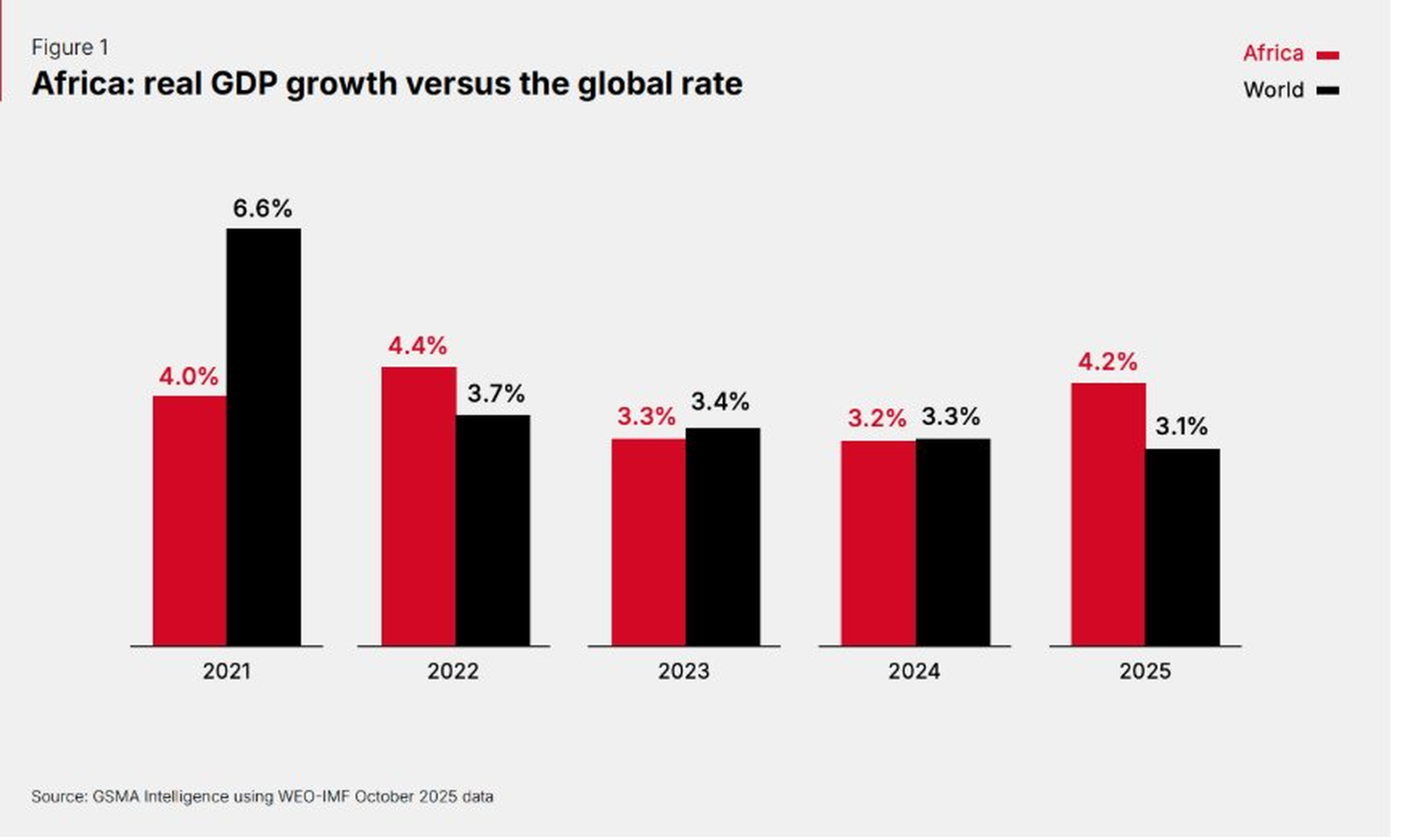
These figures tell the story of an industry that has become a major economic engine. They also suggest there is still considerable room for growth.
The Connectivity Challenge Has Changed
For years, discussions about digital inclusion focused on network coverage. The assumption was simple: build the infrastructure and people will come online.
While Africa’s 5G penetration is expected to reach 21% by 2030, compared with a projected global average of 57%, the continent’s most urgent connectivity issue is not 5G adoption. It is the usage gap, and it is getting worse, not better.
In 2024, the GSMA’s global report recorded Sub-Saharan Africa’s usage gap at 58%, with 13% of the population lacking coverage entirely. The 2026 report shows the coverage gap has since narrowed to 9%, meaning network expansion is working. But the usage gap has widened to 63%. More people are within reach of a mobile signal than ever before, yet a smaller proportion are actually coming online. The industry is building in the right direction. The people are not following at the same pace.
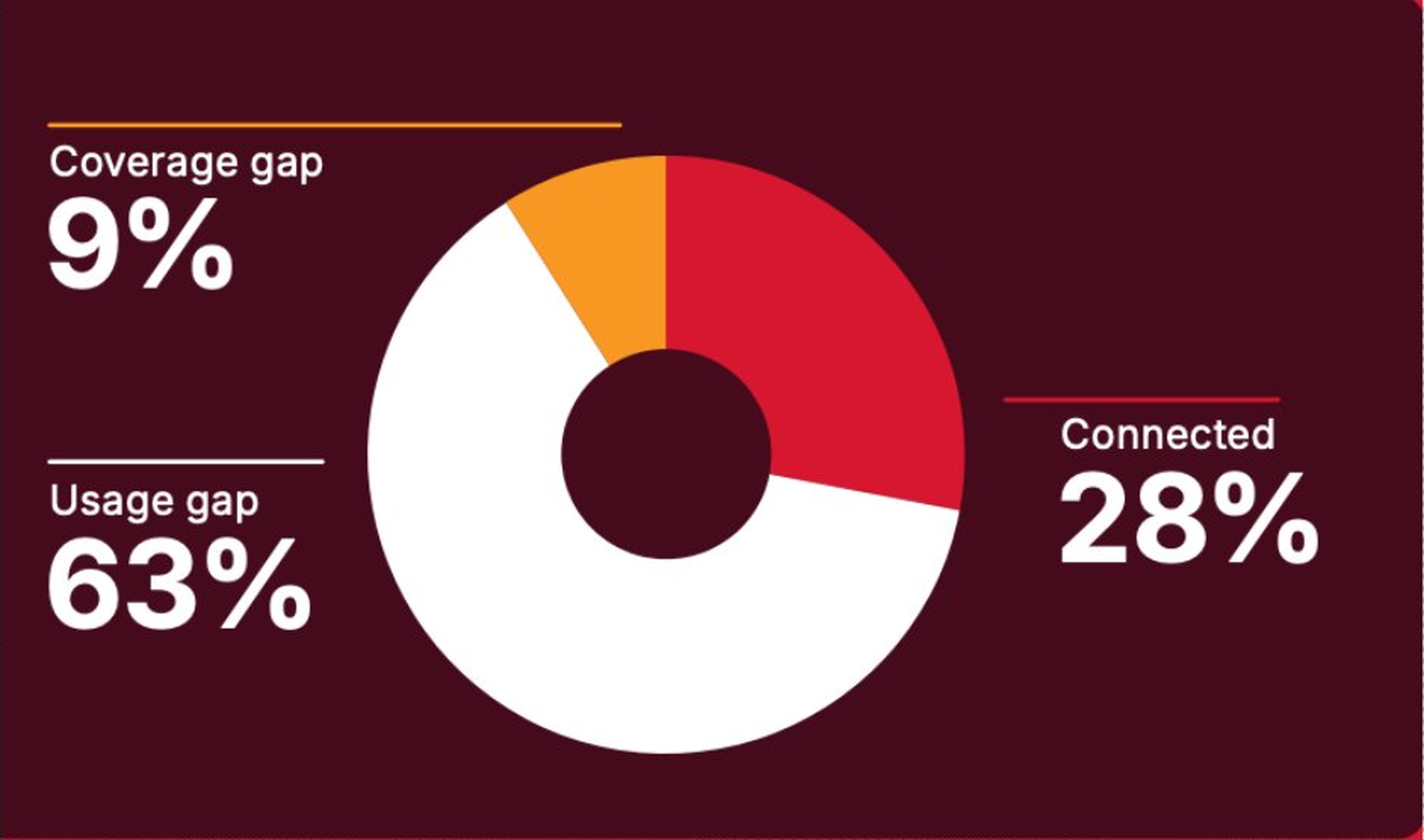
The barriers are well documented but insufficiently acted upon. In Sub-Saharan Africa, an entry-level smartphone can represent up to 80% of monthly income for low-income users. Smartphone adoption stands at 54% today, projected to reach 81% by 2030. Add data costs, limited digital literacy, safety concerns particularly among women and social norms governing who in a household is permitted to go online, and the picture becomes clear. Africa’s primary connectivity challenge in 2026 is not building more towers. It is bringing the nearly one billion people already within reach of those towers actually online.
“The numbers in this report should prompt a serious conversation across the continent. We have largely solved the coverage problem. What we have not solved is adoption – meaningful connectivity that transforms lives, communities and nations.
Nearly one billion people are within reach of a mobile signal but are not online. That is a missed opportunity – usage is lagging, leaving our people, our society largely offline. It is a significant barrier from affordability of smart devices and data, of digital skills and of the African relevant content in local languages. Closing that gap is the defining digital and financial inclusion challenge of this decade, and it will require coordinated action – from operators, governments, development institutions, civil society, academia and the innovation ecosystem.”
– Angela Wamola, Head of Africa, GSMA
Three Trends Reshaping Africa’s Mobile Industry
1. AI Is Becoming Local
AI is moving from boardroom strategy to operational reality. Africa’s operators are deploying artificial intelligence across network maintenance, fraud detection and customer operations. In Uganda, Airtel launched what it described as Africa’s first AI-powered spam alert service. MTN participated in a $45 million funding round for ODC, an AI telecoms startup building solutions specifically designed for Africa’s network environments.
But the more consequential AI story in 2026 is about language. Africa is home to over 2,000 languages, the vast majority absent from global AI systems. The GSMA and the G6 African operators announced a continent-wide collaboration at MWC Kigali to develop African AI language models built on African data, talent and infrastructure. At MWC Barcelona 2026, the first open Swahili reasoning model was demonstrated, with Google and the Gates Foundation making parallel investments in African language datasets and development. Africa is moving from AI consumer to AI co-creator.
What is at stake is straightforward: if AI systems cannot speak Africa’s languages, the productivity gains mobile is projected to deliver will not reach the majority of the people it is meant to serve.
2. Mobile Networks Are Becoming Digital Trust Platforms
Operators are discovering that their networks hold valuable capabilities beyond connectivity.
Through the GSMA Open Gateway initiative, network functions such as number verification and SIM swap detection are being exposed through standardised APIs that developers, enterprises, and governments can use.
These tools are already helping banks and fintech companies strengthen fraud prevention and improve digital security.
As cyber threats become more sophisticated, network-based authentication and verification services are creating new opportunities for operators while helping build trust across Africa’s growing digital economy.
3. Operators Are Expanding Beyond Connectivity
Africa’s telecom operators increasingly see themselves as digital transformation partners rather than connectivity providers.
According to the GSMA’s enterprise survey, 79% of African operators identify becoming a digital transformation partner as their primary enterprise objective.
Examples are already emerging across the continent. Safaricom has played a central role in Kenya’s national healthcare digitisation programme. Orange Maroc is providing AI solutions and private 5G services for enterprise customers. Meanwhile, enterprise and digital services continue to represent a growing share of operator revenues.
The shift from traditional telecom provider to technology partner is no longer a future ambition. It is already underway.
The Policy Decisions That Matter
The report also highlights an important lesson for governments: policy choices can directly influence digital adoption.
Two examples stand out.
- In 2025, Ghana removed its mobile money levy. By the end of the year, transaction volumes had increased by 31% year on year.
- South Africa removed excise duties on entry-level smartphones during the same period. The result was a rebound in affordable smartphone sales and increased adoption of mobile broadband services.

These examples reinforce a consistent finding across the industry. Taxes on devices and digital services often slow adoption, while reforms that improve affordability can produce measurable results within months.
“The evidence from Ghana and South Africa is exactly the kind of proof point that policymakers across the continent need to see. When you remove the fiscal barriers that price people out of digital participation, the response is immediate and measurable. These are not isolated cases. They are a blueprint. The question now is how many more governments are willing to act on it, because the cost of inaction is not abstract. It shows up directly in the usage gap numbers we are still trying to close.”
– Caroline Mbugua, HSC, Senior Director, Public Policy and Communications, Africa, GSMA
The GSMA’s Handset Affordability Coalition is calling for taxes on entry-level smartphones priced below $100 to be removed. Given the scale of Africa’s usage gap, affordability policies could become one of the most effective tools for accelerating digital inclusion.
Investment conditions matter as well. Nigeria provides a useful example. When several states waived right-of-way fees for fibre deployment, operators responded with more than $1 billion in additional broadband investment commitments.
The lesson is straightforward. Investment follows markets where spectrum policies, infrastructure regulations, and operating conditions support long-term growth.
The Quiet Energy Transformation
Another trend receiving increasing attention is the shift toward renewable energy.
Across Africa, operators are reducing dependence on diesel-powered infrastructure, driven by both sustainability goals and operational realities.
Vodacom now sources all of its purchased electricity from renewable sources. Orange operates thousands of solar-powered sites, while MTN and Safaricom continue expanding solar and hybrid power deployments across their networks.
For operators operating in markets where power reliability remains a challenge, renewable energy is becoming an operational necessity as much as an environmental commitment.
The Checkpoint Verdict
The GSMA Mobile Economy Africa 2026 report shows that Africa’s mobile sector has reached an important turning point.
The industry has demonstrated its economic value. Mobile now contributes more to Africa’s GDP than the global average, operators are embracing AI and digital services, and investment in infrastructure continues to grow.
The next phase of progress will depend less on building networks and more on helping people use them. That means making smartphones affordable, improving digital literacy, creating supportive policy environments, and ensuring that emerging technologies such as AI reflect Africa’s linguistic and cultural diversity.
“Africa’s mobile industry is entering a new phase of development. Having connected millions of people and businesses over the last decade, the focus is increasingly shifting towards unlocking greater value through AI, digital services and new forms of innovation. Realising this opportunity will require continued investment, policies that encourage innovation and a shared commitment to ensuring that everyone can benefit from the opportunities digital technologies create.”
–Vivek Badrinath, Director General, GSMA
Sub-Saharan Africa is expected to account for nearly a quarter of all new mobile internet subscribers globally between 2025 and 2030. The growth is coming. The real challenge is ensuring that it translates into meaningful and inclusive digital participation for everyone.