Africa’s two largest cocoa producers tighten grip on global cocoa trade with unified pricing plan to curb smuggling and stabilise supply
Ghana and Côte d’Ivoire have agreed to align cocoa producer pricing policies from the 2026/2027 season, as the world’s two largest cocoa growers seek to reduce smuggling, stabilise farmer incomes and strengthen their bargaining power with global buyers.
 Black News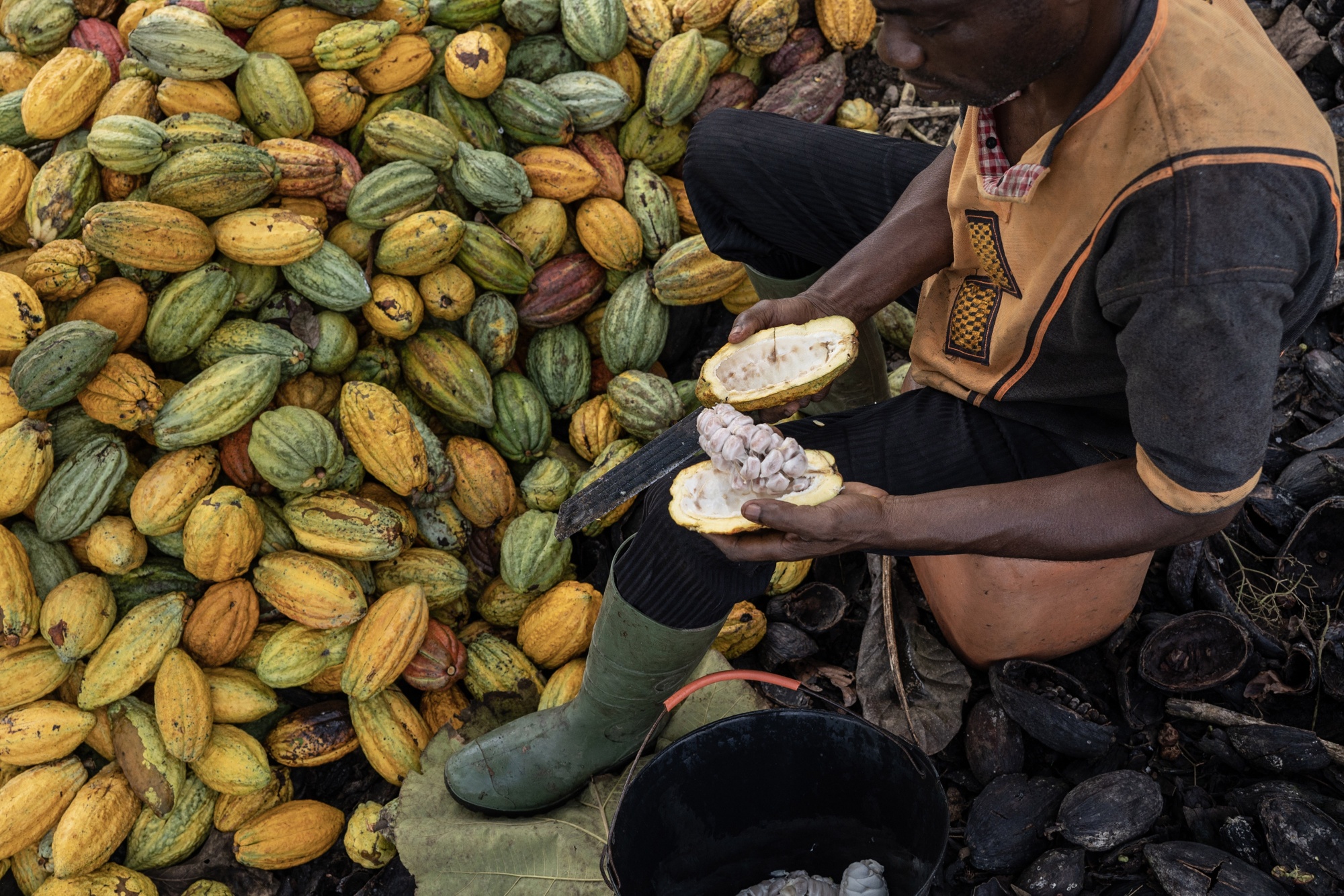

Ghana and Côte d’Ivoire have agreed to align cocoa producer pricing policies from the 2026/2027 season, as the world’s two largest cocoa growers seek to reduce smuggling, stabilise farmer incomes and strengthen their bargaining power with global buyers.
- Ghana and Côte d’Ivoire have agreed to harmonise cocoa producer pricing policies to curb smuggling, improve farmer incomes and increase their leverage in the global market.
- The agreement includes coordinated price setting, data sharing, and aligning crop year calendars starting with the 2026/2027 season.
- Both countries have suffered from declining cocoa output due to weather, disease, ageing farms and other structural challenges.
- Despite lower production, higher global prices have boosted cocoa export earnings, but most value still accrues outside Africa through processing and branding.
The two countries reached the deal in Abidjan on Tuesday, June 16, 2026, during the 7th Meeting of the Steering Committee of the Côte d’Ivoire-Ghana Cocoa Initiative, held ahead of a high-level summit on the future of the cocoa economy.
The session brought together Ghana’s Finance Minister, Dr Cassiel Ato Forson, and Côte d’Ivoire’s Minister of Agriculture, Bruno Nabagné Koné, as both countries pushed for closer coordination in a market they jointly dominate.
“The two countries agreed to harmonise farm gate prices through some measures,” Dr Forson said while presenting the committee’s conclusions.
Past efforts delivered limited gains
The move follows years of pressure over how cocoa wealth is shared between farmers, governments, traders and global chocolate companies.
In 2019, Ghana and Côte d’Ivoire introduced the Living Income Differential, a $400-per-tonne premium on cocoa sales, to raise farmer incomes and give both countries more leverage in price negotiations.
However, the policy produced mixed results, as buyer discounts eroded part of the premium while many farmers still faced low earnings, delayed payments and rising costs.
Production has come under strain
Since 2020, cocoa output has weakened in both countries, with Côte d’Ivoire’s production falling from about 2.25 million tonnes in 2020/2021 to about 2.12 million tonnes in 2021/2022.
It recovered to about 2.24 million tonnes in 2022/2023, before dropping to about 1.67 million tonnes in 2023/2024, as poor weather, disease and ageing farms weighed on yields.
Ghana, however, recorded a sharper decline.
The world’s second-largest cocoa producer, ahead of Indonesia, Ecuador and Nigeria, produced about 1.05 million tonnes in 2020/2021, before output fell to about 683,000 tonnes in 2021/2022 and 654,000 tonnes in 2022/2023.
It dropped further to about 530,000 tonnes in 2023/2024, marking its lowest level in decades and raising concerns about the resilience of its cocoa sector.
The decline has exposed long-running weaknesses in West Africa’s cocoa industry, with Ghana battling swollen shoot disease, ageing trees, illegal gold mining in cocoa-growing areas, smuggling and financing problems at its cocoa regulator.
Côte d’Ivoire, meanwhile, has also faced weather shocks, disease and price volatility, despite remaining the world’s largest cocoa producer.
Higher prices lift export earnings
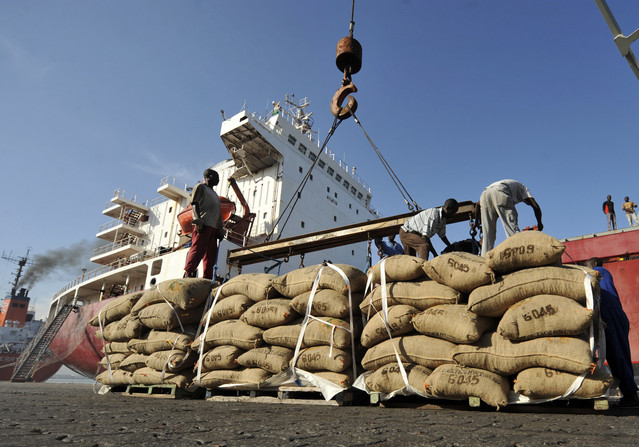
Even as harvests weakened, higher global cocoa prices helped lift export earnings across the sector.
Ghana’s cocoa exports, including beans and processed products, generated about $1.94 billion in 2024, before rising to about $3.86 billion in 2025, according to Bank of Ghana data reported by local media.
Côte d’Ivoire has also gained from stronger prices, although recent full-year public figures for 2025 and 2026 are less clearly consolidated.
Earlier data showed its cocoa exports reached about $5.06 billion in 2021, before falling to about $4.47 billion in 2022, underscoring how price swings and production shifts continue to shape earnings.
New framework from 2026/2027
The latest deal seeks to narrow producer price gaps that have encouraged illegal cross-border trade between the two countries.
When one country pays farmers more than the other, cocoa often moves across borders outside official channels, reducing export revenue, distorting production data and weakening market planning.
Dr Forson said the agreement includes stronger market cooperation through enhanced collaboration between trading rooms, increased data sharing and the harmonisation of crop year calendars.
The two countries also agreed to align the principles used in determining cocoa prices to reduce disparities in producer prices and country differentials through a coordinated approach.
A technical task force made up of experts from both countries will design a price coordination framework and periodically review producer prices.
Dr Forson said Ghana and Côte d’Ivoire had also agreed to officially harmonise their cocoa crop calendars. The cocoa year will run from September 1 to August 31, beginning with the 2026/2027 marketing season.
“The Committee thus reaffirms its commitment to the long-term coordination of cocoa price management and marketing,” he said.
If enforced well, the plan could reduce smuggling, support farmer incomes and give both countries a stronger hand in negotiations with global buyers.
For major buyers in Europe, North America and Asia, including grinders, chocolate makers and commodity traders, the agreement could bring clearer pricing rules and more predictable supply from West Africa.
However, it could also limit their ability to benefit from price gaps between Ghana and Côte d’Ivoire, especially if both countries coordinate sales, data and producer prices more closely.