Agathon Rwasa Accuses Burundi Government of Using Judiciary to Sideline Opposition
The veteran opposition politician alleges that stalled court proceedings involving the party he once led amount to a denial of justice and an attempt to exclude him from politics.
 Black News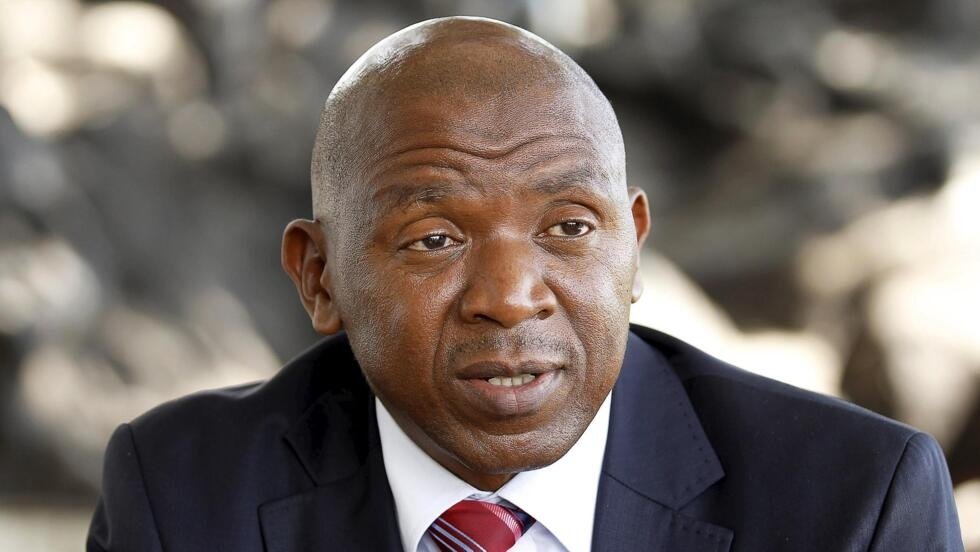
Burundi’s prominent opposition politician, Agathon Rwasa, has accused the government of using the judiciary as a political tool to deprive citizens of their rights and sideline political opponents, pointing to continued delays in a court case challenging his 2024 removal from the leadership of the National Congress for Liberty (CNL), the opposition party he founded in 2019.
Speaking to local radio station Bonesha FM on Wednesday, Rwasa alleged that the slow handling of the case is politically motivated and aimed at preventing him from participating fully in the country’s political process.
“The judiciary is depriving us of our rights as citizens,” Rwasa said. “We see these attempts to use the judiciary as a tool to bar us from elections and from national political life. This is not how things should be. We are Burundian citizens, we pay taxes like everyone else, and we do not understand why we should be denied justice.”
He further argued that the judiciary’s handling of the case suggests political interference.
“The judiciary’s failure to act while all of this unfolds clearly indicates that political considerations are taking precedence over judicial ones,” he said.
A Longstanding Opposition Figure
Rwasa has been one of Burundi’s most influential opposition figures for more than two decades and is widely regarded as the main challenger to the ruling CNDD-FDD, which has governed the country since 2005.
A former rebel leader, Rwasa has repeatedly found himself at the center of leadership disputes within opposition parties he helped establish. After being removed from the leadership of the National Liberation Front (FNL) in 2010, he accused authorities of orchestrating efforts to derail his political ambitions.
In 2019, he founded the National Congress for Liberty (CNL) and finished second in the 2020 presidential election. However, internal divisions erupted in 2024 when he was removed from the party’s leadership, a move that he and his supporters denounced as a violation of the party’s statutes.
The dispute led Rwasa’s allies to challenge the legitimacy of a March 2024 party congress before the Supreme Court’s Administrative Chamber. The case was first heard on November 7, 2024, before being postponed several times, including hearings scheduled for February 27 and September 25, 2025.
Concerns Over Delayed Court Proceedings
In a statement issued on May 30, 2026, fourteen members of the CNL political bureau aligned with Rwasa said the case had stalled despite all procedural requirements having been fulfilled by both parties.
“Given that our case already contains all the necessary documents to be resumed for a public hearing and argued on the merits, there is no other reason that would prevent its progress in the eyes of the law,” the group said.
The signatories questioned why the Supreme Court had not yet scheduled the case for a public hearing and argued that the prolonged delay amounted to a denial of justice.
The group also expressed concern that political calculations linked to the 2027 presidential election may be influencing the pace of judicial proceedings. In their statement, they called on President Évariste Ndayishimiye, the Supreme Court, civil society organizations, religious leaders, political parties, and the international community to support judicial independence and ensure the case is resolved within a reasonable timeframe.
Uncertainty Over 2027 Election Participation
Asked whether he intends to contest the 2027 presidential election, Rwasa did not provide a direct answer. However, he criticized what he described as efforts by those in power to create legal and administrative barriers to preserve their political dominance.
“Voting and standing for election are rights guaranteed to every Burundian citizen,” he said. “The problem is that authorities continually introduce obstacles and pretexts to exclude others while maintaining their grip on power.”
Rwasa also cited international human rights commitments incorporated into Burundian law, arguing that no citizen should be arbitrarily prevented from participating in political life.
He called on citizens to demand greater accountability from the judiciary and urged judges to serve the public interest rather than particular political interests.
“Justice must demonstrate that it exists for all Burundians,” Rwasa said. “Many people are seeking justice, not only us. The judiciary must show that it serves the nation and not a specific group of individuals.”
At the time of publication, efforts to obtain comment from Burundi’s Ministry of Justice and the Supreme Court were unsuccessful.