An Economy Without Permission
In cities like Marrakech, Dakar, and Dubai, art markets are curated as economic and cultural infrastructure. In Lagos, the Lekki Art Market offers the same promise, but you might need a canoe to access it. On my first visit in October 2025, the road gave way before the market did. Floodwater gathered at the entrance, and the options were simple: turn back, be carried across, or step in and find your way through. We chose the latter, buying sachets of water to rinse our feet on the other side, crossing, almost reluctantly, into a space that would challenge everything I […] The post An Economy Without Permission appeared first on African Arguments.
 Black News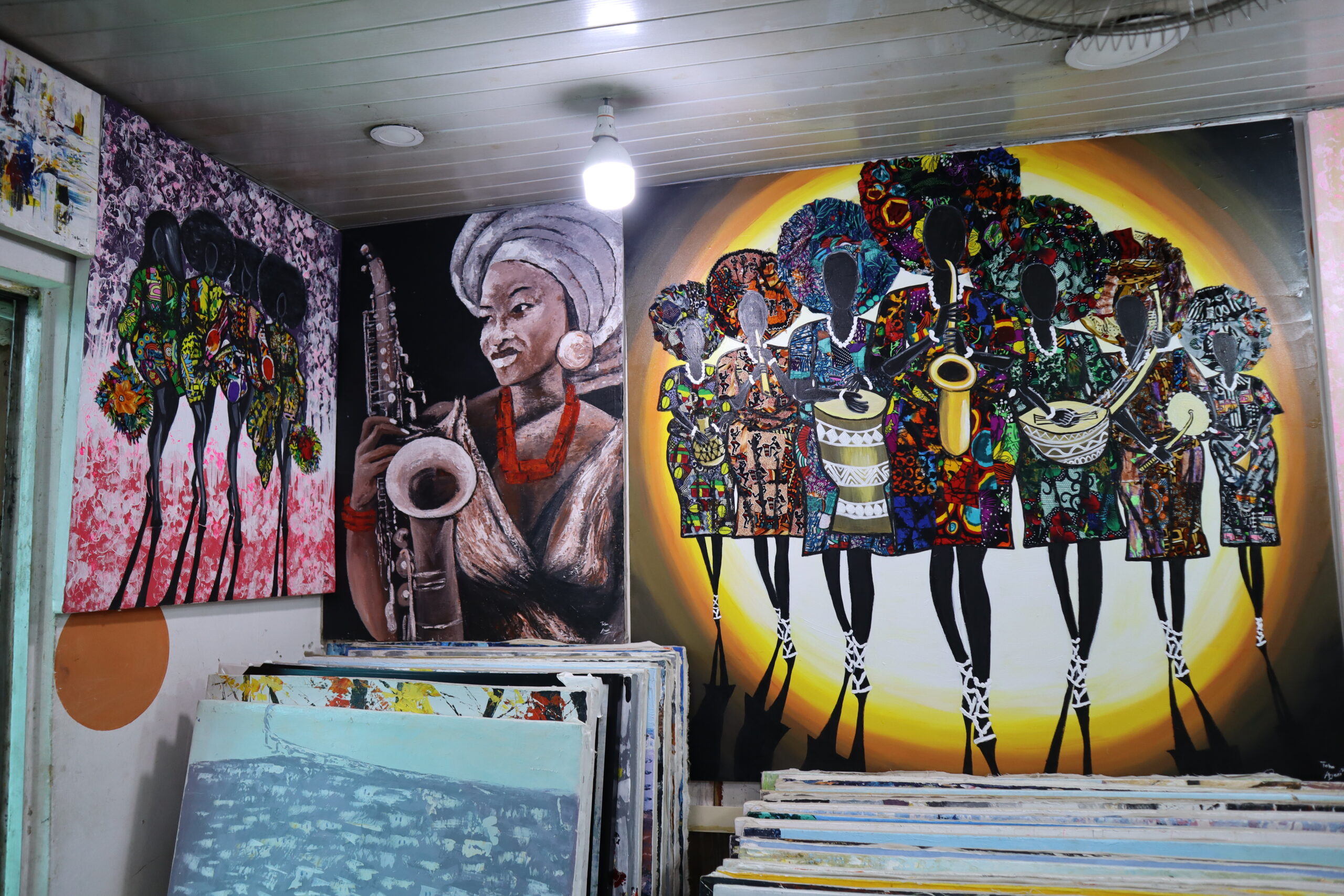


In cities like Marrakech, Dakar, and Dubai, art markets are curated as economic and cultural infrastructure. In Lagos, the Lekki Art Market offers the same promise, but you might need a canoe to access it. On my first visit in October 2025, the road gave way before the market did. Floodwater gathered at the entrance, and the options were simple: turn back, be carried across, or step in and find your way through. We chose the latter, buying sachets of water to rinse our feet on the other side, crossing, almost reluctantly, into a space that would challenge everything I thought I understood about where development begins.
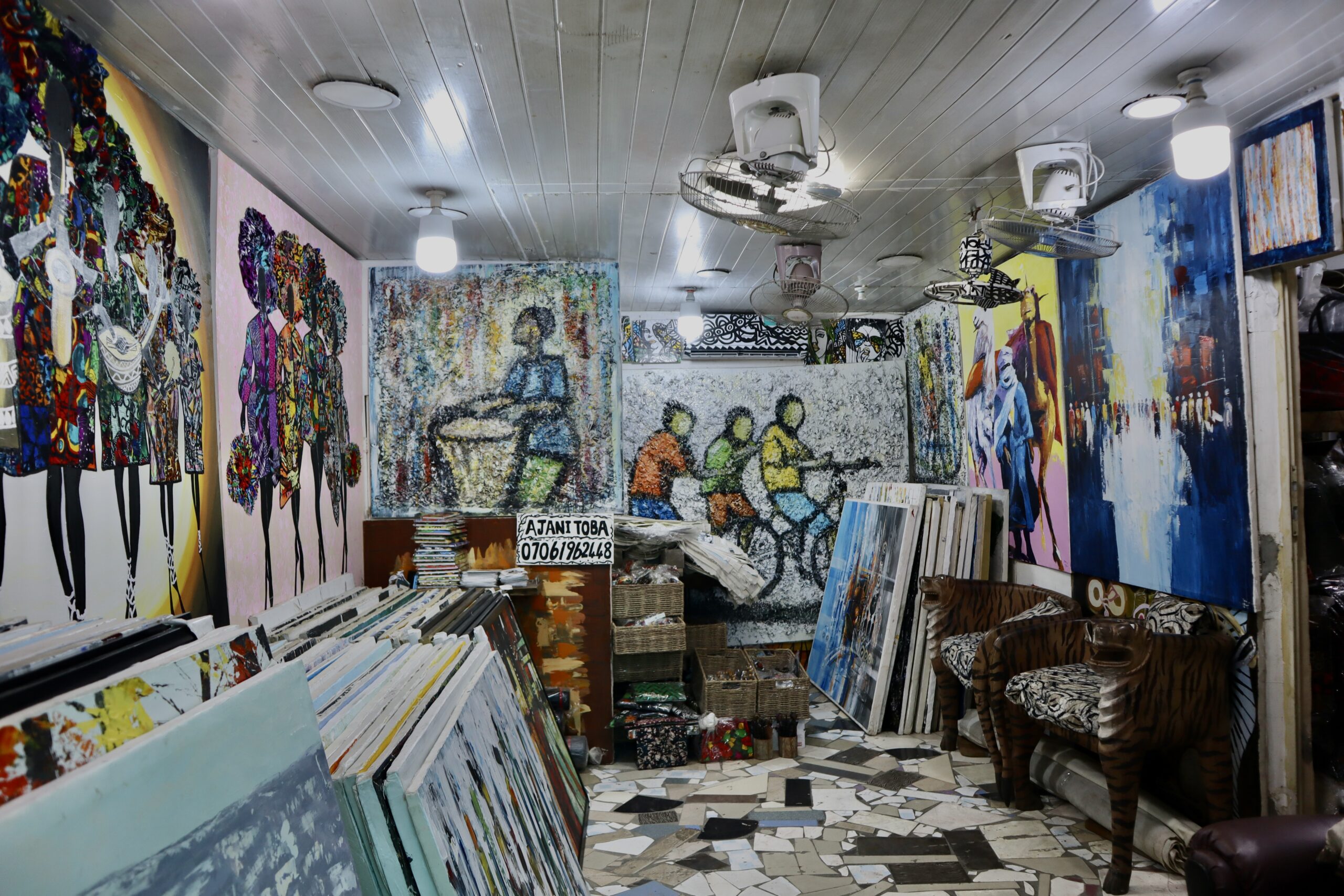
Paintings for sale in Lekki art market (author’s image).
Inside, the logic of the flood dissolved. There were rows of carved wood and bright canvases, conversations suspended between bargaining and storytelling, and artists at work — hands steady, eyes intent, translating memory, culture and imagination into objects that could be held, priced and taken home. A young woman sat behind her pieces, painting with the quiet certainty of someone who understood both her craft and its worth. The goods ranged widely: ₦500 swirl-stoned earrings and the native comb the Yoruba call ilari sat alongside ₦8,000 abayas, ₦12,000 aso-oke clutches, and at the far end of the scale, a ₦3 million (£1,620) dining set carved from wood in honour of ancestral design. The buyers were both local and visiting — Nigerians furnishing homes and offices with work that carried cultural memory, alongside tourists drawn by curiosity or a friend’s recommendation. I had known this market existed for years and never come, until a friend visiting from the United Kingdom wanted to see it. That detail stayed with me: the market did not lack customers. It lacked the kind of visibility that makes a place feel like it already belongs on your itinerary. Around her, value was being created in real time: negotiated, exchanged, and sustained without the language of policy or the visibility of data. It was an economy — alive, complex, and functioning — yet one that seemed to exist just outside the frame of how development is typically seen, measured, and supported.
And so the contradiction sharpened. How does a space so evidently productive remain so structurally neglected? How does a market that gathers artists, attracts visitors and circulates money sit at the margins of formal economic recognition? The road that led here told one story — of absence, of delay, of a city yet to arrive. But inside the market, another story insisted on being seen: one of resilience, improvisation and quiet industry. It is in the tension between these two realities — the visible failure of infrastructure and the invisible success of cultural enterprise — that a different kind of development question begins to emerge.
Paintings for sale in Lekki art market (author’s image).
Perhaps the more unsettling realisation is this: the market does not wait. It does not pause for policy to catch up, nor does it suspend its rhythms until infrastructure is repaired. Each day, in spite of constraint, it produces, adapts, and endures. What is absent in formal systems is compensated for through informal ingenuity — makeshift solutions that keep the system alive but also keep it small. And in that smallness lies a quiet loss. Nigeria’s creative industries contributed an estimated ₦239 billion (£130 million) to GDP in 2023 according to the National Bureau of Statistics, yet the informal markets where much of that creativity originates — the Lekki Art Markets and spaces like them — remain largely absent from the data that shapes funding decisions, zoning policy, and infrastructure investment. Because what exists here is not marginal — it is simply unmeasured. And what remains unmeasured, in the language of development, is too easily dismissed.
To measure, however, is not only to count — it is to decide what matters. And so the question is not simply why the Lekki Art Market lacks data, but why it has not yet been seen as deserving of it. What frameworks of value exclude spaces like this from economic imagination? What assumptions about formality, visibility and legitimacy determine which economies are nurtured and which are left to survive on their own terms? These are not questions about a market alone, but about a model of development that continues to privilege what is structured over what is lived.
It was this line of questioning that drew me back — not as a visitor this time, but as an observer with intent. To look more closely. To listen more carefully. And to begin, in whatever small way possible, the work of making this economy visible.
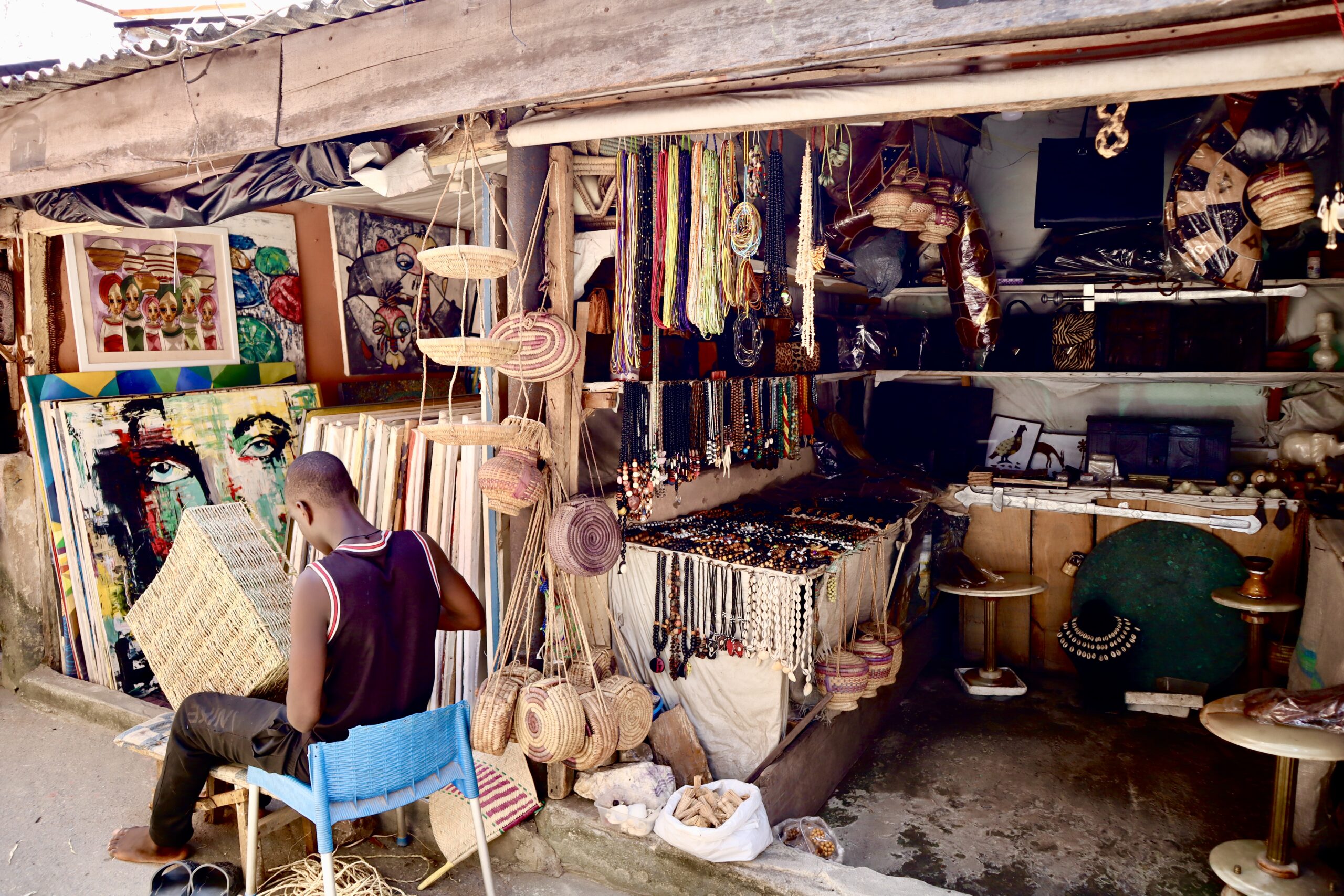
Weaver in Lekki art market (author’s image).
Because visibility, in this context, is not merely descriptive — it is political. To document is to assert that something exists; to measure is to insist that it counts; to write is to argue that it should not be ignored. If development is, at its core, a question of allocation — of attention, of resources, of belief — then the first act is often one of recognition. And recognition begins with seeing clearly what has long been in plain sight.
The Lekki Art Market does not lack productivity; it lacks amplification. It does not lack innovation; it lacks infrastructure. It does not lack relevance; it lacks recognition within the systems that decide what counts as development. To return, then, is not simply to observe, but to confront this misalignment directly: to gather fragments of evidence — prices negotiated, stories exchanged, livelihoods sustained — and to assemble them into something legible to policy. Not to reduce the market to numbers alone, but to ensure that it can no longer be dismissed for lack of them. In this way, the act of returning becomes something more deliberate: a refusal to let an entire economy remain anecdotal.
The post An Economy Without Permission appeared first on African Arguments.