Another African country set to join US-led Artemis accords as global interest in Moon and Mars missions grows
Botswana is set to become the 68th country to sign the Artemis Accords, joining a US-led framework that has become central to Washington’s effort to shape the rules for civil space exploration on the Moon, Mars and beyond.
 Black News

Botswana is set to become the 68th country to sign the Artemis Accords, joining a US-led framework that has become central to Washington’s effort to shape the rules for civil space exploration on the Moon, Mars and beyond.
- Botswana will become the 68th country to sign the US-led Artemis Accords for lunar and planetary space exploration.
- Botswana joins several other African nations, reflecting Africa's rising involvement in global space governance and diplomacy.
- Accession to the Accords does not require having a space program, but signals commitment to international space cooperation.
- The Artemis Accords outline non-binding principles for peaceful, transparent, and responsible civil space activity.
The Southern African country will sign the Accords at NASA Headquarters in Washington on Thursday, June 25, in a move that places it among a growing number of countries aligning with a framework designed to promote peaceful, transparent and coordinated space activity.
The signing will involve Botswana’s Minister of Communications and Innovation, David Tshere, NASA Deputy Administrator Matt Anderson, and U.S. Department of State Senior Advisor for Space, Gregory Autry.
The move comes as governments and private companies show growing interest in lunar activity, making space cooperation an expanding area of diplomacy and technology policy.
What the Artemis Accords mean
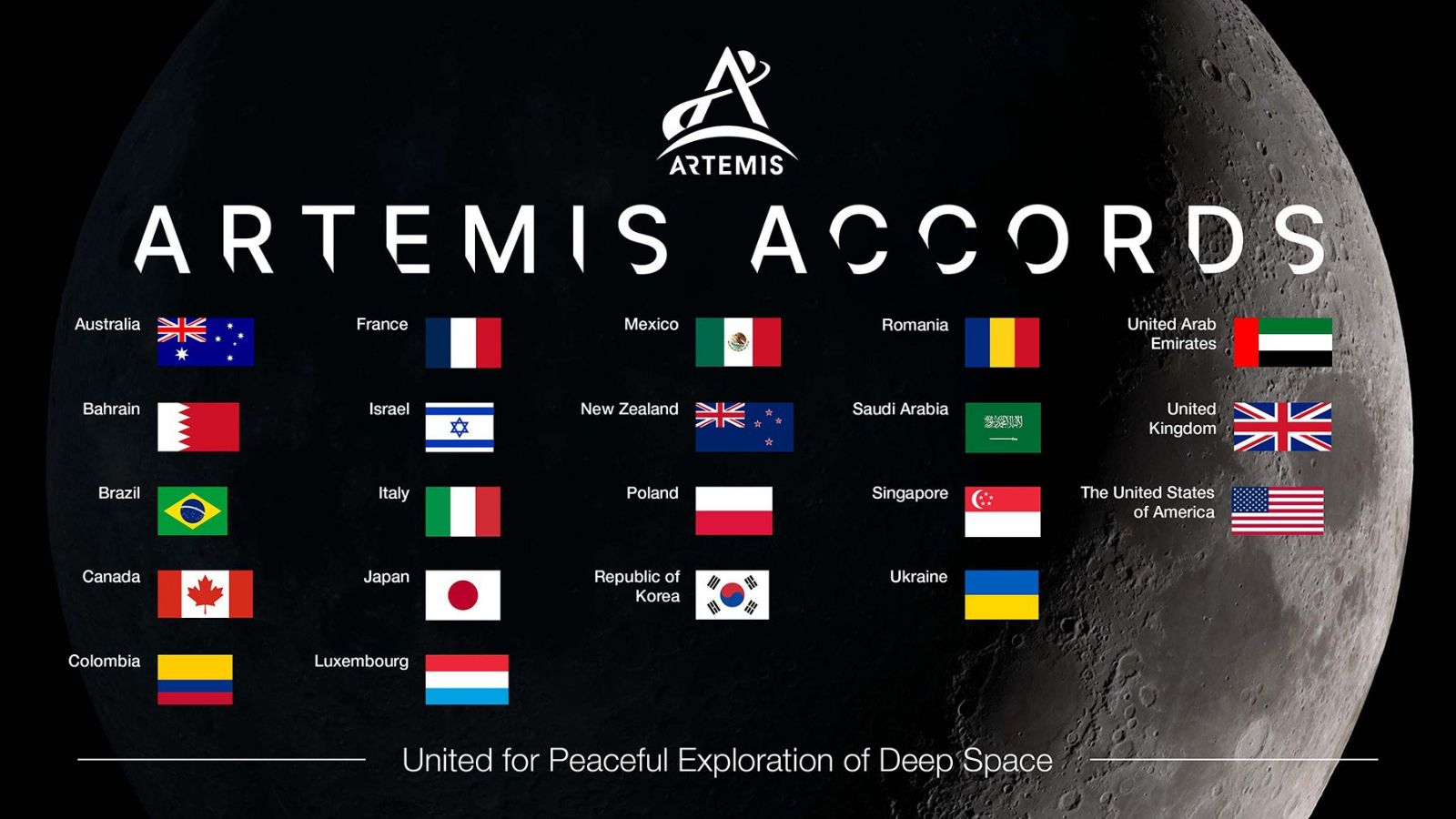
The Artemis Accords were established in 2020 during the first Trump administration by the United States, through NASA and the Department of State, alongside seven founding nations.
The founding signatories were Australia, Canada, Italy, Japan, Luxembourg, the United Arab Emirates, the United Kingdom and the United States.
The Accords are tied to NASA’s Artemis programme, Washington’s flagship effort to return humans to the Moon and build the foundations for future missions to Mars.
The programme has already sent the uncrewed Artemis I mission around the Moon, while later missions are expected to carry astronauts back to lunar orbit and eventually to the lunar surface.
The framework sets out non-binding principles for civil space exploration, including peaceful activity, transparency, scientific data sharing, emergency assistance, registration of space objects, protection of historic sites and responsible management of orbital debris.
However, accession to the Accords does not require a country to have an existing space programme or immediate plans to take part in Artemis missions.
Africa’s growing role
Botswana’s expected signing comes as more African countries seek a stronger voice in global space governance and use space cooperation as part of wider diplomatic and development strategies.
Nigeria and Rwanda became the first African signatories in December 2022, when they joined the Accords at the inaugural U.S.-Africa Space Forum in Washington, becoming the 22nd and 23rd countries to sign globally.
Angola followed in December 2023 during a White House visit by President João Lourenço, making it the third African signatory to the framework.
Senegal joined in July 2025 at a ceremony at NASA Headquarters in Washington. At the time, Senegal’s space agency chief, Maram Kaïré, described the signing as “a meaningful step in our space diplomacy.”
Morocco then signed the Accords in April 2026, becoming the 64th country globally and the fifth African nation to join.
Unlike previous African signatories, Morocco signed the agreement in Rabat, a move that highlighted the diplomatic weight of its bilateral relationship with Washington.
Botswana’s entry would therefore extend Africa’s participation in the Accords and underline the continent’s growing interest in the rules that will shape future space exploration.