Laid Off and Locked Out–But Black Women Aren’t Waiting for Rescue
Economists, financial experts, and government statisticians agree: since President Donald Trump returned to office, as many as 600,000 Black women are out of work. Many were federal employees laid off due to budget cuts; some chose to leave the workforce, and others were simply pushed out. The legion of unemployed Black women has been called […] The post Laid Off and Locked Out–But Black Women Aren’t Waiting for Rescue appeared first on Word In Black.
 Black News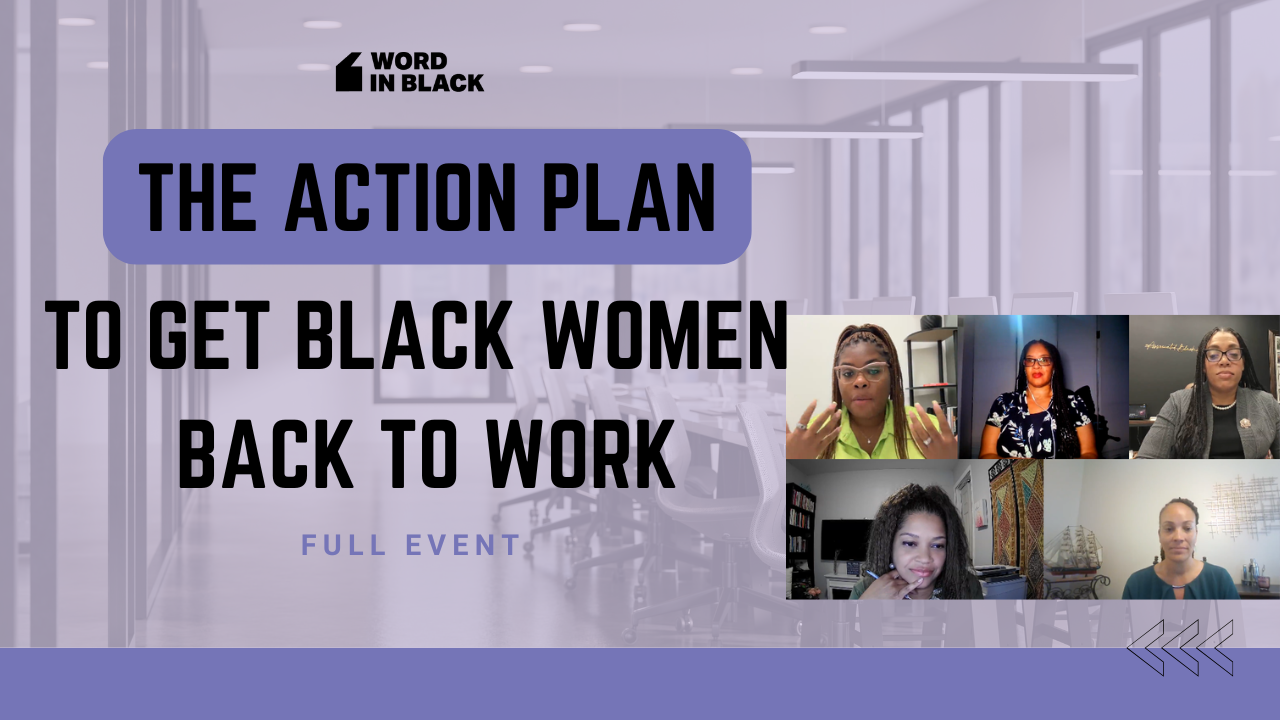

Economists, financial experts, and government statisticians agree: since President Donald Trump returned to office, as many as 600,000 Black women are out of work. Many were federal employees laid off due to budget cuts; some chose to leave the workforce, and others were simply pushed out.
The legion of unemployed Black women has been called a national crisis, but policies to address the problem are nowhere in sight. Nor is the issue anywhere on the political agenda — even though midterm elections are just six months away.
RELATED: California’s Economic Boom Is Leaving Black Women Behind
Against that grim backdrop, Word In Black recently convened a panel of experts to discuss the crisis of unemployed Black women and put concrete solutions on the table.
Their consensus was clear: Black women can’t wait for help that probably isn’t coming. They should instead pull together to meet this challenge head-on, using everything at their disposal — from artificial intelligence to old-fashioned networking.
Powerhouse Panel
The panelists spanned industries and geographic locations. They included Chrissy M. Thornton, president and CEO, Associated Black Charities; Dr. Kimani Norton-Sands, co-founder, Job Liberation Virtual Summit; Dr. Rhianna C. Rogers, senior vice president at the California Black Women’s Collective Empowerment Institute; Kalyanna (Yana) Williams, founder, The Group Chat; and Nikki Porcher, founder, Buy From a Black Woman. Each organization is helping Black women thrive economically.
The event followed a Word in Black video report published in March that featured Shana Pinnock Glover, an Atlanta-based social media strategist. Glover talked about navigating the job market while handling a cancer diagnosis.
We have to stop treating Black women’s resilience as a strategy.
Chrissy M. Thornton, president and CEO, Associated black charities
Moderated by Word In Black’s Shernay Williams, the conversation pulled no punches. Against the backdrop of federal layoffs, AI disruption, and a job market that added just over 22,000 jobs over two months, the panelists discussed how to chart a path forward to create economic transformation — not just survival.
Rejecting Stereotypes
“We have to stop treating Black women’s resilience as a strategy,” Thornton said, describing one of the most deeply held narratives about Black women. She noted that while resilience should be celebrated, it has also been used to keep Black women from gaining the support needed to excel.
Thornton’s call to action was direct: shift from endurance to strategy. That means building mentorship pipelines, pursuing pay equity, creating businesses together, and investing in one another’s leadership — before crisis forces the conversation.
Kimani concurred, urging the community to treat well-being as a form of resistance.
“If people are trying to put me into the strong Black woman stereotype, I can reject that,” she said, adding that healing — both individual and collective — is the foundation of economic recovery. She recently created the Job Liberation Virtual Summit to provide a private, anonymous space for Black women to develop exit plans from toxic jobs and explore new, independent income streams.
Rogers drew on the California Black Women’s Collective’s December 2025 State of Black Women report, which identifies five key demands for Black women: equal pay and asset building, affordable housing and childcare, maternal health equity, leadership pathways, and sustained funding.
Embracing AI
Yana Williams reframed AI not as a threat but as a rare equalizer.
But she also sounded an alarm about artificial intelligence, noting that Black women are among the least likely to use AI tools. That’s despite the fact that AI-powered applicant-tracking systems are quietly filtering out their job applications before a human ever sees their resumes.
“When you can have an idea, type it into a tool, and skip so many steps before hiring a developer — that is an advantage for us,” Williams said. She also suggested that Black women entrepreneurs, who have long lacked equitable access to capital, can now use AI to build faster and leaner than ever before.
“With AI tools doing work that previously required entire departments, you can now move from idea to prototype faster and at far lower cost,” she said. “That is an advantage for those of us who have had to do more with less.”
Building the Table
Porcher, an Air Force veteran who is running for Georgia labor commissioner, closed by bluntly challenging attendees to stop suffering in silence. She urged attendees to push past embarrassment or the fear of rejection and tell their networks they’re looking for an opportunity.
“Either they’re going to say, ‘Girl, me too,’ or ‘Girl, I got you,'” she said. “Those are the only two responses you are going to get.”
She also urged the group to look beyond four-year degrees toward trade programs and technical certifications — pathways that are often free and fast and lead to high-demand careers.
One theme emerged from the entire conversation: the solution to this crisis will not come from waiting for an invitation to the table. It will come from Black women deliberately and collectively choosing to build the table themselves.
RESOURCE: The Action Plan to Get Black Women Back to Work
The post Laid Off and Locked Out–But Black Women Aren’t Waiting for Rescue appeared first on Word In Black.