Exploring Bucovina, the last wild place in Europe
Noroc! — 70% of Romania’s northern provinces are covered in ancient woodland, with its people cultivating a close relationship with the land that stretches back millennia. Jack Burke forages, eats and drinks his way around the region.
 Black News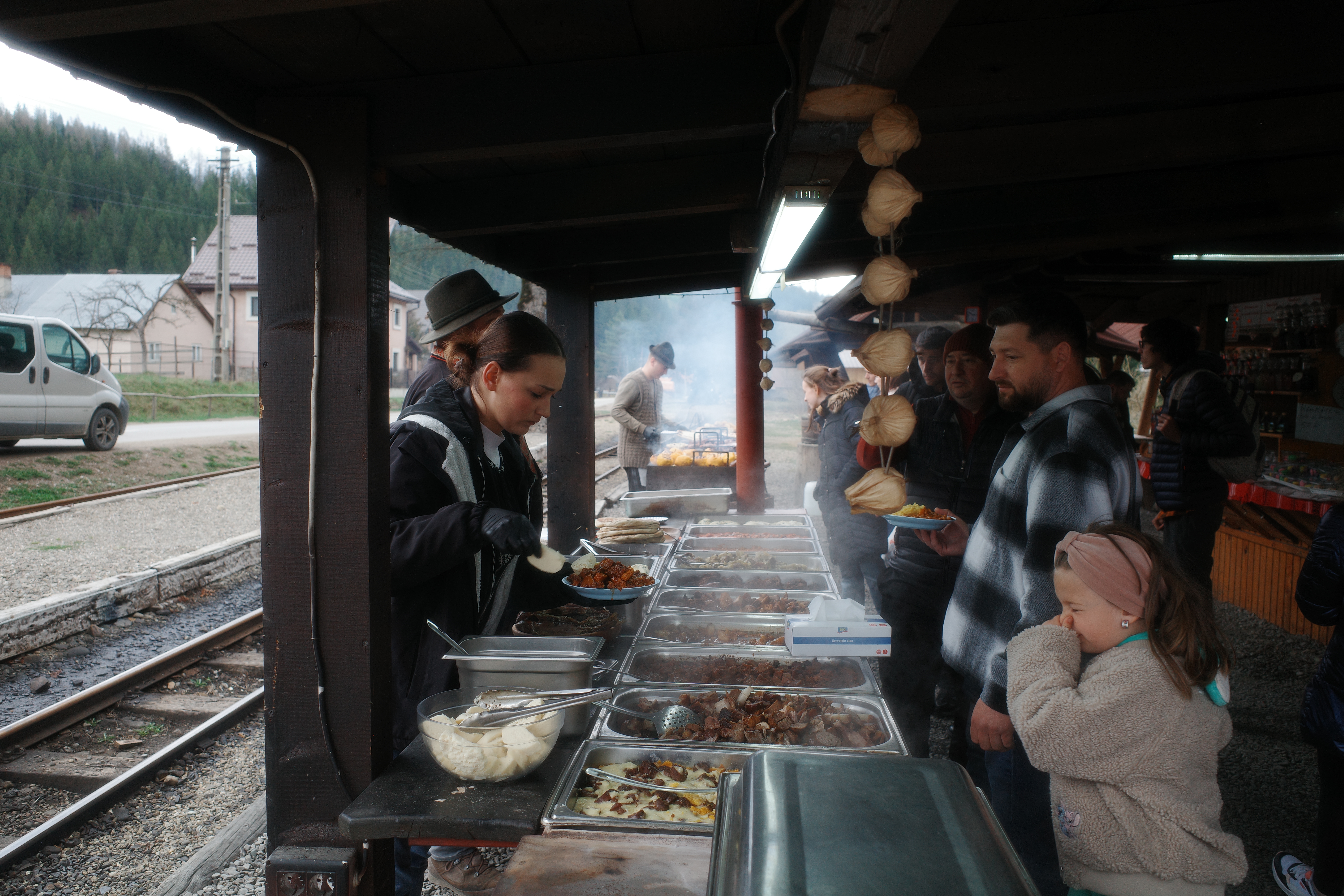

Noroc! — 70% of Romania’s northern provinces are covered in ancient woodland, with its people cultivating a close relationship with the land that stretches back millennia. Jack Burke forages, eats and drinks his way around the region.
“Noroc!” we cry. The glasses clink, and the amber liquid refills itself like a trick. Outside the veranda of a handbuilt Romanian log cabin, the snow-capped Carpathian mountains stretch behind us, enrobed in dark pine forest that goes on, it seems, forever.
I have been in Romania for approximately four hours. In that time, I have survived a death-defying, blind-bend-overtaking lift from the airport in a blacked-out BMW with 300,000 miles on the clock, piloted ably and terrifyingly by Christy, the brother of the man I am here to visit. We are now in his home, in the small town of Gura Humorului, and a platter has already been laid, a bottle of homemade sparkling demi-sec already opened, and there is no suggestion that any of this will stop soon.
Christy is a stern-eyed, macho Romanian man, t-shirt a little tight, bone-crushing handshake, mischievous chocolate-brown eyes that miss nothing and give away less. He has a bear pelt on the floor of his living room. I notice it immediately, and stare at it for perhaps a beat too long. Christy, hawkish and pursed-lipped, barks something in Romanian to his brother, George, who acts as translator.
“It bit him,” George says, nodding towards the pelt. “In the arm. He went back the next day. Found it, killed it, skinned it.”
A pause.
“Da,” says Christy, corners of mouth turned down in a boastful smile, nodding once, as if anyone would have done the same.
The sparkling wine gives way to home-distilled cognac, produced in the basement, one hundred litres of it, Christy gloats. There is fresh unripened cheese, tougher aged cheese, lamb two ways because it is Easter and everyone in Romania eats lamb at Easter, one on the spit, one from the oven, cabbage rolls stuffed with pork and rice and herbs, more wine, more cognac. Boar tusks and deer skulls hang framed on the walls. Guard dogs bark their territorial announcements from outside. In every corner of this veranda, something has been hunted, fermented, cured, or grown within walking distance.
This is Bucovina. And this is simply how things are done here.
Bucovina, in the northeastern corner of Romania, is one of the last truly wild places left in Europe. 70% of the northern provinces are covered in forest, ancient and unbroken and Cathedral-dark, the kind that once blanketed most of the continent before it was cleared, managed, and made presentable. Bears move through these woods with the unhurried confidence of apex residents. Walk around on a moonlit night and you will hear the howling of wolves.
People here still live in a relationship with the land that feels, from a Western European vantage point, almost ancestral. The diet is seasonal, homemade, produced in conjunction with what grows and what is raised. There are barely any grocery stores in the villages. The year is structured not around quarterly earnings but around the Orthodox calendar, the feast days and fasting periods and saints’ days that give the table its logic and the seasons their meaning. It is a country that, in parts, has not changed much in the last 200 years. Driving through it, eating through it, drinking through it, you begin to believe them.

The next morning, we stop at the home of Nikolae, part of the wider Bucovinan network of force-feeding hosts. He emerges from his doorway with impish dark eyes, proud belly leading the way, and immediately begins producing dishes with the confidence of someone not accustomed to refusal.
“Eat,” he says, firmly, hovering just long enough to ensure compliance.
He brings out nuci, walnut-shaped cake pucks filled with walnut cream, dense and sweet and faintly medieval. I eat twelve and have to be rolled back into the car for a hairpin drive deep into the Bucovinan countryside, steeples puncturing the mist, forest pressing in on either side. The road coils upwards through pine and beech towards the Rarău Mountains, then opens suddenly onto a ridge where headscarved women stand beside tables selling honey and cheese and pelts in the thin, high-altitude light.
The honey is dark, almost feral, tasting of forest and something harder to name. The cheese is fresh and slightly sour, wrapped in paper already beginning to surrender. A man produces țuică from a plastic bottle and pours it into small cups without asking.
“Da,” he says.
We drink.
That evening we arrive at Perla Rarăului as guests of the governor, a timber-framed pension that sits in the forest as if it has grown there, and are immediately ushered into another meal. Lamb soup enriched with cream that has travelled perhaps 20 metres from cow to bowl. Pork in multiple iterations. Potatoes, beetroot, wine, cake, chocolate, cheese straws, each course arriving on the safe assumption that stopping would cause offence. I fall into a deep and dreamless sleep.


The painted monasteries of Bucovina are, depending on who you ask, either one of the great unsung wonders of European civilisation or simply the reason you come here, and everything else is a bonus. They were built between the 15th and 16th centuries under Moldavian princes, most notably Stephen the Great. He reputedly constructed a monastery after each military victory against Ottoman expansion, they are covered on their exterior walls with Byzantine frescoes of extraordinary vividness. Saints, sinners, biblical scenes and apocalyptic visions rendered in ochre and cobalt and deep verdigris green, painted with the faith of the zealot on the outside walls, exposed to five centuries of Carpathian winter, and, somehow, still there.
We visit Sucevița first, then Putna, where priests move through the courtyard in robes that belong to another century, long-bearded, chanting, their voices folding into the stone. Walking into the heart of the chapels, the original paint from the 1400s alive on the walls around you, Romania presents itself as a country organised around continuity rather than novelty, where the mystical is part of daily life.
At Sihastra Putnei, we eat lunch with the monks. Every day, for anyone who wants it, for free: potato soup, barbecued carp, rice and mackerel, unlimited jugs of local white wine. Because it is Easter, painted red hardboiled eggs adorn the table in the old Bucovinan tradition. A priest invites me to play his egg-tapping game, a kind of egg conker. Tips knocked against each other, whosever’s cracks loses. I win. He shakes my hand.
The road carries us west to Moldovița, where a communist-era steam train has been dusted off for a twice-daily run through the ancient logging route. It is not leaving for another hour, so we drink Suceava beer in the sun and are seduced by the smell of mici grilling on an open fire – small, skinless, heavily spiced pork rolls that a woman fans with the practised seductiveness of someone who knows she barely needs to try. I eat three.
The train is unchanged from the era that built it, coal-powered, with wood-burning stoves heating each carriage. It moves slowly and deliberately through villages untouched by the march of time. Babushkas in headscarves work soil that has known them all their lives. Horses pull carts. Smoke rises in thin vertical plumes from chimneys that open onto kitchens where the same dishes have been made, in the same sequence, for generations without counting.
At the final stop there is a market, a purple-faced, barrel-chested man grilles pork over open flame, hawking his wares in a local dialect: polenta, cabbage, beans. Tuică is poured with the same casual, unstoppable generosity. Traditional music plays slightly off, slightly too loud, looping into something almost hypnotic.
“Things are changing. But slowly. People here, they are not in a hurry to become somewhere else.”
On the final morning, Andrei arrives in a 1990 Toyota Land Cruiser, three-litre turbo diesel, jacked up on custom suspension and off-road tyres. He has rough hands and an open face and the unhurried manner of a man who has driven this forest all his life. Before we leave, he stops.
“For courage,” he says, and pours us each a shot of grappa. Then he helps himself to three more, revs the engine to screaming point, and we are off. Mud flying, the car bucking and shaking through ancient beech forest on trails that only he can see.
We stop to forage: wild garlic, mushrooms, the forest floor thick with things that are free and good and available to anyone who knows where to look. It’s too late for winter truffles, too early for summer. George winks. “You must come back.”
I tell him I will.
It is tempting to write Bucovina as a place suspended in time, where everything is grown and shared, where generosity is not the exception but the baseline. There is truth in that. But there is something else too, sitting alongside the richness without cancelling it: a sense that life here is built around a repetition that is both grounding and, if we are honest, constraining. Days that unfold according to patterns leaving little room for deviation. A narrowness that coexists with the abundance.
Romania is a country whose finest produce is routinely misattributed. Unscrupulous truffle dealers vacuum up the treasures of these forests, transport them to Italy, and rebrand them at considerable markup. The country’s honey and cheese and cured meats travel west and come back wearing other people's labels. It is a place easy to take from and easy to overlook.
The things that Bucovina has and the developed west has largely surrendered – genuine community, self-sufficiency, a life organised around place and season and the people immediately around you rather than the accumulation of things further away – are not romantic abstractions here. The grappa in the basement, the lamb on the spit, the neighbours who arrive unannounced and stay until the cognac runs out. These are not lifestyle choices. They are the architecture of a life. We dismantled ours some time ago and have spent considerable money trying to reconstruct it at farmers’ markets ever since.
Yet driving out through Bistrița, you begin to see the edges. Houses tilting towards something newer, faux-marble facades, plastic flourishes, the future arriving in the form of a building material. New pensions are being built with surprising sensitivity, tucked into the landscape rather than imposed upon it. It is a region that manages, for now, to absorb change without entirely surrendering to it.
But you can feel the pressure. You can see it hovering.
“Things are changing,” George says, on our drive home, watching the villages roll past the window. “But slowly. People here, they are not in a hurry to become somewhere else.”
Back in Gura Humorului, on the last night, there is an outdoor barbecue, a haze of grappa and woodsmoke and meat and laughter. Somebody tops up my glass. Somebody else appears from the kitchen with something I have not tried. The mountains sit dark and enormous behind the treeline.
“Noroc!” says George, raising his glass.
“Noroc,” I say.
We drink.
Jack Burke is a freelance journalist and sometimes chef. Follow him on Instagram.
Buy your copy of Huck 82 here.
Enjoyed this article? Follow Huck on Instagram and sign up to our newsletter for more from the cutting edge of sport, music and counterculture.
Support stories like this by becoming a member of Club Huck.