
Are they furniture? Zimbabwe at 46 and Africa’s curse of permanent officials
Our leaders are not furniture. Furniture does not loot diamonds, mismanage treasuries or unleash militias. Furniture does not cling to power with brazen arrogance. But in Zimbabwe, officials behave as if they were carved into the mahogany of government itself
 Black News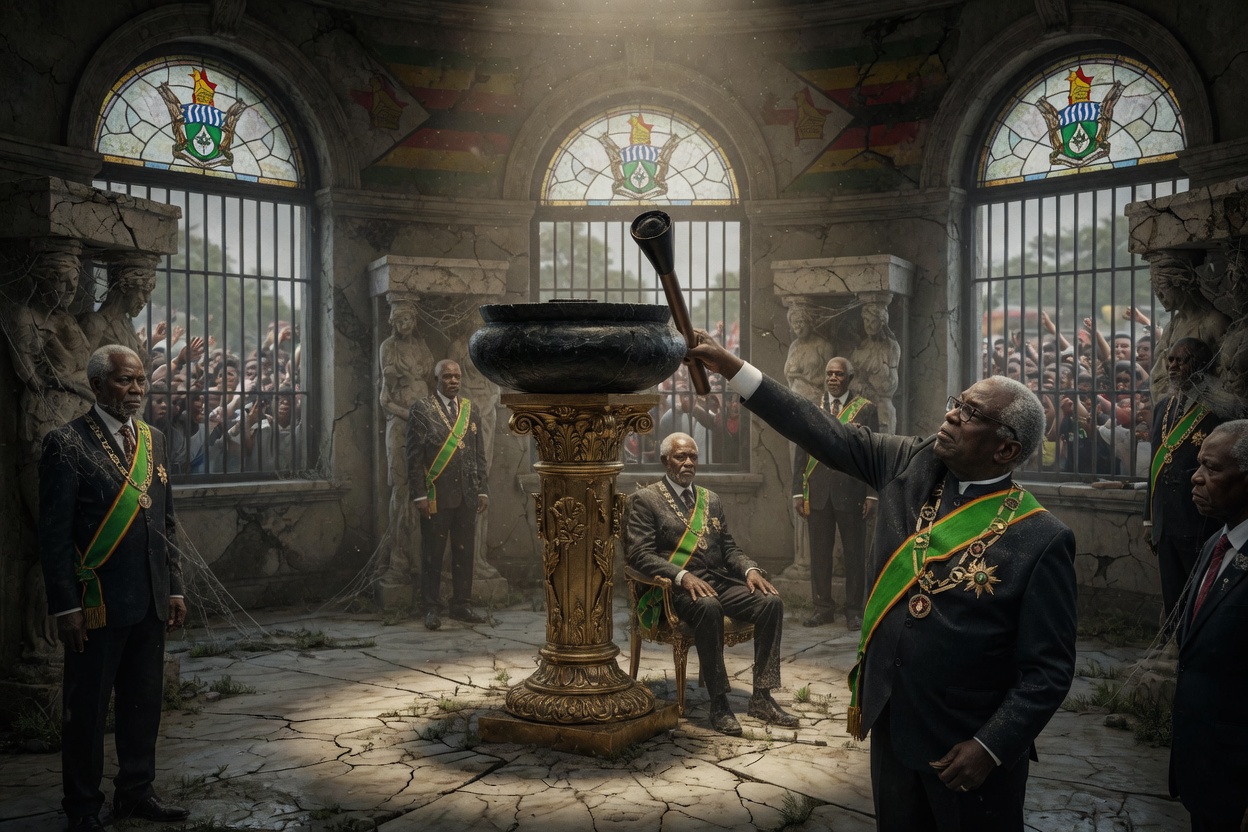
Zimbabwe turns 46 but instead of basking in the glow of renewal, we find ourselves wandering through a mausoleum of permanence. The corridors of power are lined not with leaders but with relics — officials who have become fixtures, indistinguishable from the furniture they occupy. Their presence is less about governance than about endurance, less about vision than about survival.
Emmerson Mnangagwa, the lone survivor of the 1980 cabinet, has remained in office for nearly half a century, his career a living archive of Zimbabwe’s political tragedies. Robert Mugabe’s 37-year reign turned permanence into pathology. Sydney Sekeramayi, the perennial cabinet ornament, drifted from portfolio to portfolio like a ghost of continuity. Bernard Chidzero presided over the treasury for 13 years, Jacob Mudenda has warmed the Speaker’s chair since 2013 and Luke Malaba clung to the bench even after his tenure expired — a brazen act of judicial entitlement. George Charamba, the eternal spokesperson, has been the ventriloquist of two presidents, his “Nathaniel Manheru” columns a testament to the art of permanent propaganda.
The curse of longevity
This permanence is no virtue; it is a pathology. Zimbabwe’s institutions are suffocated by men and the occasional woman — who confuse endurance with legitimacy, mistaking their ability to outlast generations for proof of wisdom. Frederick Shava, Patrick Chinamasa, Obert Mpofu, Ignatius Chombo, Joseph Made, Gideon Gono, and Jonathan Moyo: each presided over corruption, violence, or economic collapse, yet they remain embedded in the system like termites in rotting wood.
The judiciary, too, has not escaped this contagion. Godfrey Chidyausiku lingered for 16 years as Chief Justice, Rita Makarau drifted through endless appointments with little to show, and Luke Malaba clings to the bench with the stubbornness of a barnacle on a shipwreck. Diplomats are no different: Stuart Comberbach, Simbarashe Mumbengegwi and Willard Manungo — permanent fixtures in a diplomatic corps that has long ceased to innovate.
Longevity here is not stability; it is institutional sclerosis. It is the embalming of a nation’s political imagination, where officials become monuments to inertia rather than stewards of progress.
A continental malaise
Zimbabwe is not alone in this affliction. Across Africa, longevity has become the currency of power. In Cameroon, Paul Biya has ruled since 1982, a spectral presence who governs more from Geneva than Yaoundé yet remains the continent’s most enduring head of state. Uganda’s Yoweri Museveni, in power since 1986, has perfected the art of constitutional tinkering to extend his reign, turning amendments into personal life insurance. In Equatorial Guinea, Teodoro Obiang has been president since 1979; his rule is a family business masquerading as a republic.
These leaders, like Zimbabwe’s own fossils, mistake permanence for progress. Their longevity is not a stabilising anchor but a dead weight, dragging institutions into irrelevance while the world races ahead with artificial intelligence, robotics and generational renewal.
The continental consequence
The curse of longevity is more than a Zimbabwean tragedy; it is a continental malaise. It explains why Africa, despite its demographic youth bulge, remains governed by men who came of age in the Cold War. It explains why innovation is stifled, why youth are reduced to pawns and tokens, and why institutions resemble mausoleums rather than engines of renewal.
Until Africa confronts its addiction to permanence, until it dares to move the furniture out of the room, independence anniversaries will remain hollow rituals, celebrating liberation while entrenching stagnation.
The private sector rot
The malaise seeps far beyond the corridors of government into the private sector, where the same logic of permanence has taken root. Banks that once thrived but were tethered to the state through indigenisation laws, and farms seized during the chaotic land reform programme, have largely been driven into ruin by the very apparatchiks who claimed to be liberators of the economy. Yet, astonishingly, many of these institutions still employ the same executives who have presided over decline for more than a quarter of a century, as if longevity itself were a qualification.
In this theatre of stagnation, the youth have been reduced to pawns and tokens, wheeled out as photo-op props to lend a veneer of inclusivity. They are spectators, condemned to clap politely while fossils dictate their future, stripped of agency, denied the chance to inject new ideas, and excluded from shaping the trajectory of a nation that is demographically theirs but politically hijacked by relics of another era.
The mirage of reform
How then can Africa move forward? With these relics in charge, the continent risks irrelevance in a world reshaped by artificial intelligence, robotics and modern ideas. Zimbabwe’s Constitutional Amendment Bill No. 3 (CAB3) is presented as the latest “modernisation” project — a supposed refinement of the 2013 Constitution, promising streamlined mandates and clarified governance structures — yet beneath the technocratic gloss lies the same old trick: entrenching executive dominance while dressing it up as reform.
CAB3 might have been more palatable had it contained a genuine commitment to generational renewal, a bold pledge to retire the fossils by 2030 and open space for new ideas. Instead, it reads like another insurance policy for permanence, another clause in the contract of institutional stagnation. Jonathan Moyo, ever the architect of constitutional tinkering, perhaps forgot to add the “sweetener” that would have made this proposal credible: a guarantee that the furniture would finally be moved out of the room.
A call to move the furniture
Zimbabwe at 46 cannot afford another hollow ritual of independence, where speeches echo liberation but institutions remain embalmed in permanence. Constitutional Amendment Bill No. 3 (CAB3), dressed up as “modernisation”, is simply the latest camouflage for stagnation. Across Africa, constitutional amendments have become instruments of entrenchment — abolishing term limits in Uganda, extending Paul Biya’s reign in Cameroon, and embalming institutions while the world races ahead with artificial intelligence, robotics and generational renewal.
Corrective action must be uncompromising. Term limits must be imposed across the board — for ministers, judges and permanent secretaries — so that no office becomes a personal fiefdom. Succession planning must be transparent, dismantling patronage networks and professionalising appointments to prevent ministries from becoming retirement homes for liberation-era veterans. Youth inclusion must move beyond tokenism, transforming young people from pawns and photo-op props into genuine architects of innovation and policy. Above all, constitutional guarantees of generational renewal must be embedded into Zimbabwe’s political DNA, ensuring that by 2030 leadership passes to a new generation.
Independence should mean renewal, not stagnation. CAB3 could have been the moment to enshrine this principle, but instead it reads like another insurance policy for fossils. The challenge is clear: Africa must dare to move the furniture out of the room, replacing relics with leaders who are not monuments to inertia but builders of the future. Only then will independence anniversaries cease to be mausoleums of permanence and become true celebrations of progress.
Our leaders are not furniture. Furniture does not loot diamonds, mismanage treasuries, or unleash militias. Furniture does not cling to power with brazen arrogance. But in Zimbabwe, officials behave as if they were carved into the mahogany of government itself.
The question remains: are they furniture or are we simply too timid to move them out of the room?
Wellington Muzengeza is a political risk analyst and urban strategist offering incisive insight on urban planning, infrastructure, leadership succession and governance reform across Africa’s evolving post-liberation urban landscapes.