Belgium unlocks colonial-era Congo mining records with $24 trillion at stake as U.S. and China compete for critical minerals
Belgium is preparing to open a vast colonial-era geological archive on the Democratic Republic of Congo, placing decades-old mining records at the centre of a modern race for critical minerals.
 Black News

Belgium is preparing to open a vast colonial-era geological archive on the Democratic Republic of Congo, placing decades-old mining records at the centre of a modern race for critical minerals.
- The archive includes century-old maps and survey files focused on copper, gold, cobalt, and lithium, making it valuable for Congo's mining sector expansion.
- Belgium is opening a vast colonial geological archive on Congo, containing decades-old mining records crucial for identifying mineral deposits.
- DR Congo and Belgium are collaborating on a roadmap to digitise and transfer these records, aiming to boost Congo's control and competitiveness in minerals.
- Intense competition for Congo's mineral wealth continues as China, the US, and Europe vie for access, with Congo seeking greater sovereignty over its resources.
The archive is housed at the AfricaMuseum in Tervuren, outside Brussels, and contains nearly 500 metres of records, including century-old maps, mining files, survey reports and field notes compiled during Belgium’s colonial rule.
For Kinshasa, the files could help identify unexplored deposits, attract investors and strengthen its control over a mining sector tied to mineral resources estimated at $24 trillion by the U.S. International Trade Administration.
A Colonial Archive With Modern Value
Belgian geologists and mining companies compiled the records before Congo’s independence in 1960, focusing mainly on copper and gold, although some documents also point to cobalt and lithium deposits.
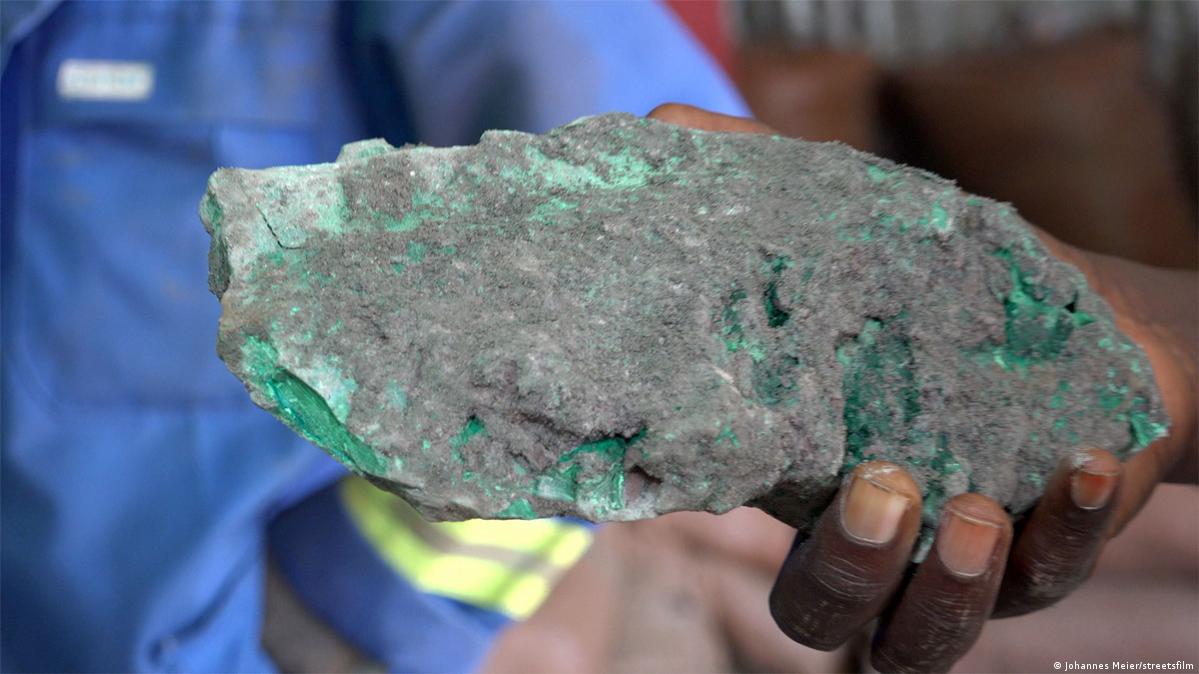
The files cover one of the world’s richest mineral belts, with the DRC holding copper, cobalt, coltan, lithium and other minerals used in electric vehicles, mobile phones, weapons systems and renewable energy technology.
According to the U.S. International Trade Administration, most of the country’s mineral resources remain untapped and are estimated to be worth $24 trillion.
From a science standpoint, "the content of the documents is absolutely incredible", said Francois Kervyn, the museum geologist leading the project.
"It is the result of an enormous amount of work by people who devoted a large part of their lives to field observations," said Kervyn.
"They travelled to completely unexplored regions to conduct surveys, without the positioning tools we have today."
For the DRC, the archive could improve its bargaining power in a mining sector still shaped by foreign capital.
DON'T MISS: Congo set to take advantage of critical mineral boom with its first-ever stock exchange
Kinshasa Pushes For Faster Access
DR Congo has been requesting access to geological files kept in Belgium for years, but the digitisation plan gained fresh momentum after U.S. company KoBold Metals entered the conversation around the archive.
Last year, the AfricaMuseum turned down an offer from KoBold Metals to digitise the Tervuren records.
Director general Bart Ouvry said the institution rejected the offer because it did not want one private company to gain privileged access.
"Granting a monopoly to a company for several years seemed tricky," he said.
Afterwards, KoBold Metals secured access to the Congolese government’s mining data, in what Kinshasa described as a "strategic partnership" to boost U.S. investment.
The company is also digitising records at Lubumbashi university in southern DRC.
"The project started in April and we have already digitised around 170,000 pages," KoBold Metals DRC head Benjamin Katabuka told AFP from Lubumbashi.
He said the technology makes scanned documents available online to investors "in less than a minute".
Belgium And Congo Move Towards A Roadmap
The issue later moved higher on the diplomatic agenda after Congolese Mines Minister Louis Watum Kabamba met Belgian and European Union officials to discuss the transfer and digitisation of records held near Brussels, Business Insider Africa earlier reported.
A spokesperson for the Congolese mining ministry said the government wanted to move into implementation because “there is a need to accelerate the discovery of new mineral deposits”.
“A very large part of DR Congo has not yet been explored,” the spokesperson said.
Subsequently, officials agreed to draw up a joint roadmap for digitisation and restitution, and create a task force to oversee the process.
The ministry described the initiative as a step towards strengthening DR Congo’s “geoscientific sovereignty” and making its mining industry more competitive.
DON'T MISS: Congo tightens cobalt exports, exposing China’s heavy reliance on imported battery metals
Congo Tightens Control Over Cobalt
The archive push is unfolding as Kinshasa tightens its grip on cobalt, a battery metal central to the global energy transition.
Kinshasa suspended cobalt exports in February before introducing a quota regime, slowing shipments to Chinese processors.
Under the framework, Congo capped fourth-quarter 2025 exports at 18,125 metric tonnes and set a 2026 quota of 96,600 tonnes, including a 10 percent strategic reserve.
DR Congo will also confiscate unused cobalt export rights and transfer them to a government-controlled reserve, according to a regulatory notice seen by Reuters.
The directive, issued by strategic minerals regulator ARECOMS, says export quotas allocated for the first half of 2026 but left unused by June 30 will expire and move to the regulator’s “strategic quota”.
DON'T MISS: DR Congo joins Africa’s resource-control push, rolls out sweeping reforms to overhaul gold trade
Global Powers Circle Congo’s Minerals
Competition over Congo’s minerals is intensifying as China dominates large parts of the country’s cobalt and copper sector, while the United States and Europe are trying to expand their roles in search of alternative supply chains.
Ultimately, the Belgian archives could give Congo stronger command over its geological history as Kinshasa asserts more control over cobalt exports, especially as the United States takes a less conventional route to rival China and its European counterparts in the global critical minerals race.