Blantyre’s colonial ghosts—Part 1
Malawi’s commercial capital remains haunted by colonial-era buildings that no longer serve their purpose due to a law long misinterpreted. It is time to talk. At the heart of Blantyre’s central business district stands a courthouse, Surveys Department and the old Town Hall frozen in the past. Erected to serve a colonial administration, they occupy … The post Blantyre’s colonial ghosts—Part 1 appeared first on Nation Online.
 Black News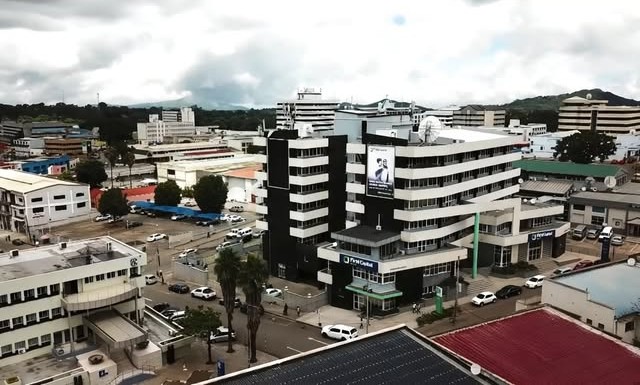
Malawi’s commercial capital remains haunted by colonial-era buildings that no longer serve their purpose due to a law long misinterpreted. It is time to talk.
At the heart of Blantyre’s central business district stands a courthouse, Surveys Department and the old Town Hall frozen in the past.
Erected to serve a colonial administration, they occupy prime land along Victoria Avenue and add little to the city’s contemporary economic or civic life.
Under the guise of heritage preservation, we have clung to buildings that have long outlived their purpose, producing a stagnant skyline and a city centre incapable of meeting modern demands.
These ageing structures pose a growing threat to public safety.
The Monuments and Relics Act frequently invoked to shield these structures was never intended to impede national progress.
Properly interpreted, it should serve a Malawi that values safety, development and an identity defined on its own terms.
Whose history are we preserving?
These buildings are remnants of colonial subjugation. They were neither built by Malawians nor for Malawians.
To preserve them uncritically is to preserve the very stage upon which our subjugation was enacted, compelling every generation to walk past them, work within them and be judged inside them.
Over six decades after independence, should the built environment of a free nation continue to mirror the era that preceded its freedom?
Should colonial monuments deny an independent country the use of prime land to shape an identity aligned with its own needs, culture and changing times?
Most of these buildings are over a century old. Foundations, roofs, walls and timbers have irreparably superseded their lifespan.
Each day, court staff, litigants, civil servants and ordinary citizens enter these premises unaware of the risks of preventable collapse. This is a matter of public safety.
Blantyre’s population has multiplied significantly since these buildings were erected, yet the CBD remains largely unchanged.
Businesses struggle to secure adequate space, government departments operate from cramped premises, traffic overwhelms narrow streets and housing supply is insufficient.
Expansion is constrained because most prime land is occupied by low-rise colonial structures deemed untouchable.
As Blantyre keeps repainting colonial walls, Kigali in Rwanda is redefining the African capital, Kampala in Uganda is rising and Dar es Salaam, Tanzania’s commercial hub is modernising.
During my tenure as mayor, I participated in the “red star” campaigns that identified privately owned buildings for demolition.
Blantyre City Council told private owners their buildings impeded urban regeneration and had to be removed.
The same arguments apply with equal, if not greater, force to the colonial buildings the law appears to shield.
Councils cannot credibly ask private developers what they will not require of themselves.
Having once condemned newer buildings as unsafe and incompatible with a modern city, I submit that the same standard must now be applied to the State’s own obsolete inheritances.
The Monuments and Relics Act, enacted in 1965 and updated in 1991, provides a comprehensive framework for balanced decision-making.
Section 24(6) permits demolition or alteration where “urgently required in the interest of health or safety” as do Section 24(2) “provided a proper record is preserved”.
Section 18 and 52 empowers the minister to intervene where a monument faces disrepair and to de-list any monument by notice in the Malawi Government Gazette Supplement, an official publication of geverment noyice.
Section 21 imposes a duty of genuine maintenance just as Section 24(3) permits salvage, partial reconstruction and adaptive reuse.
Section 4(b) provides for site museums, which could convey the colonial narrative more accurately than deteriorating buildings.
A careful reading reveals a law far more balanced than public debate suggests.
It does not enshrine preservation as an end in itself, but offers lawful options, from maintenance to adaptive reuse de-listing and demolition “where necessary”.
The Act was designed to serve the nation, not to bind it.
Its provisions accommodate change, anticipate obsolescence and expressly prioritise human safety.
The obstacle, therefore, is our attitude.
What the Act awaits is not amendment, but the courage of those entrusted to apply it.
The post Blantyre’s colonial ghosts—Part 1 appeared first on Nation Online.