CEMAC’s largest economy expects a $1.75 billion mining windfall to overtake oil
Cameroon is preparing for a historic shift in how it makes money, with the government expecting mining to generate more annual revenue than oil for the first time.
 Black News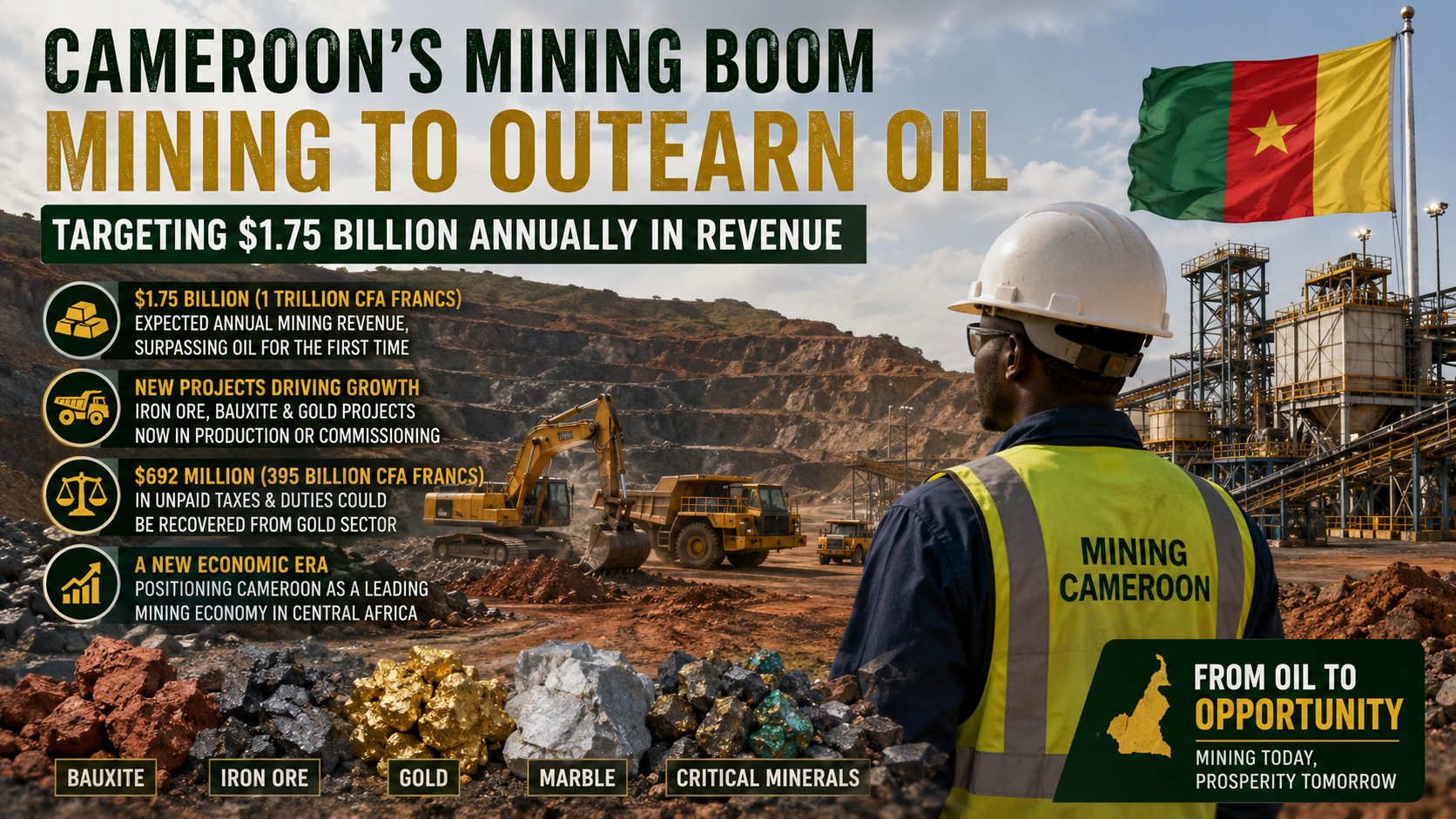

Cameroon is preparing for a historic shift in how it makes money, with the government expecting mining to generate more annual revenue than oil for the first time.
- Cameroon expects mining to generate $1.75 billion (1 trillion CFA francs) annually, overtaking oil.
- New iron ore, bauxite and gold projects are driving the projected revenue surge.
- A gold crackdown could recover nearly $692 million (395 billion CFA francs) in unpaid taxes and duties.
- The shift could reshape Cameroon into one of Central Africa’s leading mining economies.
The country is targeting more than $1.75 billion (1 trillion CFA francs) a year from newly launched mining projects and a sweeping campaign to bring undeclared gold into the formal economy.
If achieved, the figure would turn mining, currently a small part of Cameroon’s economy, into a bigger source of state revenue than the oil industry that has supported government finances and foreign exchange earnings for decades.
It would also strengthen Cameroon’s position in the global race for iron ore, bauxite, gold and critical minerals as countries seek more secure supplies for construction, manufacturing, renewable energy and electric vehicles.
However, the projection remains a government target rather than money already secured. Its success will depend on mines reaching full commercial production, transport links functioning reliably and authorities closing the channels through which most of the country’s gold has reportedly disappeared from official records.
Five mining projects drive Cameroon’s revenue bet
Cameroon’s Mines Minister, Fuh Calistus Gentry, said five major projects had either started production or entered commissioning.
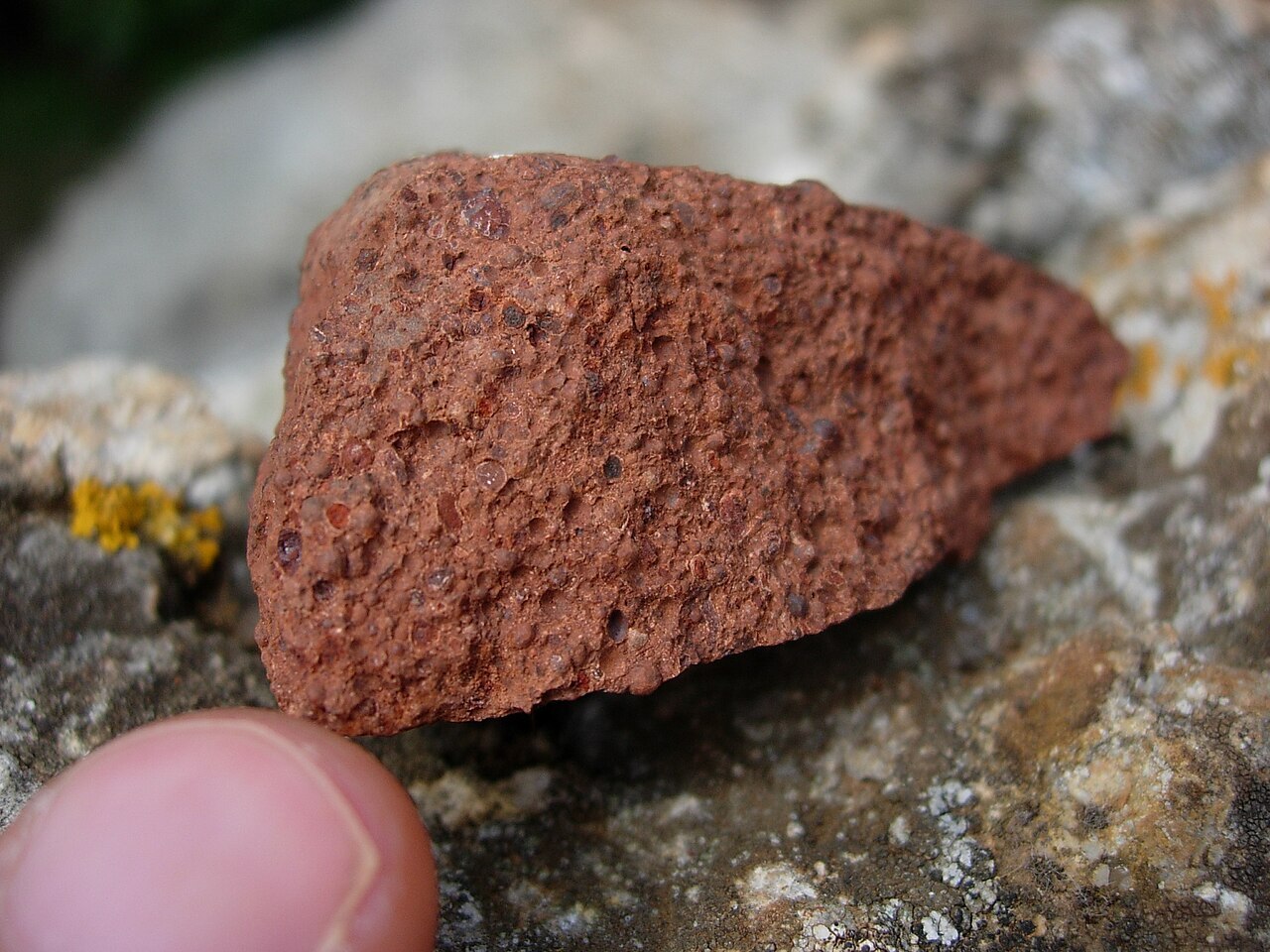
They include the Minim-Martap bauxite project, the Bipindi Grand-Zambi and Kribi-Lobé iron ore developments, the Bidzar marble project and the Colomine gold mine.
The projects represent Cameroon’s biggest attempt yet to convert mineral deposits known for decades into commercially viable operations.
Additional iron ore projects at Mbalam, Nkout and Ngovayang are expected to advance in 2026, alongside the Mborguene and Bibemi gold projects, according to the minister.
Among the most closely watched is Minim-Martap, one of Cameroon’s flagship bauxite developments.
DON'T MISS THIS: Cameroon’s $622 million Kribi oil refinery to begin operations in 2026, two years ahead of schedule
Cameroon signed a mining agreement valued at more than $2 billion for the project in 2024. The agreement covered an initial 20-year operation targeting 99.1 million tonnes of proven high-grade bauxite reserves, with proposed production of about five million tonnes annually.
More recent project information puts the capital required to reach two million tonnes of annual production at about $158 million. Investment could increase to $446 million as capacity expands to 10 million tonnes, with trial mining expected in the third quarter of 2026 and the first shipment targeted for the fourth quarter.
That timeline matters because a project under construction or commissioning does not immediately produce the taxes, royalties and export earnings expected from a fully operational mine.
Cameroon is trying to recover gold that vanished from official records
New mines are only part of the government’s revenue plan.
The more immediate source of additional money could come from tightening control over a gold industry in which the state says most semi-mechanised production had been avoiding official collection systems.
Gentry said between 80% and 90% of gold produced by semi-mechanised operators had escaped state collection before the latest reforms.
That means Cameroon may have been producing significantly more gold than appeared in its official export, tax and royalty figures.
Authorities have since identified more than 200 illegal operators, taken 137 companies to court and withdrawn all semi-mechanised mining permits while companies undergo compliance reviews.
The government expects tax and customs reassessments to recover about $166.5 million (95 billion CFA francs) from 2025 production and another $525.6 million (300 billion CFA francs) from gold produced in 2026.
Together, those recoveries could bring in approximately $692 million (395 billion CFA francs), although the final amount will depend on enforcement and the government’s ability to collect assessed liabilities.
Joint enforcement operations are scheduled to begin on August 1.
The crackdown is financially important, but it could also disrupt thousands of livelihoods connected to artisanal and semi-mechanised mining unless the government creates a workable path for legitimate operators to return to the industry.
![Cameroon has intensified its crackdown on illegal gold operators after authorities said up to 90% of semi-mechanised production had bypassed official collection systems. [Photo by Amy Nip/South China Morning Post via Getty Images]](https://ocdn.eu/pulscms/MDA_/6f60e9cce8c768d007ba494f5758307c.jpg)
Why overtaking oil would be a major economic change
Cameroon is the largest economy in CEMAC, the six-country bloc that also includes Chad, Gabon, Equatorial Guinea, the Central African Republic and the Republic of Congo. The World Bank estimates that Cameroon accounts for more than 40% of the region’s economic output.
Oil has historically provided Cameroon with export earnings, taxes and foreign currency, leaving public finances exposed to declining production and swings in global crude prices.
DON'T MISS THIS: Local miners, investors in Tanzania set to take over mining rights as government revokes 40 exploration licences
World Bank data previously showed that Cameroon generated about 18.4% of fiscal revenue from oil, despite the sector representing only around 2.2% of gross domestic product.
The wider extractive industry, including oil, gas and mining, contributed about 4.9% of GDP, 11.9% of government revenue and 31.3% of exports in 2024, according to figures cited by the US International Trade Administration.
Solid minerals alone remain much smaller. Industry assessments place mining’s contribution at around 1% of Cameroon’s GDP, highlighting the scale of the transformation required for the industry to overtake oil revenue.
Critical minerals could push revenue beyond $3.5 billion
Cameroon’s longer-term ambition stretches beyond gold, bauxite and iron ore.
The government believes developing rare earth elements and other critical minerals could eventually double mining’s annual contribution to approximately $3.5 billion (2 trillion CFA francs).
That would place Cameroon inside a global contest for minerals used in batteries, electronics, defence technology, renewable energy systems and other advanced industries.
But mineral deposits alone do not guarantee revenue.
DON'T MISS THIS: Cameroon introduces stricter gold mining conditions, targets foreign firms in crackdown
Cameroon still faces transport and electricity constraints, lengthy project development periods, regulatory uncertainty and governance concerns. These obstacles have repeatedly delayed projects and prevented its mineral potential from translating into large-scale production.
The government must also decide whether Cameroon will primarily export raw ore or develop local processing industries that create more jobs and retain more value inside the country.
That question is becoming increasingly important across Africa. Mineral-rich countries such as Guinea are pressing investors to build processing facilities rather than shipping unprocessed resources abroad, as governments seek a larger share of the wealth generated by global supply chains.
The $1.75 billion target for Cameroon, is therefore more than a revenue forecast. It is a test of whether CEMAC’s largest economy can convert undeveloped deposits, informal gold production and international investor interest into a credible alternative to oil.