China urges Lesotho to tap into Chinese market
…as Ambassador Xiaokun outlines zero-tariff policy Moroke Sekoboto THE Chinese Ambassador to Lesotho, Yang Xiaokun, has urged Basotho to fully utilise China’s zero-tariff policy, saying it presented new opportunities for enhancing China-Africa economic and trade cooperation. Mr Xiaokun said the world was undergoing profound changes unseen in a century and, amid a turbulent international landscape,... The post China urges Lesotho to tap into Chinese market appeared first on Lesotho Times.
 Black News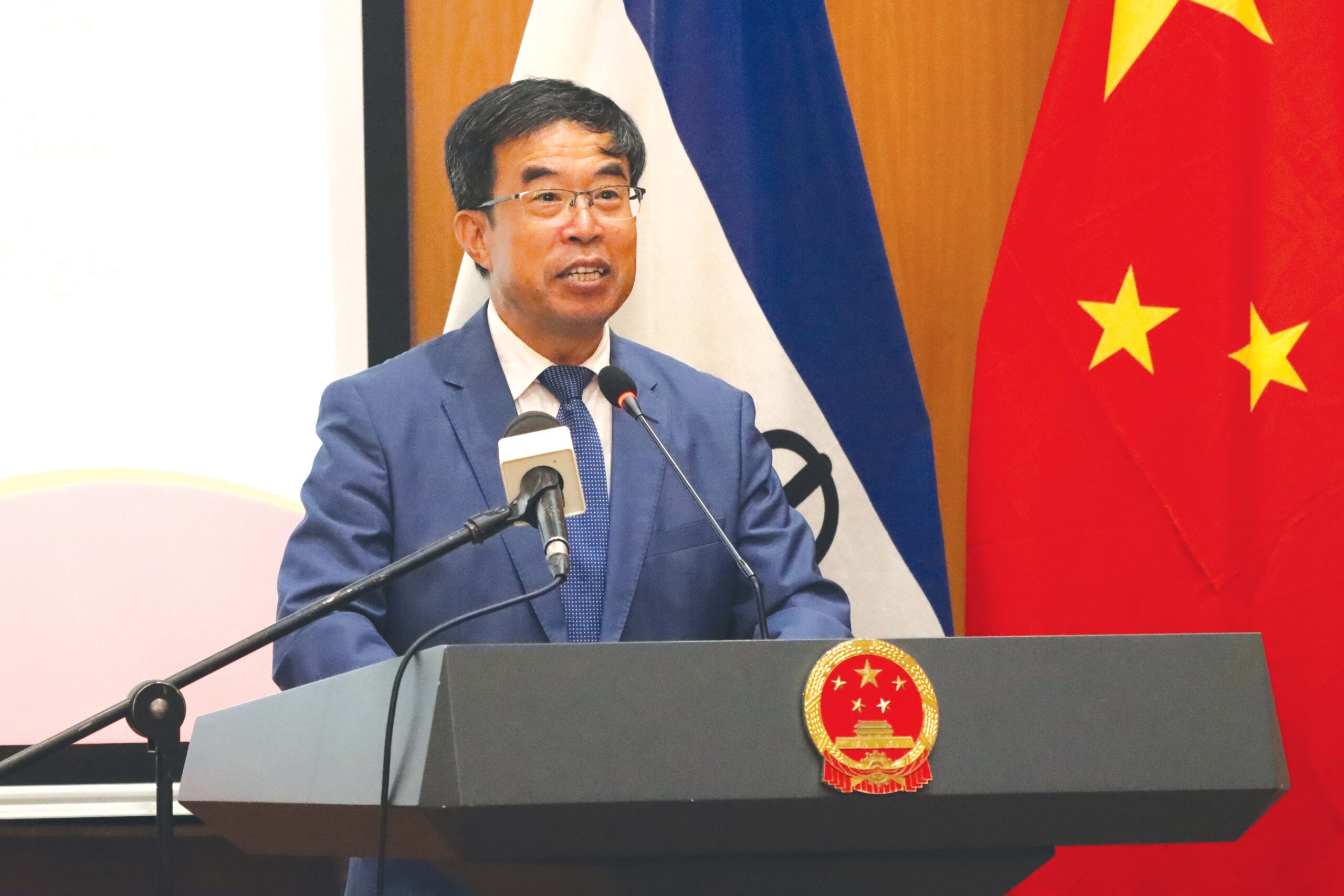
…as Ambassador Xiaokun outlines zero-tariff policy
Moroke Sekoboto
THE Chinese Ambassador to Lesotho, Yang Xiaokun, has urged Basotho to fully utilise China’s zero-tariff policy, saying it presented new opportunities for enhancing China-Africa economic and trade cooperation.
Mr Xiaokun said the world was undergoing profound changes unseen in a century and, amid a turbulent international landscape, China remained committed to safeguarding world peace, advancing common development, and building a shared future for humanity.
Speaking at a zero-tariff reception held at the Chinese Embassy in Maseru this week, Mr Xiaokun said the policy marked a new step in China’s efforts to expand high-standard opening-up and would create fresh opportunities for Africa’s development and China-Africa cooperation.
“The zero-tariff policy is an innovative measure introduced by China in the course of negotiating the Agreement on Economic Partnership for Shared Development with African countries having diplomatic relations with China that are not classified as least developed countries,” Mr Xiaokun said.
“It is intended to address the practical difficulties faced by relevant African countries in concluding negotiations with China within a short period of time. African countries will still need to continue advancing negotiations with China on the agreement in order to secure long-term, stable and institutionalised access to zero-tariff treatment.”
Mr Xiaokun said continued negotiations would ensure that preferential treatment and market access commitments were implemented in line with World Trade Organization rules.
He said the agreement would not only address tariff-related concerns but also respond to African countries’ expectations in areas such as reducing non-tariff barriers, improving trade facilitation and boosting investment.
“It constitutes an important measure to deepen mutually beneficial China-Africa cooperation, inject strong momentum into China-Africa trade and investment cooperation as well as Africa’s economic modernization, and advance the joint building of an all-weather China-Africa community with a shared future for the new era,” he said.
Mr Xiaokun said Lesotho was among the countries that started benefiting from China’s zero-tariff policy at an early stage.
“In recent years, China-Lesotho trade has remained stable at around US$100 million (M1.7 billion) annually. Wool and mohair constitute the major exports of Lesotho to China. There remains enormous room for growth in both trade volume and product diversity between our two countries.
“We are confident that the implementation of the zero-tariff policy in Lesotho will enable more products from Lesotho to enter the Chinese market, thus helping Basotho enterprises grow and thrive through China-Lesotho trade cooperation. More people in Lesotho will benefit from expanded employment opportunities, higher incomes, and improved living standards arising from the development of bilateral trade.”
The Director of Trade in the Ministry of Trade, Industry and Business Development, ‘Malineo Seboholi, welcomed China’s decision to extend zero-tariff treatment to all African countries, describing the initiative as a major opportunity for economic growth, trade expansion, and stronger cooperation between Lesotho and China.
Ms Seboholi said, while Lesotho had previously benefited from preferential market access as a Least Developed Country (LDC), the challenge now was ensuring effective utilisation of the opportunities.
She said Lesotho faced a growing trade deficit, with China ranking among the country’s top import partners while exports to China remained limited.
“Tariff elimination alone will not automatically translate into economic benefits unless Lesotho strengthens its productive capacity and export competitiveness. We need to improve Lesotho’s ability to produce, process, and export value-added products to remain competitive in the Chinese market,” Ms Seboholi said.
She identified several priority areas for cooperation with China, including technical support and capacity building for exporters, investment in agro-processing and manufacturing, improved logistics and trade facilitation systems, as well as skills development and technology transfer.
Minister of Agriculture, Food Security and Nutrition, Selibe Mochoboroane, said agricultural products contributed six percent to Lesotho’s Gross Domestic Product (GDP), with wool and mohair accounting for five percent of that contribution.
Mr Mochoboroane said Lesotho had suffered setbacks in wool and mohair exports due to the Foot and Mouth Disease outbreak.
“Lesotho continues to export these products largely in raw form, exposing the sector to risks such as the recent Foot and Mouth Disease outbreak which disrupted exports. Domestic processing and value addition would help create jobs, retain more value within the country, and strengthen economic resilience,” Mr Mochoboroane said.
He also thanked China for its continued partnership and support, saying the success of the initiative would depend on countries effectively utilising the opportunities and translating them into tangible economic outcomes.
The Revenue Services Lesotho (RSL) Acting Commissioner General, Ninnie Mopeli, said China had remained a strategic partner in supporting economic development, trade facilitation, customs modernisation, and capacity building in Lesotho.
Ms Mopeli said China’s Zero-Tariff Market Access initiative for African countries presented a significant opportunity for Lesotho to diversify exports, enhance industrialisation, and strengthen bilateral trade relations.
She said China implemented zero-tariff treatment on 100 percent of tariff lines for LDCs in Africa from December 2024, with broader expansion to African countries expected in 2026.
“As RSL, we particularly appreciate the support that China has extended in the area of human capital development and customs cooperation. Over the years, several RSL officials have benefited from scholarship programmes, customs training initiatives, technical exchanges, and study opportunities facilitated by Chinese institutions and authorities.
“These capacity-building programmes have contributed immensely towards strengthening technical expertise within RSL, particularly in areas such as customs modernisation, trade facilitation, digital customs systems, rules of origin administration, and income tax and value-added tax technical services,” Ms Mopeli said.
The post China urges Lesotho to tap into Chinese market appeared first on Lesotho Times.