Communities can remove traditional leaders
The Traditional Authorities Act allows for the removal of chiefs or heads of traditional communities from office by community members, provided there is sufficient reason and the process is in accordance with customary law. This is amid voting sessions held by |Khomanin community members to remove their chief, Juliane Gawa-!Nas, and her council for allegedly […] The post Communities can remove traditional leaders appeared first on The Namibian.
 Black News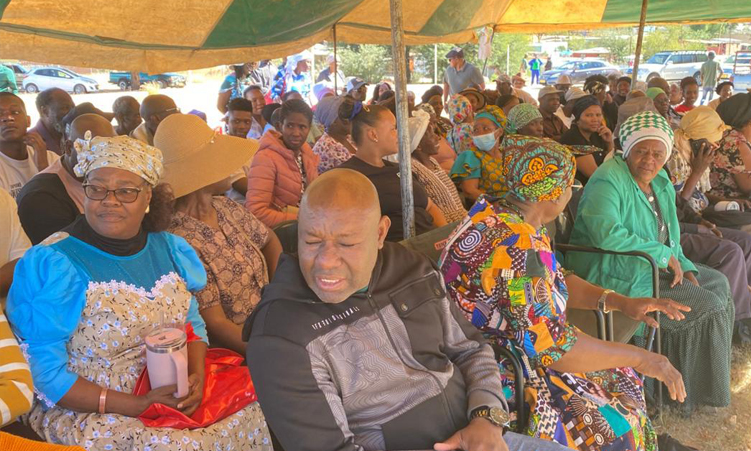
The Traditional Authorities Act allows for the removal of chiefs or heads of traditional communities from office by community members, provided there is sufficient reason and the process is in accordance with customary law.
This is amid voting sessions held by |Khomanin community members to remove their chief, Juliane Gawa-!Nas, and her council for allegedly selling land and keeping donations meant for the community for herself.
This also comes after minister of urban and rural development James Sankwasa last week said traditional leaders can only be removed through processes led by royal families and not by communities alone.
He said chiefs are appointed from royal bloodlines, and are traditionally accountable to royal families.
However, the act states that such chiefs may be removed from office by the members of the traditional community in accordance with the customary law of that community.
It also says the members of a community, authorised by customary law, may designate a member of that traditional community to replace such chief or head.
Advocate for the Uukwambi Legitimate Chieftaincy member Mike Tshilongo argues that the minister’s position contradicts the ministry’s decision to remove chief Sagarias Seibeb of the Dâure Daman Traditional Authority from office last year.
“Today you are telling members of |Khomanin that only a royal family has the authority to remove a chief. These two positions cannot both be true,” he says, questioning the legal basis on which the ministry acted.
“The law does not say ‘royal family’, it says ‘members of the traditional community’. Why, then, are you attempting to narrow the law to a royal family structure when parliament deliberately chose a broader language?”
He says chiefs are accountable to the communities they serve, warning that applying different interpretations of the law in different cases risks undermining public confidence in both government and traditional institutions.
“What section of the Traditional Authorities Act empowered you to remove chief Seibeb, and why does that same principle no longer appear to apply today?” Tshilongo asks.
George Nelulu of the Oukwanyama yesterday said members of the community can remove a chief if they have valid reasons.
Ongandjera Traditional Authority spokesperson Shiimi Shangula says community members can only raise their demands or disputes to the royal family, but are not legally authorised.
Ondonga Traditional Authority secretary Frans Enkali says chieftaincy positions are not elected, but appointed, and the removal of chiefs is done according to what is normally practised in a specific traditional community.
“You cannot just stand up, and say you don’t need the king. If, within a traditional community, a community can remove the chief, they can do that,” he says.
Independent observer Kae Matundu-Tjiparuro says a community has the right to express themselves regarding a chief’s removal.
He says in traditional authorities where a leader is elected, community members have the right to remove the chief they voted for.
The |Khomanin Traditional Authority customary law states that the king/queen position is for a lifetime, but the traditional authority shall, in consultation with the community and on the grounds of his or her poor mental health, remove the king or queen from office.
The law also states that a person born to at least one member of |Khomanin shall be permitted to reside in the area under |Khomanin jurisdiction. However, many |Khomanin people complain of land issues.
Steering committee member Shaun Gariseb yesterday said the final voting session by the |Khomanin community members will be held at farm Versailles on Saturday, with a press conference to be held in Windhoek to determine the chief’s status in the traditional authority.
“The community will have an acting chief once the degazetting is done, and all pockets will propose their choice of leaders after 21 days of degazetting,” he says.
The post Communities can remove traditional leaders appeared first on The Namibian.