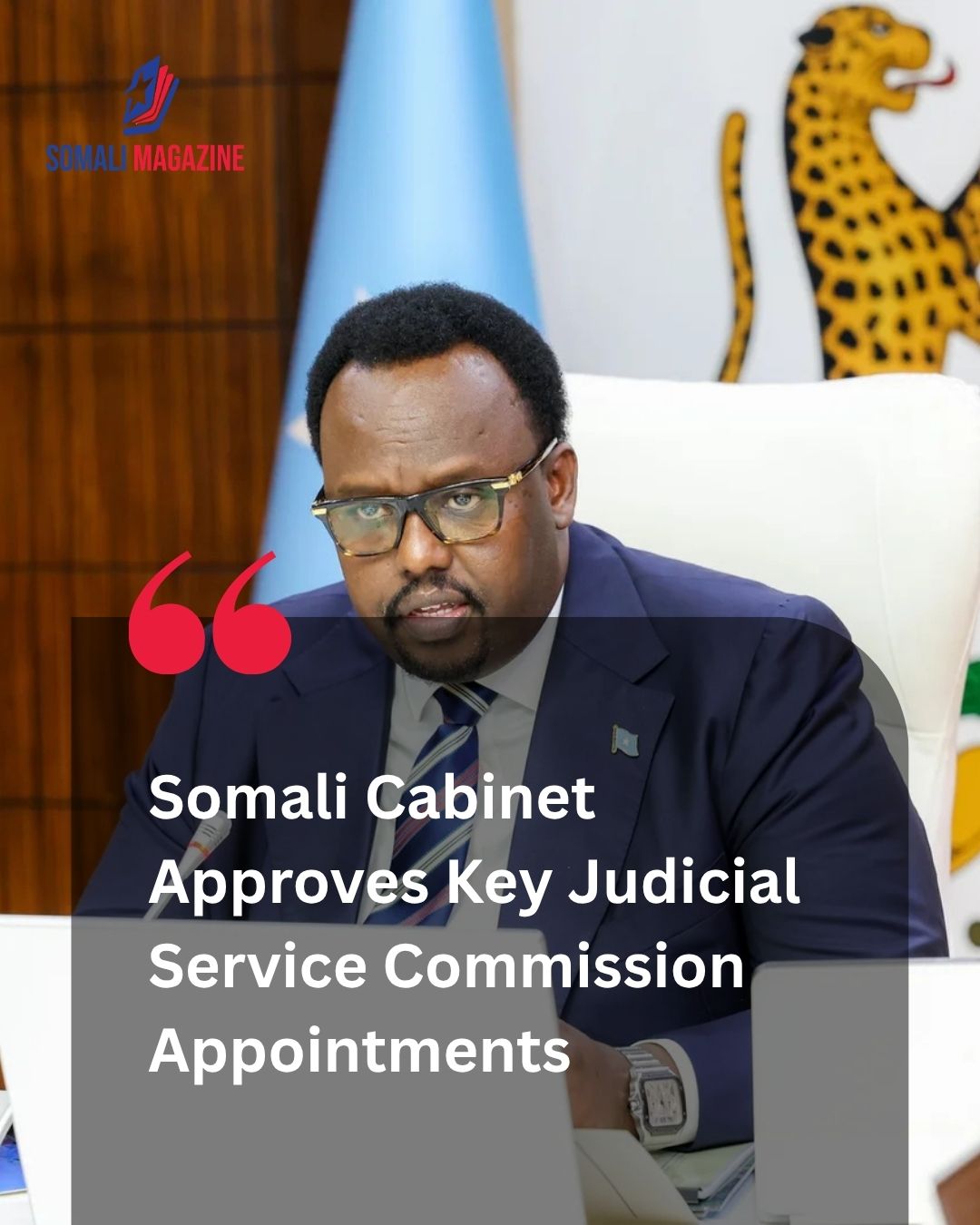
In a pivotal step toward institutional governance and constitutional compliance, the Somali Cabinet approves four members of Judicial Service Commission during its weekly executive session in Mogadishu. Chaired by Deputy Prime Minister Salah Ahmed Jama, the Council of Ministers formally endorsed the nominations submitted by the Ministry of Justice and Constitutional Affairs. The four approved appointees—Mohamed-deeq Macallin Adan, Maryan Sheikh Osman, Abdirisaq Mohamed Ismail, and Abdikadir Ali Macallin—comprise two distinguished senior lawyers and two prominent legal experts. Once their appointments complete the required legal endorsement process through both houses of the Federal Parliament and receive a formal presidential decree, the members will serve five-year terms on the constitutional body responsible for supervising and administering the national judiciary.
The formal approval moves one of the most critical oversight bodies in Somalia’s constitutional architecture from statutory text into practical operation. Under Article 145 of Somalia’s Constitution, the Judicial Service Commission—also referenced as the Supreme Judicial Council—is designed as an independent fifteen-member authority created to safeguard the judicial branch from political interference by the executive and legislative branches. While the four newly appointed members represent the primary presidential and ministerial nominees selected from within the legal community and civil society, the remaining eleven members serve ex-officio by virtue of their state positions. These include the Chief Justice of the Supreme Court, the Chairperson of the Constitutional Court, the Attorney General, the Chairperson of the Independent Human Rights Commission, and the heads of high courts across the Federal Member States and the Banadir Regional Administration.
Minister of Justice and Constitutional Affairs Hassan Moallin Mahamud commended the cabinet’s endorsement, emphasizing that operationalizing the commission establishes a fundamental pillar for judicial independence in Somalia. For decades, legal reform advocates and civil rights organizations have urged federal authorities to fully constitute the commission to institutionalize judicial appointments, manage disciplinary oversight, and replace fragmented court mechanisms with standardized legal frameworks. By embedding the newly established Independent Human Rights Commission directly into judicial oversight, federal leadership aims to protect fair trial guarantees, strengthen legal accountability, and increase public trust in civilian courts across urban and rural districts.
As the Somali Cabinet approves four members of Judicial Service Commission and submits their names to parliament for final ratification, civil society leaders and international legal observers view the move as a major stride toward consolidating democratic institutions and state-building priorities. Establishing a fully functioning judicial commission provides a key legal mechanism for vetting judicial candidates, addressing misconduct allegations, and expanding legal access throughout the country. With cabinet endorsement secured, government officials expressed confidence that parliamentarians will swiftly confirm the appointees, enabling the commission to assume its constitutional mandate and reinforce systemic governance across Somalia’s legal ecosystem.

 Black News