Dangote seeks Ruto, Museveni backing for mega refinery project in East Africa
Africa’s richest man, Aliko Dangote, has unveiled plans to expand his refining footprint into East Africa, proposing a large-scale refinery comparable to his flagship facility in Nigeria, as regional leaders push for greater industrial self-sufficiency.
 Black News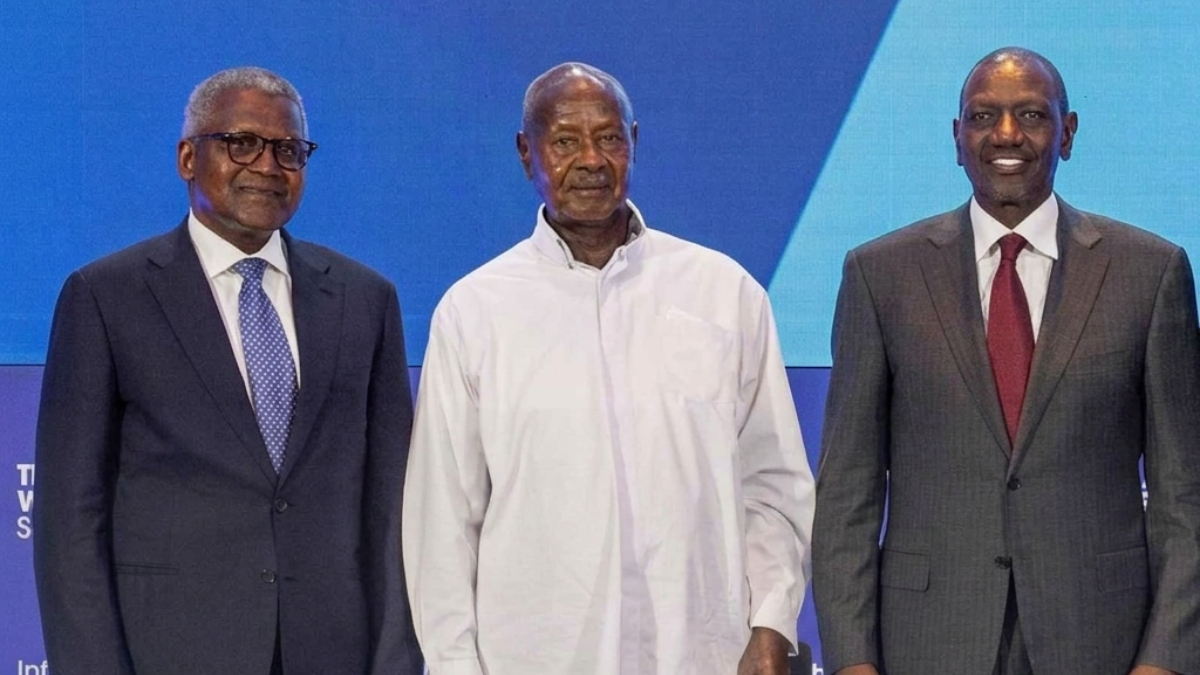

![L-R: Africa's richest man and founder of Dangote Group, Aliko Dangote; President Yoweri Museveni of Uganda and President William Ruto of Kenya. [X, formerly Twitter]](https://ocdn.eu/pulscms/MDA_/74a7191e22623b26a9fcb72202dde074.jpg)
Africa’s richest man, Aliko Dangote, has unveiled plans to expand his refining footprint into East Africa, proposing a large-scale refinery comparable to his flagship facility in Nigeria, as regional leaders push for greater industrial self-sufficiency.
- Africa’s richest man has proposed a 650,000 bpd refinery in East Africa, signalling a major expansion beyond Nigeria.
- The project hinges on policy alignment with regional governments and could reshape fuel supply across multiple countries.
- Leaders, including those of Kenya and Uganda, backed the push for industrialisation and a reduced reliance on raw exports.
- The move builds on the growing influence of the Dangote Refinery in global and regional energy markets.
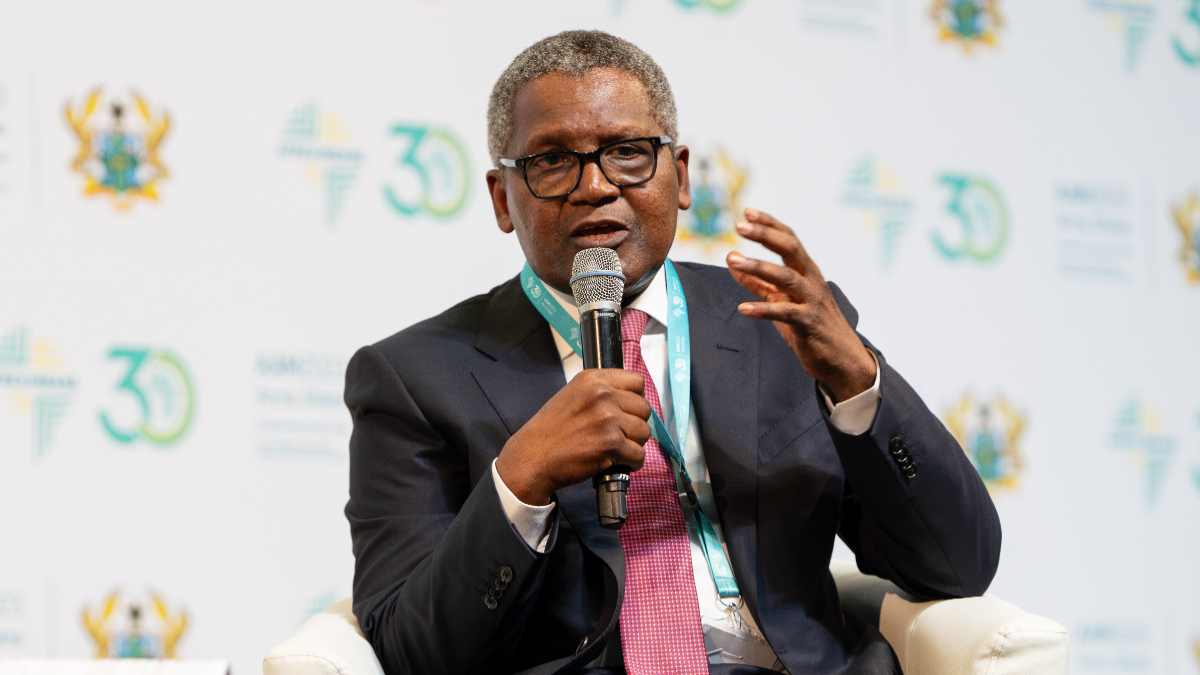
Speaking at the “Africa We Build” summit in Nairobi, Dangote said his group was prepared to construct a 650,000 barrels-per-day refinery in partnership with governments across East Africa, provided there was policy alignment and long-term support. He made the pitch alongside Kenyan President William Ruto and Ugandan President Yoweri Museveni.
“I can give commitment… if they will support the refinery, we’ll build the identical one that we have in Nigeria,” Dangote said, adding that the project could be delivered within four to five years.
The proposed refinery would serve a regional market spanning Kenya, Uganda, Tanzania, South Sudan and the Democratic Republic of Congo, using shared infrastructure to lower costs and improve efficiency. Dangote framed the move as part of a broader effort to reverse Africa’s long-standing reliance on exporting raw materials while importing refined products.
“By exporting raw materials and importing finished products, we are impoverishing our population,” he said, calling for a shift towards domestic processing and industrialisation.
![L-R: Africa's richest man and founder of Dangote Group, Aliko Dangote and President William Ruto of Kenya. [X, formerly Twitter/William Ruto]](https://ocdn.eu/pulscms/MDA_/1c29a8db725dca6a71195ea47b5ec58b.jpg)
The announcement builds on the scale of the Dangote Refinery in Nigeria, a $20 billion facility that has begun reshaping regional fuel markets. Dangote said the refinery is already exporting around 1.1 billion litres of aviation fuel to Europe, underscoring its growing global reach.
Regional leaders echoed his position as Ruto said Africa could no longer afford to export raw materials while importing finished goods, describing the practice as a drain on jobs and economic growth.
“Why would we fail? We have the raw materials, the market, the capital and the industrialists,” he said, noting that discussions were underway on a shared regional refining model.
Museveni was more direct, describing the export of unprocessed resources as “near criminal”, and arguing that African economies lose significant value by failing to industrialise.
Dangote also used the platform to call for stronger intra-African mobility, arguing that visa restrictions were undermining trade.
“With a European passport, you can move faster in Africa than being an African,” he said, urging governments to adopt visa-free policies across the continent.
Beyond the East African expansion, Dangote disclosed plans to invest up to $40 billion across refining, petrochemicals, fertiliser and manufacturing by 2030.
He stressed that consistent government policy would be critical to attracting long-term capital, warning that uncertainty had historically discouraged major investments.
“No investor will come without local leadership and domestic commitment,” he said, adding that African governments and businesses must take greater responsibility for driving development rather than relying on foreign capital.
The backdrop to the announcement is a shifting energy landscape across Africa. New data shows trade between Nigeria and South Africa reached $2.16 billion, driven largely by demand for crude oil and refined products.
South Africa is increasingly positioning Nigeria as a primary fuel supplier, with officials citing the impact of Dangote’s refinery on regional energy security.
At the same time, the refinery has become central to Nigeria’s domestic aviation sector. The Airline Operators of Nigeria say it supplies more than 95 per cent of the country’s jet fuel demand, helping to stabilise operations amid global supply disruptions.
![Catering supply truck supply an passenger jet aircraft at Cape Town International Airport. [Photo by: Education Images/Universal Images Group via Getty Images]](https://ocdn.eu/pulscms/MDA_/54c4099be3410cdb14fc49fb90a769b3.jpg)
However, airline executives have raised concerns about price volatility. Air Peace chief executive Allen Onyema questioned why jet fuel prices had surged by as much as 300 per cent despite steady supply from the refinery, suggesting inefficiencies within the downstream distribution chain.
Industry analysts say the refinery’s export volumes, estimated at 876,000 metric tonnes of jet fuel between March and April, highlight Nigeria’s emerging role in global fuel markets while reinforcing its domestic energy resilience.
At a policy level, the project has been cited as a model for value addition. Officials at Nigeria’s Raw Materials Research and Development Council say the country loses an estimated $29 billion annually by exporting raw materials without processing them locally, a gap large-scale industrial projects could help close.
The proposed East African refinery, if realised, would mark one of the most significant cross-border industrial investments on the continent, with potential implications for trade, energy security and economic integration.
It also reflects a growing consensus among African leaders that industrial capacity, rather than raw resource exports, will determine the region’s long-term economic trajectory.