Everything You Need To Know About Anti-Union “Right-To-Work” Laws
By Economic Policy Institute Photos: Wikimedia Commons Worker interest in unions is at historic highs, and nearly 70% of the public approves of unions. Yet most of the 56 million workers who say they want a union contract can’t get one because of weak federal labor law and the spread of state anti-union “right-to-work” (RTW) laws. Suppression of union membership has in turn lowered workers’ wages and benefits while inequality has skyrocketed. This FAQ examines the meaning, origins, and impact of anti-union RTW laws, and the importance of restoring workers’ collective bargaining power by removing RTW laws and other obstacles to unionization. Key takeaways The label “right to work” is intentionally misleading. RTW laws provide no job protections. What they do is make it harder for workers to form and sustain strong unions. RTW laws are intended to weaken unions. They are linked to lower unionization rates, lower wages and benefits, and worse safety outcomes for all workers. RTW laws have racist, anti-union origins dating to the 1940s. For decades, big business and white supremacist groups promoted RTW laws to diminish workers’ collective bargaining rights and block multiracial organizing. RTW laws don’t boost job growth but do erode job quality and increase inequality. Trends on RTW are reversing. No state has adopted a new RTW law since 2017, and multiple states have repealed or rejected RTW. READ MORE
 Black News

By Economic Policy Institute
Photos: Wikimedia Commons
Worker interest in unions is at historic highs, and nearly 70% of the public approves of unions. Yet most of the 56 million workers who say they want a union contract can’t get one because of weak federal labor law and the spread of state anti-union “right-to-work” (RTW) laws.
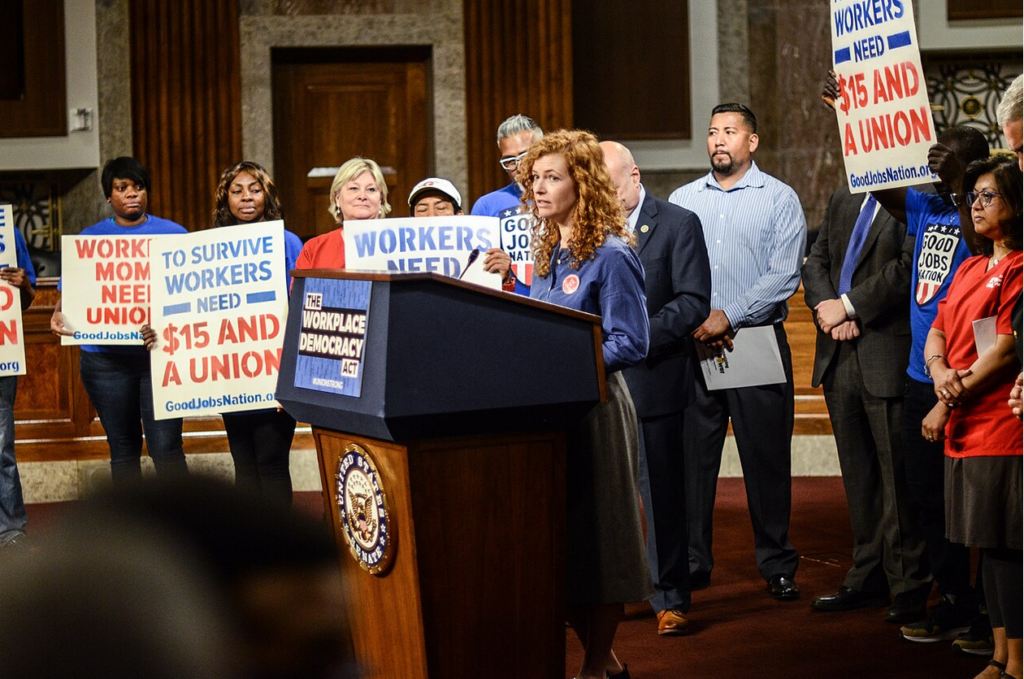
Suppression of union membership has in turn lowered workers’ wages and benefits while inequality has skyrocketed.
This FAQ examines the meaning, origins, and impact of anti-union RTW laws, and the importance of restoring workers’ collective bargaining power by removing RTW laws and other obstacles to unionization.
Key takeaways
- The label “right to work” is intentionally misleading. RTW laws provide no job protections. What they do is make it harder for workers to form and sustain strong unions.
- RTW laws are intended to weaken unions. They are linked to lower unionization rates, lower wages and benefits, and worse safety outcomes for all workers.
- RTW laws have racist, anti-union origins dating to the 1940s. For decades, big business and white supremacist groups promoted RTW laws to diminish workers’ collective bargaining rights and block multiracial organizing.
- RTW laws don’t boost job growth but do erode job quality and increase inequality.
- Trends on RTW are reversing. No state has adopted a new RTW law since 2017, and multiple states have repealed or rejected RTW.