Govt races to evacuate 746 Ugandans as South Africa xenophobic attacks turn deadly
The Ugandan government has activated an emergency evacuation plan for hundreds of its citizens stranded in South Africa after a wave of xenophobic violence claimed the life of one Ugandan and left hundreds fearing for their safety. Acting Minister of Foreign Affairs Haruna Kyeyune Kasolo announced on Sunday that President Yoweri Museveni had directed the […] The post Govt races to evacuate 746 Ugandans as South Africa xenophobic attacks turn deadly appeared first on Daily Star.
 Black News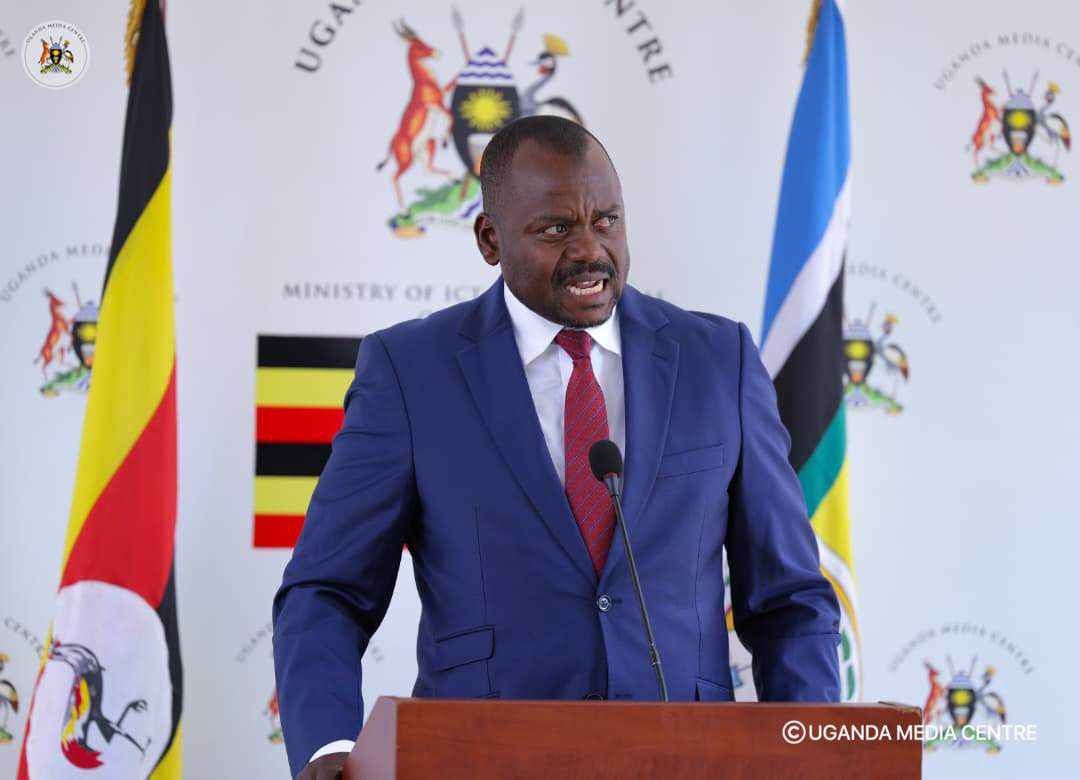
The Ugandan government has activated an emergency evacuation plan for hundreds of its citizens stranded in South Africa after a wave of xenophobic violence claimed the life of one Ugandan and left hundreds fearing for their safety.
Acting Minister of Foreign Affairs Haruna Kyeyune Kasolo announced on Sunday that President Yoweri Museveni had directed the immediate evacuation of Ugandans who wish to return home following months of escalating anti-migrant violence in South Africa.
The government says 746 Ugandans have so far voluntarily registered for evacuation, with officials expecting the number to rise as the security situation deteriorates ahead of a June 30 deadline reportedly issued by vigilante groups demanding that foreign nationals leave the country.
“The Ministry of Foreign Affairs, working in close coordination with the Office of the Prime Minister, the Ministry of Internal Affairs, the Ministry of Works and Transport, the Uganda High Commission in South Africa, and the leadership of the Ugandan community in South Africa, is finalising an evacuation plan that is expected to commence in the next few days,” Kasolo said.
The evacuation operation will be funded by the Ugandan government, with Uganda Airlines expected to provide special charter flights to bring the affected nationals home.
The announcement follows the killing of a Ugandan national in South Africa’s KwaZulu-Natal Province, marking the first confirmed Ugandan casualty since the latest wave of anti-foreigner attacks began.
Uganda’s High Commissioner to South Africa, Ambassador Paul Amoru, identified the deceased as Wilberforce Niwamanya , also known as Joseph Ainebyona , who was working as a motorcycle delivery rider.
According to Amoru, Niwamanya was reportedly attacked by assailants who beat him before stealing the motorcycle he used for work.
“We received with sadness the news of the death of Niwamanya. Reports indicate he was beaten and succumbed to his injuries in KwaZulu-Natal, and his motorcycle was taken away,” Amoru said.
He added that the attack appeared to be linked to threats issued against foreign nationals who had declined to leave South Africa.
Uganda has formally petitioned the South African government to preserve the deceased’s body, apprehend those responsible for the killing and provide a comprehensive police report on the incident.
“We have requested the Government of South Africa to secure and preserve the body, bring to book the culprits who participated in this heinous crime, and ensure police file and share with us a full report on how this case is being managed,” Amoru said.
Government officials say the evacuation exercise has become necessary because many Ugandans are now trapped by both insecurity and immigration challenges.
According to the Foreign Affairs ministry, those seeking assistance fall into three broad categories.
The first group consists of undocumented migrants and those who overstayed their visas and are unable to leave South Africa without facing arrest, fines or imprisonment.
Amoru said Uganda has secured a commitment in principle from the South African government to grant immigration amnesty to affected Ugandans to enable them to leave safely.
“We have submitted the first preliminary list and have received positive engagement from South African Home Affairs and the Border Management Agency regarding this category,” he said.
A second category includes Ugandans who can afford to purchase their own air tickets but require emergency travel documents after losing or lacking valid passports.
The third comprises Ugandans who remain in South Africa but continue to rely on security assurances from the host government as tensions remain high.
The Ugandan mission says South African President Cyril Ramaphosa has publicly condemned the attacks and warned vigilante groups against taking the law into their own hands.
Authorities in South Africa have reportedly increased security deployments after vigilante groups threatened to intensify their actions once the June 30 deadline expires.
The current violence is the latest in a long history of xenophobic attacks that have periodically erupted in South Africa over the past two decades. The latest wave began gathering momentum in mid-April 2026 , when anti-migrant groups launched protests and vigilante campaigns demanding that undocumented foreigners leave the country.
By late April, attacks had spread across Gauteng, KwaZulu-Natal, the Western Cape and the Eastern Cape, with reports of assaults, intimidation, looting of migrant-owned businesses and forced displacement of foreign nationals. A group known as March and March is reported to have spearheaded demonstrations calling for stricter immigration enforcement and later issued a June 30 ultimatum ordering foreigners to leave South Africa.
The unrest intensified throughout May and June, forcing thousands of African migrants to flee their homes and prompting several governments to organise evacuations for their nationals. Human rights organisations say the attacks reflect a broader pattern of anti-foreigner violence linked to unemployment, poverty and competition for economic opportunities. South Africa has witnessed similar outbreaks in 2008 , when more than 60 people were killed, and again in 2015 , 2019 and 2021–2022 , despite repeated government pledges to curb xenophobic violence.
Uganda’s High Commission has already established three assembly centres where evacuees will gather before boarding flights home.
The largest holding centre will be in Gauteng Province, where at least 607 Ugandans have already been registered for evacuation through O.R. Tambo International Airport.
Additional assembly points are being organised in the Western Cape, using Cape Town International Airport, and in KwaZulu-Natal through King Shaka International Airport, where officials are still updating the lists of affected Ugandans.
Kasolo said the evacuation process will involve registration, movement of affected nationals to secure assembly centres, issuance of emergency travel documents where necessary and coordination with South African immigration authorities before departure.
“In collaboration with the Ministry of Works and Transport, arrangements are being made for Uganda Airlines to provide special charter flights for the evacuation exercise. These flights will be funded by the Government of Uganda,” he said.
The government also revealed that some Ugandans had already left South Africa independently following reports of worsening attacks against migrants.
Meanwhile, Kampala says diplomatic engagement with Pretoria will continue to ensure the protection of Ugandans who choose to remain in South Africa despite the volatile environment.
For Uganda, the immediate priority is ensuring the safe return of those seeking evacuation while pursuing justice for Niwamanya, whose death has underscored the growing dangers facing Ugandans living in South Africa.
The post Govt races to evacuate 746 Ugandans as South Africa xenophobic attacks turn deadly appeared first on Daily Star.