Herbert Sim Says Brain-Computer Interfaces Could Become a Defining Technology Race of 2026
As China approves one of the world’s first commercial brain-computer interface implants, the futurist behind Neurochip.com believes BCIs could reshape healthcare, AI, defence technology, and the future of human-machine interaction. For Herbert Sim, widely known as the Bitcoin Man®, the next major technology race will not be fought only over artificial intelligence, chips, robotics, or […] The post Herbert Sim Says Brain-Computer Interfaces Could Become a Defining Technology Race of 2026 appeared first on Time Africa.
 Black News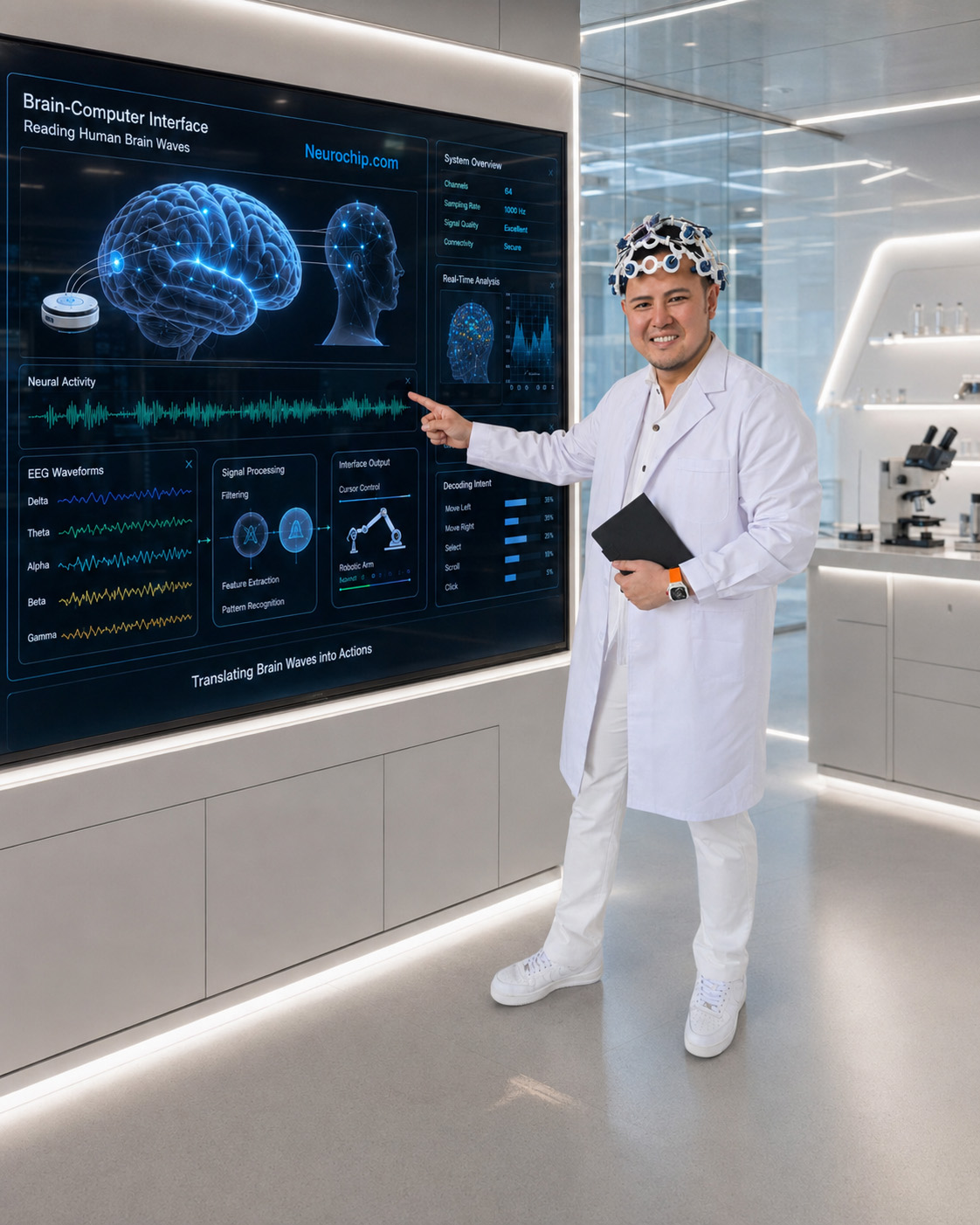
As China approves one of the world’s first commercial brain-computer interface implants, the futurist behind Neurochip.com believes BCIs could reshape healthcare, AI, defence technology, and the future of human-machine interaction.
For Herbert Sim, widely known as the Bitcoin Man®, the next major technology race will not be fought only over artificial intelligence, chips, robotics, or digital finance. It may also be shaped by the way humans connect with machines.
Sim, a futurist investor and longtime observer of transhumanism, believes that before the end of 2026, global attention could shift more sharply toward brain-computer interfaces, or BCIs – systems designed to allow brain signals to communicate with external devices.
In March 2026, China approved its first brain implant for commercial use, developed by Shanghai-based Neuracle Medical Technology for people with spinal cord injuries. The approval marked an important step in moving BCI technology from laboratory research toward real-world medical application.
For Sim, the milestone is significant not only because of what it may mean for patients, but because it signals the beginning of a broader public conversation.
“The first stage of brain-computer interface is medical,” Sim says. “The second stage is productivity. The third stage is national competitiveness.”
Through Neurochip.com, established in 1999, Sim has followed the development of brain-computer interface technology for more than two decades. The domain was established years before today’s wave of high-profile BCI companies brought the field into mainstream public discussion.
From Medical Treatment to Human-Machine Interaction
While several leading companies and research groups are exploring implant-based approaches, Neurochip.com currently focuses on non-invasive methods, particularly wearable BCI helmets. The aim is to make human-machine connection more accessible, scalable, and easier to understand without beginning with surgery.
Sim believes this distinction matters. Invasive implants may offer important therapeutic potential, especially for people with paralysis, spinal cord injury, or severe neurological conditions. But they may also involve medical risk, regulation, cost, surgical complexity, and higher barriers to adoption.
Why Non-Invasive BCIs Could Reach a Wider Market
Non-invasive BCI, by contrast, could become a practical bridge between humans and intelligent machines. It may not match the precision of implanted systems in every medical use case, but it could offer a more accessible path for education, productivity, rehabilitation, gaming, communication, and human-machine training.
The broader vision is to reduce the delay between human intention and machine response.
Today, humans still interact with advanced systems through screens, keyboards, phones, controllers, and voice commands. Yet AI can process information faster than humans can type. Robots, drones, smart devices, autonomous systems, and connected electronics are becoming more capable each year. To Sim, the bottleneck is increasingly the interface itself.
If BCI matures, he believes humans may one day communicate with AI systems, robotics, and electronic devices through neural signals or intention-based controls rather than traditional input devices.
In civilian life, that could transform accessibility, productivity, communication, and learning. A person with limited mobility may be able to control devices more easily. A worker may interact with software more intuitively. A student may use adaptive systems that respond more directly to attention, focus, or cognitive workload. A patient undergoing rehabilitation may receive more personalized feedback from machines.
The Strategic Questions Behind Neurotechnology
In defence and national-security settings, the implications could be more complex. BCI may eventually be studied as part of broader research into faster decision-making, human-machine teaming, drone control, situational awareness, and communication in high-pressure environments.
Sim does not claim that such systems are already fully developed or deployed. His point is that many of the ingredients are advancing at the same time: AI, robotics, neurotechnology, autonomous systems, cybersecurity, data infrastructure, and wearable computing.
When those technologies converge, BCI becomes more than a medical tool. It may also become a strategic interface — one that raises questions about safety, regulation, access, privacy, human autonomy, and the ethical boundaries of machine-assisted decision-making.
That concern sits within the broader transhumanism debate. Transhumanism examines how science and technology may extend, restore, or alter human capability. Supporters often focus on medical restoration, accessibility, longevity, and human-machine collaboration. Critics raise concerns about inequality, surveillance, consent, autonomy, and the possibility that enhancement technologies could deepen social divides.
For Sim, those tensions are precisely why the discussion should move into the public sphere early.
“Crypto changed money,” Sim says. “AI is changing intelligence. Brain-computer interface may change how humans interact with machines.”
Sim first became known through Bitcoin, cryptocurrency, and digital finance before expanding his public work into futurism, AI, music videos, and human enhancement themes. To him, Bitcoin was never only an asset class; it reflected broader ideas about decentralization, individual agency, and the relationship between people and powerful systems.
His interest in future-facing technology goes back decades. Transhumanism.com was established in 1997, Neurochip.com in 1999, GeneticsTechnology.com in 2002, and Extropianism.com in 2002. These long-running domains reflect Sim’s sustained interest in the convergence of transhumanism, neurotechnology, genetics, and human-machine interaction.
In recent years, Sim’s public profile has expanded beyond digital finance. His YouTube channel, @TheBitcoinMan, has also surpassed 10 million subscribers, giving him a broad public platform for content spanning cryptocurrency, futurism, AI-generated music videos, and emerging technology themes. His online presence has increasingly combined crypto culture, futuristic visual storytelling, AI-driven music videos, and commentary on emerging technologies.
His views on technologically enhanced humans have also drawn media attention, especially around the potential divide between those with access to enhancement technologies and those without.
For Sim, that divide is one of the central questions surrounding BCI and human enhancement. If these tools remain expensive, invasive, or restricted to elite institutions, they could widen existing gaps. If they become safe, regulated, affordable, and widely accessible, they could help restore lost abilities, improve communication, and create new forms of human-machine collaboration.
The neurotechnology era, in his view, will not arrive all at once. It will likely arrive first through medicine, then through productivity tools, and eventually through broader debates over education, defence, labour, entertainment, and human identity.
Balancing Innovation With Privacy, Safety and Access
The challenge is not only whether the technology can be built. It is whether society can build the right ethical, legal, and safety frameworks around it.
Brain-computer interfaces could help people move again, communicate again, or interact with machines in ways that once belonged to science fiction. But they also raise difficult questions: Who owns neural data? How should consent be protected? What happens if employers, militaries, or governments seek access to cognitive information? How can society prevent enhancement technologies from becoming available only to the wealthy or powerful?
For Sim, 2026 may be remembered as a year when those questions became harder to ignore.
As BCI moves from research labs into early commercial and medical use, the debate will no longer be limited to scientists, engineers, investors, or futurists. It will increasingly involve doctors, regulators, ethicists, patients, policymakers, defence analysts, educators, and the public.
The next phase of brain-computer interface development may not be defined by a single company, country, or device. It may be defined by how carefully society balances innovation with human dignity, privacy, safety, and access.
If AI is changing how machines think, BCI may change how humans communicate with machines. And as that interface becomes more powerful, the most important question may not be whether humans can connect their brains to technology.
It may be whether they can do so responsibly.
Disclaimer: References to Bitcoin, cryptocurrency, or related projects are for background context only and should not be interpreted as financial advice, investment promotion, or a recommendation to buy, sell, or trade any digital asset.
This article is for informational purposes only and does not substitute for professional medical advice. If you are seeking medical advice, diagnosis or treatment, please consult a medical professional or healthcare provider.
TIME Africa staff were not involved in the creation of this content.
The post Herbert Sim Says Brain-Computer Interfaces Could Become a Defining Technology Race of 2026 appeared first on Time Africa.