Hezbollah Chief says resistance will continue as memorandum faces mounting pressure
Hezbollah Secretary General Sheikh Naim Qasim has declared that the Lebanese resistance movement will not surrender despite mounting military, economic and political pressure, remarks that come amid growing uncertainty over the implementation of the recently signed memorandum of understanding aimed at ending regional hostilities. Speaking in a televised address, Qasim said Lebanon was passing through […] The post Hezbollah Chief says resistance will continue as memorandum faces mounting pressure appeared first on Daily Star.
 Black News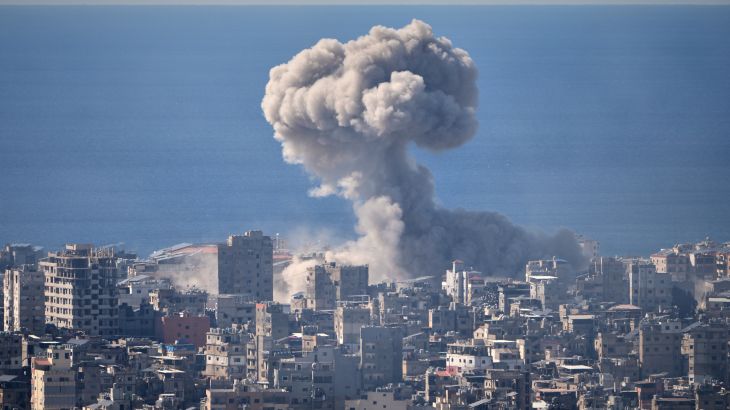
Hezbollah Secretary General Sheikh Naim Qasim has declared that the Lebanese resistance movement will not surrender despite mounting military, economic and political pressure, remarks that come amid growing uncertainty over the implementation of the recently signed memorandum of understanding aimed at ending regional hostilities.
Speaking in a televised address, Qasim said Lebanon was passing through one of the most dangerous periods in its modern history, accusing Israel and its international allies of pursuing a coordinated strategy to eliminate Hezbollah and weaken the broader resistance movement.
His comments come days after Iran accused the United States and Israel of failing to honor commitments contained in the war-ending memorandum, leading Tehran to announce the closure of the Strait of Hormuz and warn of further measures if the agreement continues to be violated.
The memorandum, signed earlier this month following intensive diplomatic negotiations, was intended to establish a framework for ending hostilities across the region. The agreement reportedly included commitments to cease military operations, respect territorial sovereignty, facilitate reconstruction efforts in conflict-affected areas and support the implementation of ceasefire arrangements, particularly in southern Lebanon.
However, implementation of the agreement has been increasingly questioned as allegations of continued Israeli military activity in Lebanon persist.
“As long as we are able to resist, why should we surrender?” Qasim asked during his address. “We are going through the most dangerous phase of our lives in Lebanon.”
The Hezbollah leader claimed that a comprehensive plan was being implemented against the resistance movement, alleging that the objective was to eradicate Hezbollah’s military, political and social presence from Lebanon.
According to Qasim, the campaign extends beyond military operations and includes restrictions on air, sea and land crossings, efforts to block the flow of weapons and technology, and measures aimed at preventing reconstruction in areas devastated by the conflict.
He further accused international actors of imposing a financial blockade intended to weaken the movement and create divisions within Lebanese society.
“The plan aimed to prevent reconstruction so that people would remain displaced and homeless and to turn the environment of resistance against the resistance itself,” he said.
Qasim also alleged that attempts had been made to create tensions between the Lebanese Armed Forces and Hezbollah but said such efforts had failed due to what he described as the awareness of military leaders and officials.
He directed particular criticism toward the United States, accusing Washington of leading what he called a “master plan” against the resistance and mobilizing international and regional support for Israel’s objectives.
Despite the challenges, Qasim insisted Hezbollah had adapted its military strategy and remained united alongside its allies, including the Amal Movement.
“We have adjusted our combat methods and the combat doctrine of the resistance to suit the benefits of our experience and the prevailing circumstances,” he said.
In one of the strongest statements of the speech, Qasim declared that Hezbollah remained committed to what he described as a “Karbala-style decision,” a reference to the historic battle in Islamic tradition symbolizing sacrifice and steadfastness in the face of overwhelming odds.
The Hezbollah chief maintained that efforts to destroy the organization had failed and vowed that Israeli forces would eventually be removed from all occupied Lebanese territory.
Regional analysts say the speech reflects increasing frustration among members of the Iran-aligned resistance axis over what they perceive as shortcomings in the implementation of the memorandum of understanding. The remarks are also likely to intensify concerns about the future of the agreement at a time when diplomatic efforts are focused on preventing a return to full-scale conflict.
With Iran warning that the agreement could collapse if all parties fail to fulfill their obligations, and Hezbollah reaffirming its commitment to armed resistance, the prospects for lasting stability in the region remain uncertain.
The post Hezbollah Chief says resistance will continue as memorandum faces mounting pressure appeared first on Daily Star.