Historic China-Tanzania ties inspire modern cultural, economic cooperation
DAR ES SALAAM: Tanzania is continuing to strengthen its position as a centre of cultural diplomacy, international cooperation and sports development through strategic partnerships that promote peace, dialogue and shared global progress. The country’s growing international influence was highlighted during celebrations of the International Day for Dialogue among Civilizations held in Dar es Salaam recently, … The post Historic China-Tanzania ties inspire modern cultural, economic cooperation first appeared on Daily News. The post Historic China-Tanzania ties inspire modern cultural, economic cooperation appeared first on Daily News.
 Black News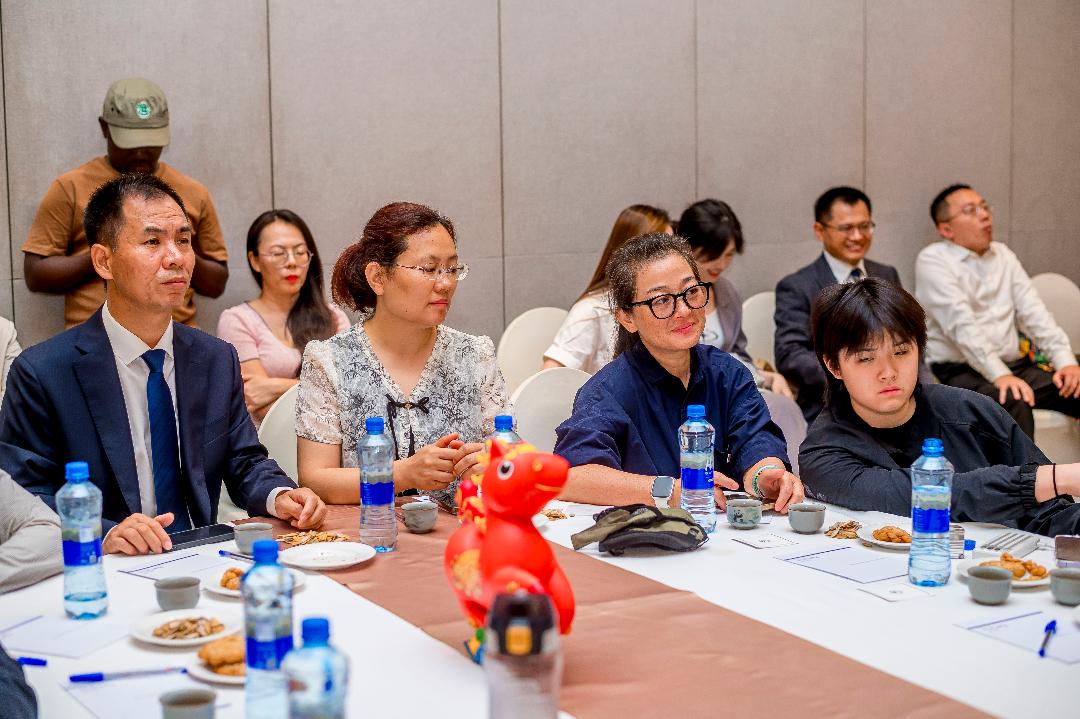
DAR ES SALAAM: Tanzania is continuing to strengthen its position as a centre of cultural diplomacy, international cooperation and sports development through strategic partnerships that promote peace, dialogue and shared global progress.
The country’s growing international influence was highlighted during celebrations of the International Day for Dialogue among Civilizations held in Dar es Salaam recently, where leaders from Tanzania and China reinforced the importance of culture, heritage and people-to-people exchanges in strengthening relations between nations.
The event, organised by the Embassy of the People’s Republic of China under the theme “Maritime Silk Road Impressions: Tea for Harmony” Yaji Cultural Salon, brought together diplomats, government officials, cultural stakeholders to celebrate long-standing friendship and cooperation between Tanzania and China.
Addressing the gathering, Minister for Information, Culture and Sports Paul Makonda said Tanzania values its historic relationship with China, describing it as a partnership built on solidarity, mutual respect and cooperation dating back to the era of the country’s founding father, Mwalimu Julius Kambarage Nyerere, and former Chinese leader Chairman Mao Zedong.
Mr Makonda noted that China played an important role during Africa’s liberation struggles by supporting anti-colonial and anti-apartheid movements across the continent.
In particular, he said the construction of the historic Tanzania-Zambia Railway Authority (TAZARA) remains one of the strongest symbols of friendship and shared commitment between Africa and China.
“The friendship between Tanzania and China is built on a strong historical foundation that continues to grow through cooperation in infrastructure, education, culture, tourism, technology and sports,” Makonda said.
Equally, he added that culture continues to serve as a powerful bridge connecting people and promoting peaceful coexistence among nations through music, art, language, tea culture, dance and other cultural expressions.
According to the minister, Tanzania is now focusing on preserving and promoting the history of African liberation struggles through the planned establishment of the African Liberation Heritage Centre in Kongwa, Dodoma.
The centre is expected to preserve archives, historical records and memories linked to liberation movements across Africa while also serving as a place for commemorating Pan-African solidarity and the sacrifices made by freedom fighters.
Mr Makonda said Tanzania is looking forward to strengthening cooperation with China in areas such as technology, innovation and heritage preservation, noting that China has made remarkable progress in digital archiving systems, museums and cultural preservation technologies.
“We believe there is much Tanzania can learn from China’s experience in preserving civilization and cultural heritage for future generations,” he said.
He also welcomed continued cooperation from China in supporting the development of the African Liberation Heritage Centre, describing the project as part of a shared commitment to preserving the history of liberation, solidarity and human dignity.
Mr Makonda further invited guests to visit the Liberation Heritage Centre located at the former headquarters of the Organisation of African Unity (OAU) Liberation Committee in Dar es Salaam, which remains an important symbol of Africa’s liberation history.
The minister also highlighted Tanzania’s growing role in international sports diplomacy, noting that the country, together with Kenya and Uganda, will co-host the 2027 Africa Cup of Nations (AFCON) tournament.
He described the tournament as a historic milestone because it will mark the first time the continental football competition is jointly hosted by three East African nations.
“This achievement reflects the growing unity, cooperation and shared vision of the East African region,” Makonda said.
He explained that AFCON 2027 will not only celebrate football excellence but will also showcase Africa’s unity, cultural diversity, hospitality and talent to the world.
Preparations for the tournament are already creating opportunities for youth empowerment, tourism growth, infrastructure development, investment and regional integration among the three host nations.
At the same time, Tanzania is preparing to host Miss World 2027, an international event expected to attract participants from more than 120 countries worldwide.
Mr Makonda said the event will provide another major platform to showcase Tanzania’s tourism attractions, culture, hospitality, creativity and youth talent to the international community while strengthening global cultural exchanges.
The minister also highlighted the growing international recognition of Kiswahili, which became the first African language officially recognized by UNESCO through the establishment of World Kiswahili Language Day celebrated every July 7.
He said Kiswahili has become an important tool for promoting African identity, peace, solidarity and dialogue among civilizations.
This year, Tanzania, in collaboration with UNESCO, is coordinating global Kiswahili celebrations in Paris, France, where more than 1,500 participants, including diplomats, scholars, artists, cultural practitioners and development partners, are expected to attend.
Makonda said President Dr Samia Suluhu Hassan will serve as Guest of Honour during the celebrations in recognition of her role in promoting Kiswahili and African cultural diplomacy globally.
“In today’s world, dialogue among civilizations remains essential in promoting peace, mutual respect and cooperation among nations,” he said.
On her part, Chinese Ambassador to Tanzania Chen Mingjian highlighted the deep historical ties between China and Africa through the ancient Maritime Silk Road.
She explained that the Maritime Silk Road served as one of the oldest known maritime routes connecting China with East Africa and other parts of the world for more than 2,000 years.
According to the ambassador, voyages led by Chinese explorer Zheng He during the Ming Dynasty strengthened exchanges between Chinese and East African coastal civilizations, including Tanzania.
She noted that ancient Chinese porcelain fragments discovered in Kilwa, Lindi Region, remain important evidence of historic cultural and trade links between China and East Africa.
“The Maritime Silk Road acted as a blue bond connecting Chinese and African civilizations,” Ambassador Chen said.
She added that many stories of cultural exchange, learning and friendship emerged through these historical interactions, including the famous giraffes brought from Africa to China during Zheng He’s voyages.
Ambassador Chen said China continues promoting dialogue among civilizations through initiatives aimed at encouraging mutual respect, inclusiveness and cultural understanding.
She noted that June 10 marks the International Day for Dialogue among Civilizations established by the United Nations following a resolution proposed by China during the 78th Session of the UN General Assembly in 2024.
According to her, the initiative reflects global aspirations for peace, dialogue and cooperation at a time when the world faces increasing conflicts, uncertainty and geopolitical tensions.
“Dialogue is the only bridge to peace, and mutual learning is the shared key to prosperity,” she said.
The ambassador also noted that 2026 marks both the China-Africa Year of People-to-People Exchanges and the 70th anniversary of diplomatic relations between China and Africa.
She described Tanzania-China people-to-people relations as a cornerstone of the Comprehensive Strategic Cooperative Partnership between the two countries.
Ambassador Chen said bilateral cooperation in education, tourism, think tanks and culture has continued producing positive results, including the growing popularity of Chinese language studies in Tanzania.
She noted that Chinese language programmes have expanded in Tanzania through Confucius Institutes and inclusion in the national education system.
Tourism exchanges have also increased significantly, with Chinese visitors to Tanzania reaching nearly 83,000 in 2025.
Standing at what she described as a new historical starting point, Ambassador Chen said China and Tanzania will continue strengthening cultural dialogue, people-to-people cooperation and mutual learning between civilizations.
She said such cooperation will help deepen friendship between China, Tanzania and Africa while contributing to global peace, development and shared prosperity.
The post Historic China-Tanzania ties inspire modern cultural, economic cooperation first appeared on Daily News.
The post Historic China-Tanzania ties inspire modern cultural, economic cooperation appeared first on Daily News.