How Can I Make Sure My Child Learns Black History If The School Won’t Teach It?
Editorial Plan Article Type: News-informed how-to guide for parents. Image Type: Two original AI-generated editorial images showing fictional Black parents and children learning about history at home and through local sources. Research: Reviewed the supplied Portland, Maine and Santa Barbara reporting, the cited curriculum and ethnic studies research, and Successful Black Parenting’s related articles and […]
 Black News
Editorial Plan
- Article Type: News-informed how-to guide for parents.
- Image Type: Two original AI-generated editorial images showing fictional Black parents and children learning about history at home and through local sources.
- Research: Reviewed the supplied Portland, Maine and Santa Barbara reporting, the cited curriculum and ethnic studies research, and Successful Black Parenting’s related articles and topic guides.
SEO Package
Focus Keyword: Black history curriculum
SEO Title: Black History Curriculum: 7 Powerful Ways to Fill the Gaps
Meta Description: Black history curriculum: 7 practical ways to teach Black history at home, build your child's confidence, and ask school leaders for meaningful lessons. (149 characters)
Slug: black-history-curriculum
Excerpt: A Black history curriculum may be missing from your child’s school, but you can build year-round learning at home and advocate for stronger, joyful teaching.
Secondary Keywords: teach Black history at home, Black history in schools, Black history lessons for kids
SEO Tags: African American history for children, teaching Black history, Black history books for kids, Black history curriculum for schools, Black history at home
SERP Phrases: How can I teach my child Black history if school does not, what should a K-12 Black history curriculum include, how to ask a school about Black history lessons, Black history activities for children at home, why is Black history important in school
Publishing Settings: Byline Janice Robinson-Celeste; Featured; Family Life and Identity and Race; mark as Pillar Content.
Internal Linking Strategy:
- Link the Identity and Race guide where the article discusses identity, belonging, and race-related conversations.
- Link the School and Education guide in the school-advocacy section.
- Link the existing guide to teaching African American history at home for deeper home-learning ideas.
Headline Hook Options:
- How Can I Make Sure My Child Learns Black History If The School Won't Teach It?
- What Can I Do When My Child’s School Leaves Out Black History?
- How to Teach Your Child Black History at Home and Ask for More at School
- How Can Your Child Learn Black History All Year, Not Just in February?
- What Should a Strong Black History Curriculum Include for Every Child?
Image Note: Both images were generated for this article and opened for review. They show fictional people and have no third-party photo credit. Image-license terms are not surfaced by the generation tool, so verify the platform’s applicable terms before publication.
By Janice Robinson-Celeste
A Black history curriculum is making headlines in Maine, but you do not have to wait for your school district to bring your child the full story.
Quick Answer: You can help your child learn Black history by making it part of year-round family life, using books and primary sources, exploring local history, and asking the school for a clear curriculum. Start with one conversation or activity this week, then build a steady routine. Your child deserves history that reflects Black brilliance, creativity, leadership, and joy.
Key Takeaways
- Ask your child’s teacher what Black history is taught in each grade and request a curriculum map.
- Teach history throughout the year, not only during Black History Month.
- Connect national events to local places, family stories, and Black communities.
- Balance honest conversations about racism with stories of Black achievement, joy, and agency.
- Advocate with specific, practical requests for lessons, resources, and teacher support.
What Can You Learn From Portland’s New Black History Curriculum?
Portland’s new program shows how a school district can build Black history into learning across grade levels. Portland Public Schools is launching what WGME reports as Maine’s first comprehensive K–12 Black history curriculum, developed over six years with more than 25 contributors from African American and Black African immigrant communities. Its seventh-grade work connects national history to local places, including a student-led Portland Freedom Trail tour and a visit to the Abyssinian Meetinghouse, one of the oldest Black meeting houses still standing in the United States.
The news also points to a gap: Maine passed LD 1664 in 2021, requiring education about African American history and the history of genocide, but WGME reports the law remains unimplemented in most of the state’s school systems. A district’s stated commitment is a start, but parents can ask what students will actually study, when lessons will begin, and how the district will know they are learning.
How Can You Check What Your Child’s School Teaches?
The best first step is to ask for specifics, not just a Black History Month calendar. You might email the teacher or principal: “What Black history do students study at each grade level, and can you share the curriculum map or required readings?” Ask how lessons include Black history before enslavement, abolition and Reconstruction, the Great Migration, the Civil Rights Movement, local history, and Black contributions in science, art, business, and public life.
These questions matter because a course title or assembly does not guarantee meaningful instruction. A 2014 Southern Poverty Law Center report gave most states a D or F for their approach to teaching the Civil Rights Movement, a related measure of how uneven instruction can be. Keep your tone curious and constructive at first, and write down what the school says so you can follow up.
Why This Matters for Parents of Black Children
A child who sees Black people represented as thinkers, makers, organizers, artists, and leaders can connect more fully with both history and their own possibilities. That matters in the classroom, but it also matters when a child encounters racism or feels that school adults do not understand the impact of a harmful event.
In October 2026, students at San Marcos High School in Santa Barbara led walkouts after white students darkened their faces to recreate an AI meme featuring Black children. The Santa Barbara Independent reported that parents were notified two weeks later and that Black students said they could not trust the district. This incident is a reminder that teaching history and responding to racism go together: children need accurate context, caring adults, and clear school action.
Your child’s history is not an extra chapter. It belongs in the story of our country, our communities, and your child’s future.
Know a parent who needs this? Send it to them.
How Can You Build a Strong Black History Curriculum at Home?
You do not need a teaching degree or hours of free time to make learning meaningful. A short weekly ritual, such as reading a picture book, listening to a family story, or looking closely at a historical photograph, helps your child build knowledge without making history feel like extra homework.
Start with what is close to home. Ask grandparents or other relatives about a family tradition, a first job, a favorite song, or a place that matters. Your child can draw a family tree, mark a meaningful location on a map, or write down a story in their own words. In Successful Black Parenting Magazine’s guide to teaching African American history at home, educator Kimberly A. Morrow describes how family stories helped connect classroom history to lived experience.
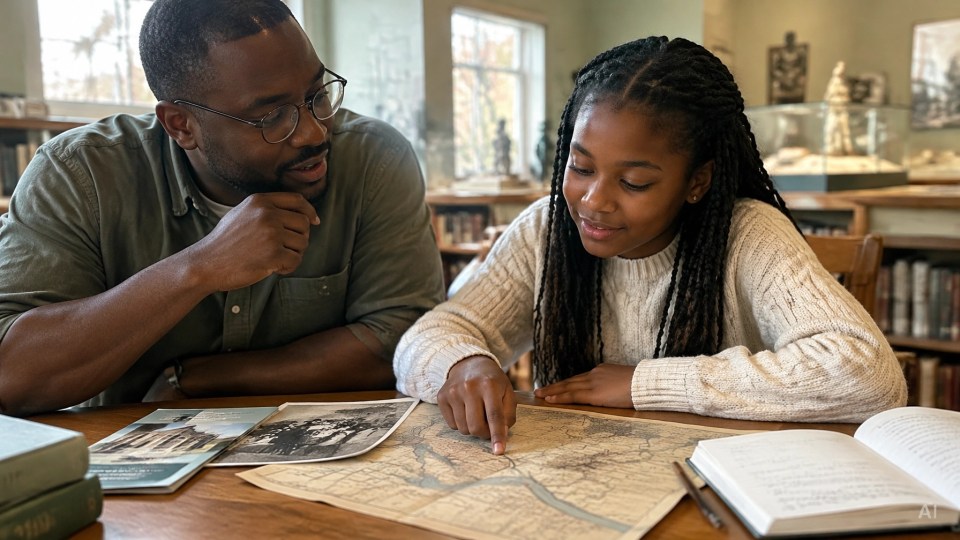
Then widen the lens. Pair a Black author’s book with a museum visit, a local monument, a historical marker, or a conversation with a community elder. Ask simple questions: “Who made this source?” “What do we learn from it?” and “Whose point of view might be missing?” A school-age child can compare two photographs, while a teen might research the history of a neighborhood or local organization. For more ideas about identity and family conversations, visit our Identity and Race guide.
How Can You Advocate for a Better Black History Curriculum at School?
Make your request clear, specific, and focused on your child’s learning. You can ask the school to share grade-by-grade learning goals, use primary sources and Black-authored materials, train teachers, and include local history throughout the year. If other caregivers share your concern, you might bring a short list of questions to a parent meeting or school board session.
There is real context behind today’s curriculum debates. A 2024 policy analysis reviewed 290 state-level bills from 2017 to 2022. The researchers identified 278 bills seeking to restrict discussions of racism or contributions of racial and ethnic groups, compared with 12 legislative efforts to expand inclusive discussion. That history can make educators cautious, so keep your requests grounded in documented history, grade-level standards, and student learning. Our School and Education guide offers more support for working with your child’s school.
The academic evidence is encouraging, too, though it should be read carefully. An NBER working paper studied an ethnic studies course in San Francisco and reported improved attendance, GPA, and credits earned for participating students. The study included 1,405 ninth-graders, but only 6% were Black, so its results should not be treated as Black-specific proof or a guarantee for every course. Still, it offers a useful reason to ask schools to evaluate whether culturally relevant teaching helps students feel engaged and supported.
What Questions Do Parents of Black Children Ask About Black History Curriculum?
What if I did not learn much Black history in school myself? You can learn alongside your child, and you do not need to know every answer before you begin. Choose a reliable book or museum resource together, and treat questions as invitations to discover more.
Should we talk about racism with young children? Yes, in age-appropriate language that is honest and reassuring. Pair difficult history with examples of Black courage, creativity, community care, and change.
Does Black history belong in every grade? Yes, with lessons suited to children’s age and understanding. A strong sequence revisits important themes while expanding the people, places, and ideas students encounter.
What if the school says it cannot teach this history? Ask which specific policy or curriculum rule concerns the school and request the explanation in writing. Then review your district and state guidance and consider raising the question with school leaders or the board.
What is one Black history story, book, or local place you would like to explore with your child? Share your thoughts in the comments.
Follow and share more parenting stories on Instagram, Facebook, YouTube, Pinterest, and TikTok.
Join our free Monday email for helpful stories and family printables.
Photos and some content may be AI generated.