How Morocco became strategic hub in China’s race to dominate green economy
Morocco is emerging as a crucial piece of China’s global green industrial strategy, with Beijing increasingly turning to the North African country to strengthen supply chains, expand clean energy investments, and reduce exposure to geopolitical risks, according to new research from the Stimson Centre.
 Black News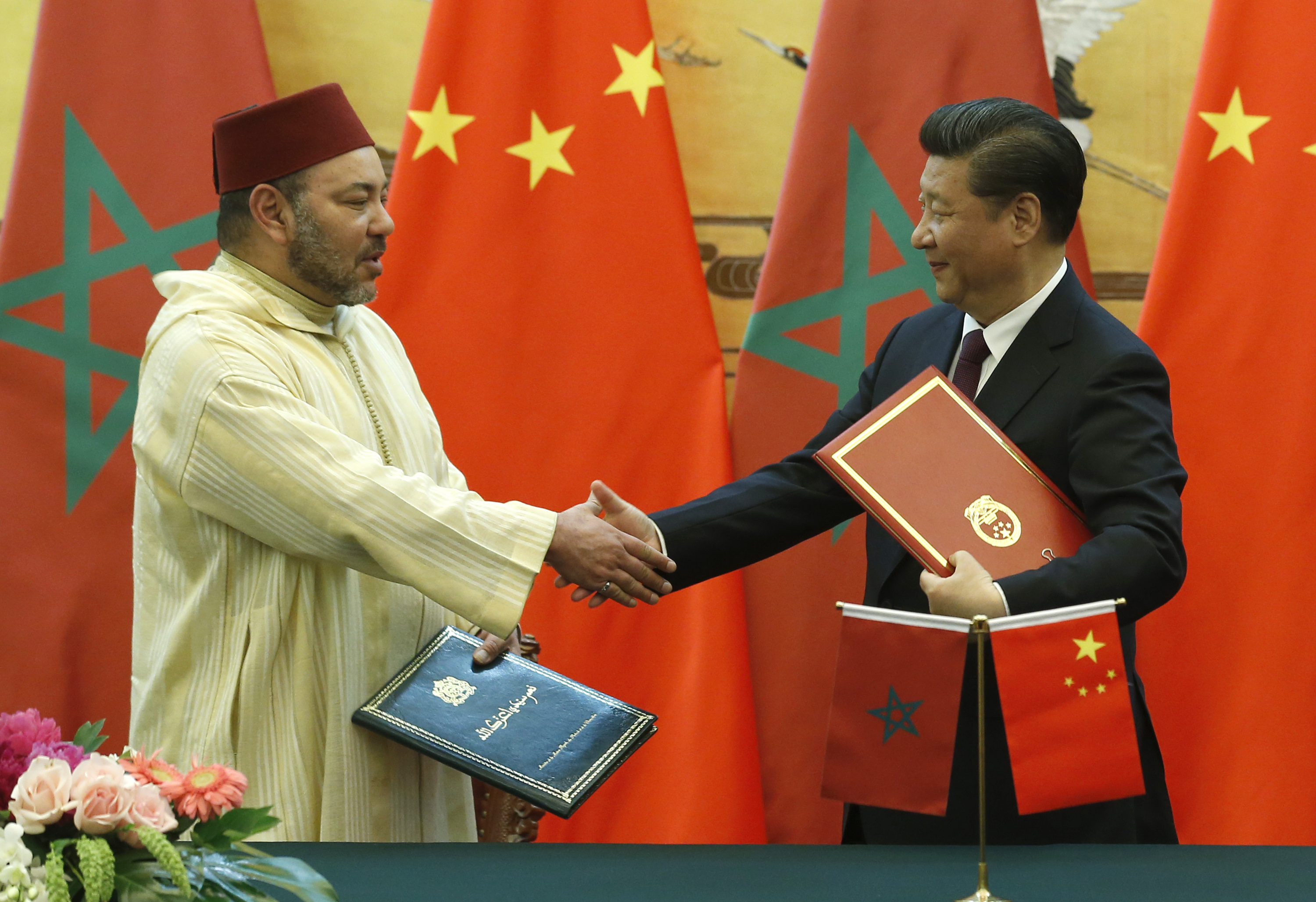
![China's President Xi Jinping (R) and Moroccan King, Mohammed VI, shake hands after signing documents during a signing ceremony at the Great Hall of the People in Beijing on May 11, 2016. [Photo credit should read KIM KYUNG-HOON/AFP via Getty Images]](https://ocdn.eu/pulscms/MDA_/36a7923311c267c4306ea7ddd15e0a61.jpg)
Morocco is emerging as a crucial piece of China’s global green industrial strategy, with Beijing increasingly turning to the North African country to strengthen supply chains, expand clean energy investments, and reduce exposure to geopolitical risks, according to new research from the Stimson Centre.
- Morocco is becoming a strategic hub in China’s global green industrial expansion, according to new research from the Stimson Centre.
- Chinese investment in renewable energy, batteries, and electric vehicle manufacturing has accelerated since Morocco joined the Belt and Road Initiative.
- The partnership is gaining geopolitical significance as conflict in the Middle East prompts businesses to diversify supply chains and reduce exposure to regional disruptions.
- Despite its growing appeal, Morocco still faces energy security and infrastructure challenges that could affect its long-term clean energy ambitions.
The Washington-based think tank said the partnership has taken on greater strategic importance as ongoing conflict in the Middle East forces governments and companies to rethink trade routes, energy security, and manufacturing networks.
China’s growing interest in Morocco reflects a convergence of ambitions. Rabat is seeking to accelerate its renewable energy transition and industrial development, while Beijing is looking for reliable overseas hubs to support its expanding green technology ecosystem.
Since Morocco joined China’s Belt and Road Initiative in 2017, Chinese investment has increased across renewable energy, battery manufacturing, and electric vehicle supply chains. Chinese companies have secured stakes in major projects, including the Noor solar complex in Ouarzazate, while others are establishing manufacturing operations focused on batteries and EV components.
Morocco’s appeal extends beyond clean energy. The country holds some of the world’s largest phosphate reserves, boasts a well-developed automotive sector, and offers direct access to European markets. These advantages have helped attract Chinese firms searching for production bases closer to Europe.
Industrial zones such as Tanger Tech City, located near the Tanger Med port complex, have become focal points for investment. The facilities provide manufacturers with logistics infrastructure and export connectivity at a time when global supply chains are becoming increasingly fragmented.
Yet the relationship also reflects emerging vulnerabilities. Morocco still relies heavily on imported energy, leaving it exposed to fuel price shocks and disruptions affecting regional supply routes. The Stimson Centre noted that while renewable energy capacity is expanding, electricity transmission infrastructure remains a constraint.
For China, however, Morocco represents more than an energy partner. It offers a politically stable platform for green manufacturing, trade, and supply-chain diversification at a time when geopolitical uncertainty is reshaping the global economy.