How One Congolese Immigrant Founded Newsroom is Connecting Maine’s African Communities
How One Congolese Immigrant Founded Newsroom is Connecting Maine’s African Communities
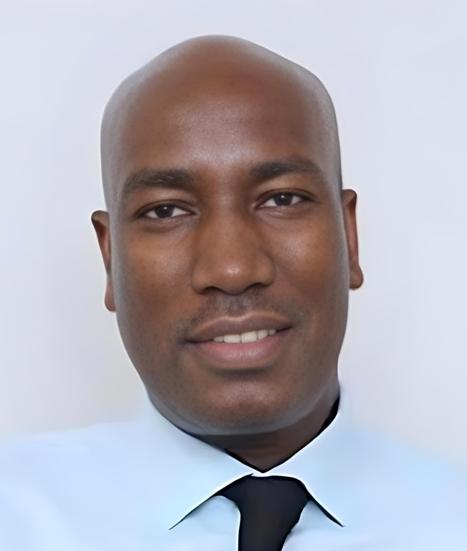
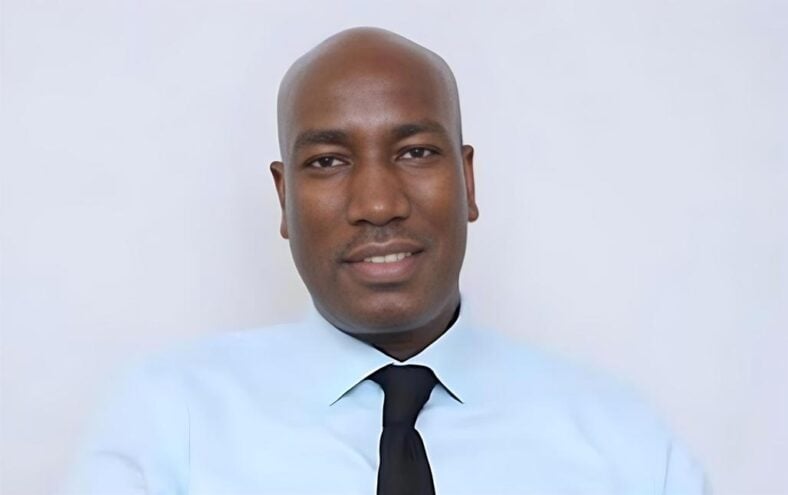
*When Georges Budagu Makoko arrived in Maine in 2002, he spoke five languages. English was not one of them. Finding his way around the Pine Tree State proved incredibly difficult — there was almost no credible information on navigating American life for newly arrived Central and East African asylum seekers. So, he decided to become […]
The post How One Congolese Immigrant Founded Newsroom is Connecting Maine’s African Communities appeared first on EURweb | Black News, Culture, Entertainment & More.
*When Georges Budagu Makoko arrived in Maine in 2002, he spoke five languages. English was not one of them. Finding his way around the Pine Tree State proved incredibly difficult — there was almost no credible information on navigating American life for newly arrived Central and East African asylum seekers. So, he decided to become the change he wanted to see.
As Editor & Publisher recently detailed in their feature, “How one immigrant newsroom is connecting Maine’s communities,” Makoko’s journey from refugee to publisher is a story of perseverance and purpose. A Banyamulenge author who fled the Democratic Republic of Congo after the 1994 genocide against the Tutsi, he took English classes and worked in affordable housing. There, he encountered others escaping the African “Great Lakes” region’s escalating violence.
“In 2007-2008, as the conflict intensified in Congo and Burundi, so many immigrants started coming here,” Makoko told E&P. “They were asking me for information about housing… other information that I didn’t have. It came very clear to me that they were struggling the same way I struggled.”
His vision found an unexpected ally in grade-school teacher Kathleen “Kit” Harrison, whom he met while presenting his book, Ladder to the Moon: A Journey from the Congo to America. She turned out to be the daughter of the late Washington Post foreign correspondent Selig Harrison. After more than a year of brainstorming — and with guidance from Maine publisher Reade Brower — Makoko and Harrison co-founded Amjambo Africa.
The name means “word” in Kinyarwanda and is a Swahili greeting. The first edition launched on April 1, 2018, in four languages: French, Swahili, Kinyarwanda, and English. “I will never forget the feeling that I had when I grabbed the first copy,” Makoko said.
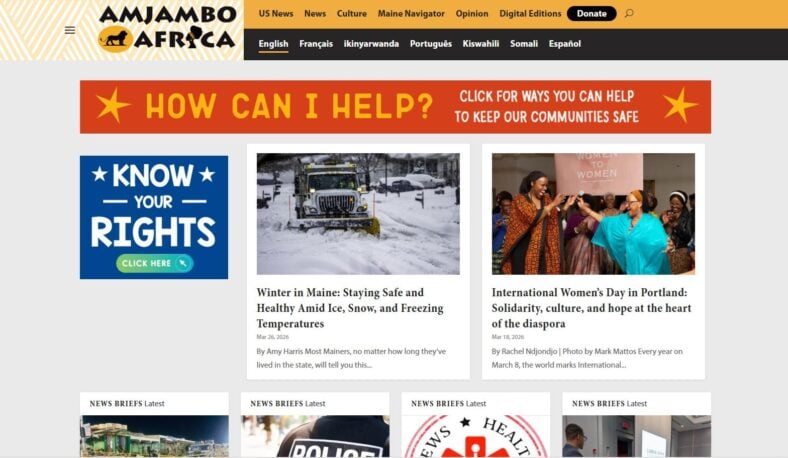
Amjambo Africa – screenshot
The Maine Ingredient: Pragmatism Meets Inclusion
Maine is largely rural, overwhelmingly white, and has the nation’s oldest median age. Supporting immigrants isn’t just altruism — it’s pragmatism. As Makoko noted to E&P, many asylum seekers were doctors, lawyers, and journalists back home.
“They’re young, energized, smart and talented, and seeing that potential now being tapped into for workforce development that we desperately need here in Maine.”
Now in its eighth year, Amjambo Africa calls itself “Maine’s most inclusive newsroom.” It prints in seven languages: French, Swahili, Kinyarwanda, English, Portuguese, Spanish, and Somali, with plans for Arabic. It has reporters across Africa and one in the Netherlands.
Interim Chief Editor Éloge Willy Kaneza, a Burundi-born journalist formerly with the Associated Press and Voice of America, says respect drives the newsroom. “When Kit resigned and I replaced her, I had reporters who are typically English-only, but they never looked down on me as someone whose [first] language is not English.”
Meeting the Moment: Trust in a Time of Fear
Amjambo Africa has become indispensable amid ramped-up federal immigration enforcement under the Trump administration. When raids dubbed “Operation Catch of the Day” hit Maine communities, the publication offered a different perspective from the Fox News narrative.
“We’ve been able to do some stories that maybe could not be done by other outlets because of who we are,” Kaneza told E&P. “People didn’t fear opening their doors for us, because they see us as their own.”
The newsroom produced a crucial know-your-rights guide with videos in French, Swahili, Kinyarwanda, Spanish, and Lingala, explaining how to handle ICE interactions and obtain legal help. Makoko added that the enforcement efforts are retraumatizing asylum seekers who fled violence: “They’ve seen their lives crushed and now are trying to build a new life here.”
Looking Ahead
As Amjambo Africa transitions with new leadership — including an executive director for its parent nonprofit, Ladder to the Moon Network — Kaneza wants to engage younger readers online. Makoko aims for even greater inclusivity.
“When I see divisions taking root in this country, it concerns me because that’s the root of the conflict that we’ve seen in other countries,” he told E&P. “I always hope that we have a strong justice system, strong economy and strong society that supports one another.”
This article is based on the reporting of Tandy Lau for Editor & Publisher. Read the original feature here.
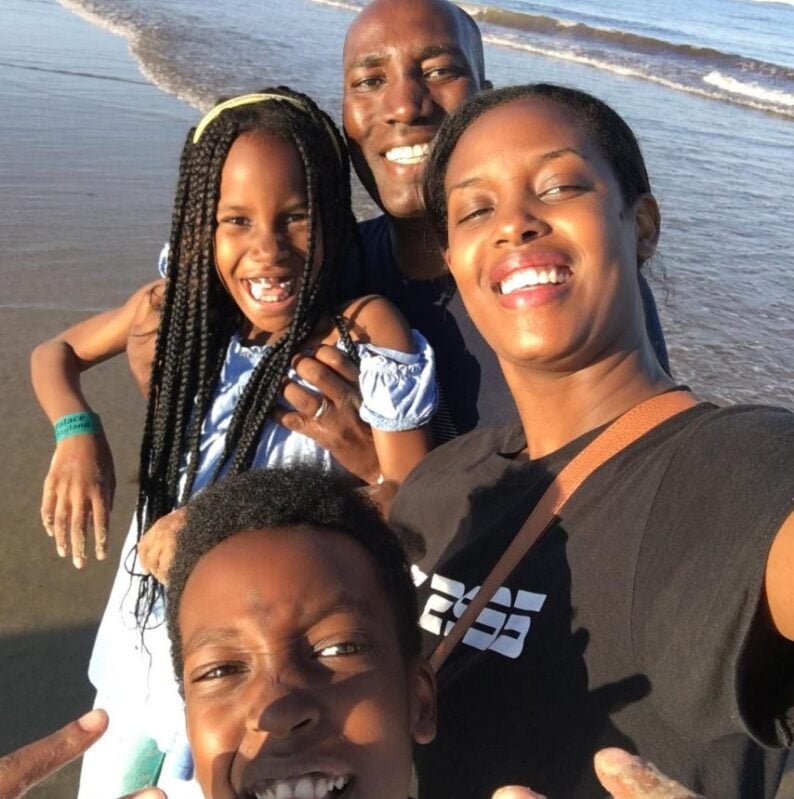
Georges Budagu Makoko and his family – via Instagram
(If You Like/Appreciate This EURweb Story, Please SHARE it!)

 Black News