‘I Will Not Listen!’: Trump Has Others Do the Asking — Then It Completely Blows Up When It Runs Into a Higher Authority Who Shuts It Down On the Spot and Even the White House Has to Step In
President Donald Trump is now deep into a war that is costing him on multiple fronts — from slipping approval ratings to growing fears inside […] ‘I Will Not Listen!’: Trump Has Others Do the Asking — Then It Completely Blows Up When It Runs Into a Higher Authority Who Shuts It Down On the Spot and Even the White House Has to Step In
 Black News


President Donald Trump is now deep into a war that is costing him on multiple fronts — from slipping approval ratings to growing fears inside his own party about what it could mean for upcoming elections.
After a nationally televised address on Wednesday evening that offered few specifics on how the conflict might end, Trump has been leaning on something else to steady the moment.
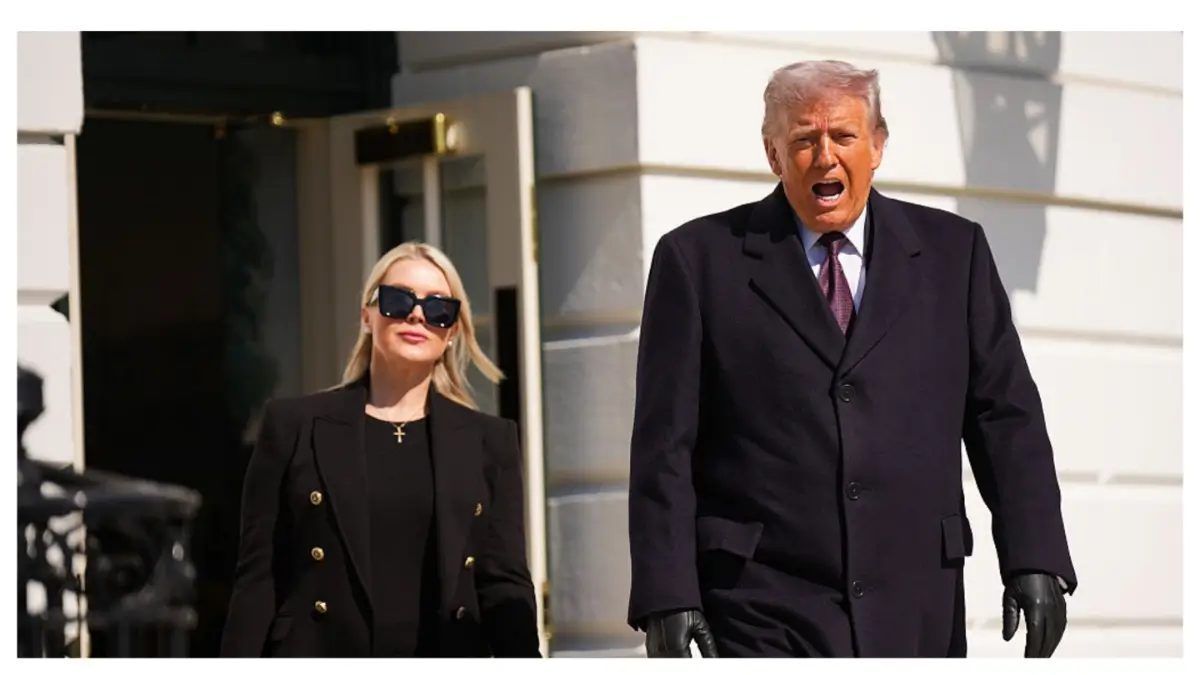
Over the past several weeks, that effort has taken shape not just through policy or messaging, but through a coordinated show of public support from inside his own circle all stepping in to reinforce the mission in their own way.
The push has come dressed in familiar language, but with a sharper edge. A steady stream of appeals, statements and displays meant to frame the war in moral and even divine terms.
That effort has played out across multiple stages.
Back on March 5, a group of evangelical leaders gathered inside the Oval Office, placed hands on Trump, and prayed for protection, guidance and strength as the Iran conflict continued, with one pastor asking for safety for troops and a return to “one nation under God.”
The same dynamic was on display again this week, when White House spiritual adviser Paula White praised Trump during an Easter event, telling him “no one has paid the price like you have” while crediting both God and Trump himself for his return to office.
Last week, Defense Secretary Pete Hegseth leaned into similar language during Christian services at the Pentagon, where he prayed to have “every round find its mark” and called for “overwhelming violence of action against those who deserve no mercy,” while also quoting scripture about being trained for battle.
And then came the moment that drew the most immediate backlash.
White took things a bit further a few days earlier when she went online urging followers to give a tenth of their income, framing it as both a religious obligation and support for humanitarian efforts tied to Israel. Critics saw something else entirely — an escalation of the same message, now tied directly to money.
“Let’s receive God’s tithe in his offering. I believe that it’s so important to honor God with his tithe. That’s the first tenth of your gross income, and an offering that’s free will. And as you do, you support Paula White Ministries, and I say this, it takes money for ministry,” she told followers.
She urged supporters to give right away by clicking the link or sending money through apps like Cash App, Venmo, or PayPal, casting it as an easy, immediate way to back the mission.
White’s appeal quickly became the focal point of criticism, with many accusing her of taking the administration’s messaging a step further than even its own officials had gone.
“Imagine your spiritual adviser telling you to Venmo another country 10% of your paycheck or you’re disobeying God,” one critic wrote on X, setting off a wave of brickbats in the comments.
Another added, “The Pontiff would like a word” with a screenshot of Pope Leo’s words.
But as that push gained traction, it ran into something few inside Trump’s orbit appeared to anticipate. It didn’t just come from critics online or political opponents. It came from one of the most authoritative moral voices possible.
As White’s message spread, so did remarks from Pope Leo XIV, who drew a stark line between faith and warfare.
“Brothers and sisters, this is our God: Jesus, King of Peace, who rejects war, whom no one can use to justify war,” he said. “He does not listen to the prayers of those who wage war, but rejects them.”
He reinforced the point with a warning, “Even though you make many prayers, I will not listen: your hands are full of blood.”
And he underscored the example of Jesus himself, “He did not arm himself, or defend himself, or fight any war.”
What had been presented as a unified message of strength and purpose suddenly collided with a direct and highly visible rebuke — one that reframed the entire effort and undercut the premise behind it.
The White House was forced to respond.
Pressed on the pope’s remarks and the broader use of religious language tied to the war, press secretary Karoline Leavitt defended the administration’s approach.
“Our nation was a nation founded 250 years ago almost on Judeo-Christian values,” she said from the podium.
“And we have seen presidents, the leaders of the department of war, and our troops go to prayer during the most turbulent times in our nation’s history and I don’t think there is anything wrong with our military leaders or with the president calling on the American people to pray for our service members overseas,” she added.
But the response only fueled more criticism.
“Our nation was founded on keeping religion out of the government,” one person wrote.
Another added, “And instead of praying for forgiveness for even thinking about taking the lives of the innocent, they have asked God for strength as they bombard them with missiles.”
“Unbelievable. The Pope warns against praying through war — and they answer with branding, tradition, and stage-managed piety,” another commenter said.
The broader backdrop remains a war that has already killed U.S. troops and thousands across the region, with Pope Leo repeatedly calling the violence “atrocious” and urging an immediate ceasefire.
The religious divide is now out in the open. On one side, public displays of faith wrapped around military power—prayers for protection, victory, and strength. On the other, a direct rebuke from the head of the Catholic Church that such prayers are not just misguided but rejected outright. White’s fundraising appeal has lit another spark, but the debate it ignited has moved well beyond a single video, cutting to the core of how religion is being wielded at the highest levels of power.