IFC signs $40 million EDF solar deal to expand off-grid electricity access across Africa
The International Finance Corporation (IFC), the private-sector lending arm of the World Bank Group, has signed a $40 million convertible loan agreement with EDF Power Solutions to support the expansion of off-grid solar energy across Africa.
 Black News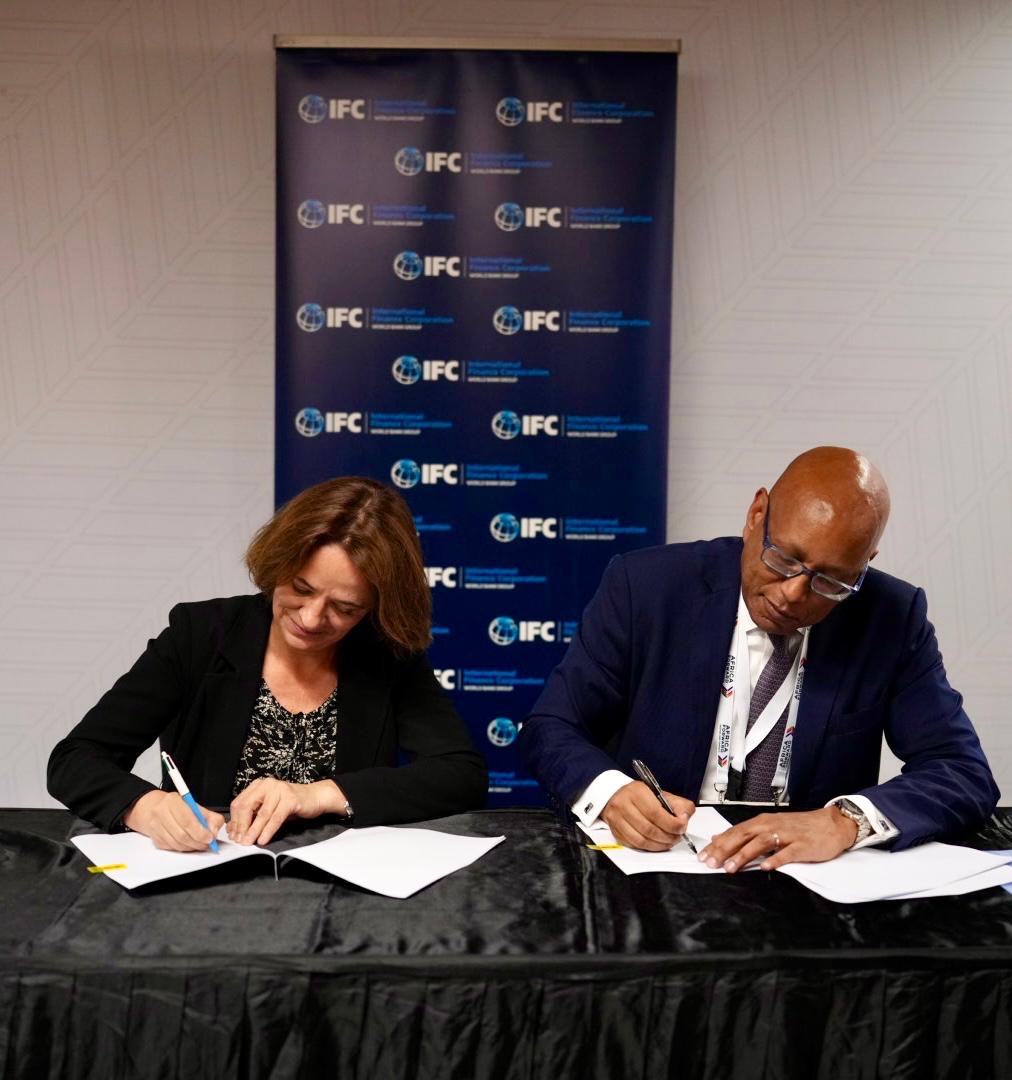

The International Finance Corporation (IFC), the private-sector lending arm of the World Bank Group, has signed a $40 million convertible loan agreement with EDF Power Solutions to support the expansion of off-grid solar energy across Africa.
- IFC and EDF Power Solutions signed a $40 million financing agreement to expand off-grid solar systems in Africa.
- The project will support pay-as-you-go solar kits for households and small businesses in underserved communities.
- The investment aligns with Mission 300, a World Bank and AfDB initiative targeting electricity access for 300 million Africans by 2030.
- Africa’s widening electricity gap is attracting growing investment into solar, mini-grid and decentralized energy projects.
The financing, announced on Tuesday by Ethiopis Tafara, combines IFC funding with capital from private investors to help scale pay-as-you-go solar systems for households and small businesses.
The investment is expected to support wider electricity access in rural and underserved communities where millions of people still lack reliable power.
The deal also aligns with Mission 300, a joint initiative by the World Bank and the African Development Bank aimed at connecting 300 million Africans to electricity by 2030.
Pay-as-you-go solar systems have become one of the fastest-growing energy solutions in Africa. The model allows customers to acquire solar kits through small instalment payments, making electricity more affordable for low-income households and small businesses that are unable to connect to national power grids.
The latest financing comes as Africa continues to face one of the world’s largest electricity access gaps.
According to estimates by the African Development Bank, nearly 600 million people across the continent still lacked access to electricity in 2025, with sub-Saharan Africa accounting for the majority of those affected.
That challenge has accelerated investment in decentralized energy systems such as mini-grids, home solar systems and independent power projects, especially as governments struggle to expand national grid infrastructure fast enough to meet growing demand.
International lenders and development finance institutions have increasingly shifted attention toward renewable energy projects in Africa, partly because of rising energy demand, rapid urbanisation and pressure to reduce dependence on fossil fuels.
Mission 300, one of the continent’s largest electricity access programmes, has continued to attract major financial commitments.
A progress report released in late 2025 showed the initiative had mobilised more than $8.5 billion and secured national energy agreements in 17 African countries.
The EDF financing also forms part of IFC’s broader push into Africa’s clean energy sector.
Earlier this week, the institution disclosed plans to invest up to $40 million in equity financing into the Facility for Energy Inclusion, a pan-African clean energy fund managed by Cygnum Capital.
The fund supports decentralized energy projects across Africa, including mini-grids, solar home systems and small independent power producers, and is expected to grow its assets under management to about $750 million after the new investment.
Analysts say growing private-sector financing will be critical if African countries are to close the continent’s electricity gap, improve energy reliability and support economic growth in both urban and rural areas.