Impact of Pilgrimages on Nigerian Economy
By Moses Chibuike Ezechukwu Pilgrimage in Nigeria is more than a deeply spiritual journey—it is also an economic movement that quietly but significantly shapes local and national markets. Every year, thousands of Nigerian Christians travel to holy sites in Israel, Rome, and other sacred destinations, while Muslim pilgrims journey to Mecca in Saudi Arabia for […]
 Black News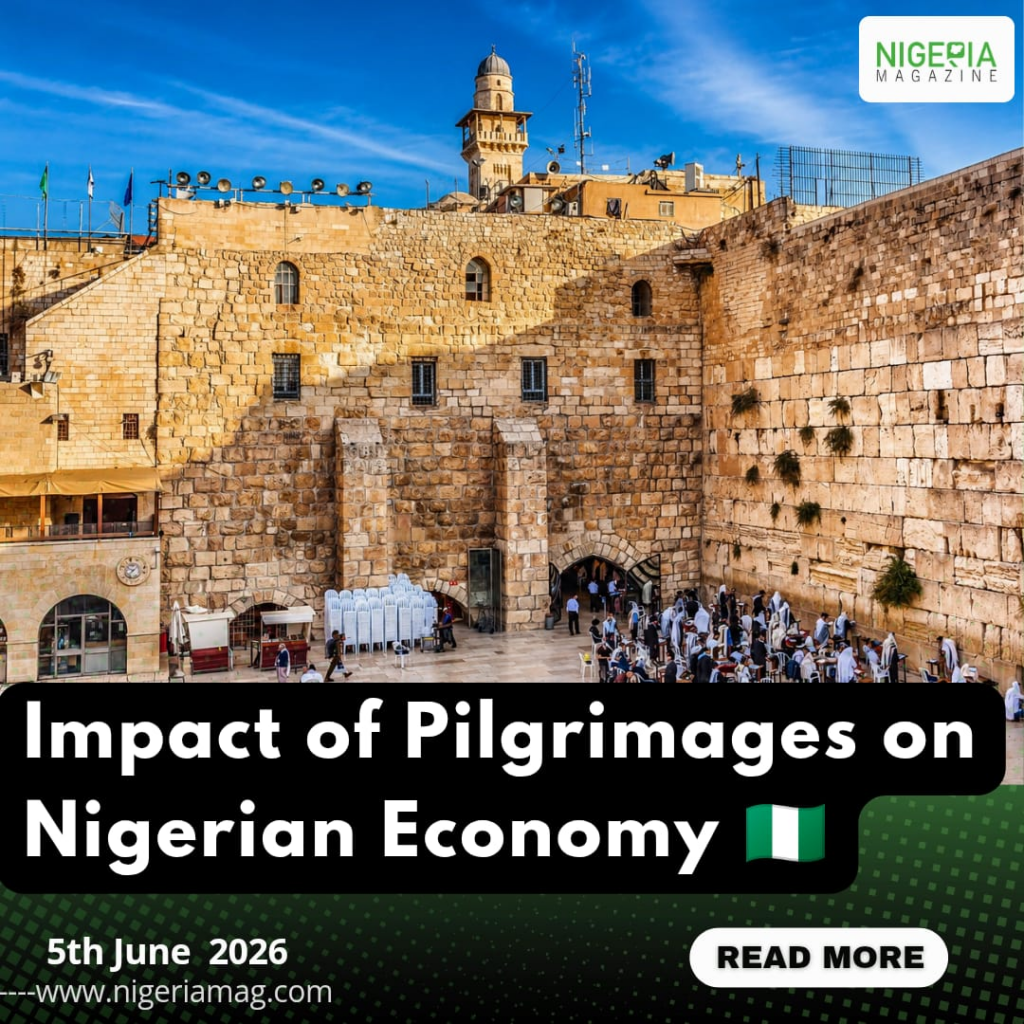
By Moses Chibuike Ezechukwu
Pilgrimage in Nigeria is more than a deeply spiritual journey—it is also an economic movement that quietly but significantly shapes local and national markets. Every year, thousands of Nigerian Christians travel to holy sites in Israel, Rome, and other sacred destinations, while Muslim pilgrims journey to Mecca in Saudi Arabia for Hajj or Umrah. While the focus is usually on the religious fulfillment these journeys bring, the economic ripple effects within Nigeria are both broad and complex.
At its core, pilgrimage involves the movement of people, money, and services across borders. In Nigeria, this movement begins long before departure. Travel agencies, religious boards, airlines, medical centres, banks, and even local tailors all become part of the pilgrimage value chain. This creates a seasonal but intense cycle of economic activity that injects liquidity into various sectors.
One of the most direct impacts is seen in the aviation and travel industry. Airlines experience peak demand during pilgrimage seasons, especially from May to September for Hajj operations. Chartered flights, baggage handling, logistics coordination, and ticket sales generate substantial revenue. Nigerian travel agencies also benefit from handling visa processing, flight bookings, and accommodation arrangements. For many agencies, pilgrimage seasons are among their most profitable periods of the year.
Beyond transportation, pilgrimage also stimulates the financial services sector. Banks play a crucial role in foreign exchange transactions, as pilgrims must convert naira into dollars or Saudi riyals. The Central Bank of Nigeria (CBN) and commercial banks often see increased forex demand during these periods, influencing short-term currency circulation patterns.
This demand can sometimes put pressure on the naira, especially when pilgrimage numbers are high.
Another significant area of impact is healthcare and insurance. Pilgrims are typically required to undergo medical screening before travel. This boosts revenue for diagnostic centres, hospitals, and pharmaceutical companies.
Vaccinations, fitness certification, and travel insurance policies create an additional layer of economic activity. Private clinics, in particular, benefit from increased patronage during pilgrimage preparation seasons.
However, the economic influence of pilgrimage is not limited to formal sectors. Informal markets also experience growth. Tailors, for example, see increased demand for religious garments such as ihram clothing for Muslim pilgrims or customised travel attire for Christian pilgrims. Vendors selling travel bags, prayer items, religious books, and souvenirs also record higher sales during peak pilgrimage periods. This informal economic boost is particularly important in urban centres like Lagos, Kano, and Abuja.
Despite these positive effects, there is an ongoing debate about capital outflow. Critics argue that the funds spent on pilgrimage—airfare, accommodation, and service fees—represent money leaving the Nigerian economy permanently. This is especially significant when thousands of pilgrims travel annually. The concern is that while certain sectors benefit locally, a larger portion of the spending ends up in foreign economies, particularly in Saudi Arabia and Israel.
On the other hand, supporters of pilgrimage argue that the benefits are not solely external. They emphasise the domestic economic circulation that occurs before departure. For instance, pilgrimage boards at both federal and state levels employ administrative staff, logistics coordinators, and support workers. These institutions also contract local service providers, ensuring that part of the pilgrimage budget remains within the country.
There is also a subtle but important impact on tourism-related knowledge transfer. Pilgrims returning from abroad often bring back exposure to different systems of organisation, hospitality, and infrastructure. While not always quantifiable, this exposure can influence expectations and standards in local service delivery industries. Some returning pilgrims also invest in small businesses, using savings or informal networks built during the pilgrimage process.
At the state level, pilgrimage administration can also be a political and economic tool. Governments allocate significant budgets to pilgrimage boards, especially in states with high numbers of applicants. This includes subsidies, administrative funding, and logistical support. While this can ease the financial burden on citizens, it also raises questions about opportunity costs—what alternative public services could be funded with the same resources?
Furthermore, pilgrimage contributes to seasonal employment. Temporary jobs are created in areas such as logistics coordination, transport services, language interpretation, security, and customer support. These jobs, although short-term, provide income opportunities for many Nigerians, particularly youths seeking temporary employment.
The multiplier effect of pilgrimage spending is also visible in hospitality and catering industries. Hotels near pilgrimage offices or departure points experience increased bookings. Restaurants and food vendors cater to families attending send-off events or processing documentation. These activities may not be large-scale individually, but collectively they form a significant economic cluster.
However, inflationary pressure can also emerge. During peak pilgrimage seasons, demand for foreign exchange, travel services, and related goods can lead to temporary price increases. This affects not only pilgrims but also the general public, especially in currency-sensitive markets. Economists often point out that such seasonal demand spikes can contribute to short-term market instability.
In recent years, there has been growing discussion about digitizing pilgrimage processes to improve efficiency and reduce costs. Online registration systems, electronic payment platforms, and centralised databases are being introduced in some states. These reforms aim to reduce corruption, improve transparency, and ensure that more of the pilgrimage-related funds are efficiently managed.
Looking forward, the impact of pilgrimage on Nigeria’s economy will likely continue to evolve. As population growth increases demand for religious travel, and as global travel systems become more digitalized, the structure of pilgrimage-related spending may shift. There is also potential for Nigeria to develop stronger local pilgrimage tourism—such as expanding domestic religious sites—to retain more of the economic benefits within the country.
Ultimately, pilgrimage remains a powerful intersection of faith and finance. While its spiritual significance cannot be quantified, its economic footprint in Nigeria is undeniable. It supports jobs, stimulates industries, and generates both local and international financial flows. At the same time, it raises important questions about economic balance, national priorities, and sustainable financial planning.
As Nigeria continues to navigate its complex economic landscape, pilgrimage will remain one of those unique phenomena where devotion and development quietly meet.