Inside the fallout: The president versus the police chief
• The inside story of a president who lost trust in her security officials• Suspect breaks into VVIP’s house, cooks and claims ownership On 21 April, a man broke into the house of the head of Namibia’s VVIP Protection Unit and was found sitting on the sofa, watching TV and eating chutney sauce. He was […] The post Inside the fallout: The president versus the police chief appeared first on The Namibian.
 Black News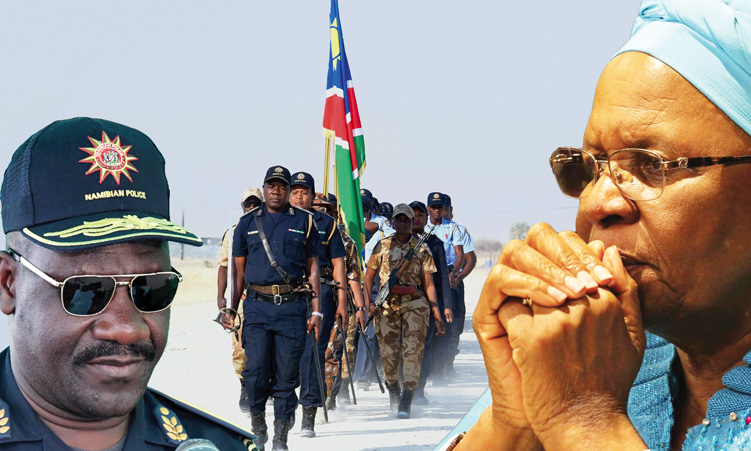
• The inside story of a president who lost trust in her security officials
• Suspect breaks into VVIP’s house, cooks and claims ownership
On 21 April, a man broke into the house of the head of Namibia’s VVIP Protection Unit and was found sitting on the sofa, watching TV and eating chutney sauce.
He was also cooking chicken.
The incident happened shortly after 16h00 when commissioner Michael Abraham, head of the VIP Protection Unit, was alerted by his family that an intruder had entered his house.
Abraham is one of the top police officers tasked with protecting the president.
Police statements seen by The Namibian show that Abraham dashed home to catch the suspect red-handed.
They also state that Saima Haitembu, who stays in Abraham’s house in Windhoek, indicated in a sworn statement to the police that while she was sitting in the kitchen warming her food, she saw the man climbing through the kitchen window.
Fearing for her safety, Haitembu says she grabbed the house keys and ran to her bedroom, wherein she locked herself and called Abraham.“When I came out from my room, I found that the suspect was cooking and was wearing my uncle’s uniform.
He was also watching TV,” she says in the statement.
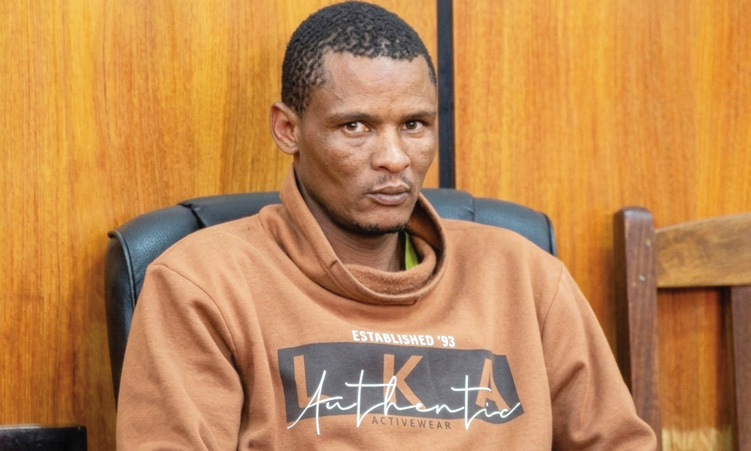
Haitembu, a cadet constable, identified the intruder as Giano Seibeb.
The police eventually took him to the Windhoek police station in town where a case was opened.
After interrogation and the taking of statements, senior officials at the station decided to transfer Seibeb to the Mental Health Centre in Windhoek, near Windhoek Central Hospital.
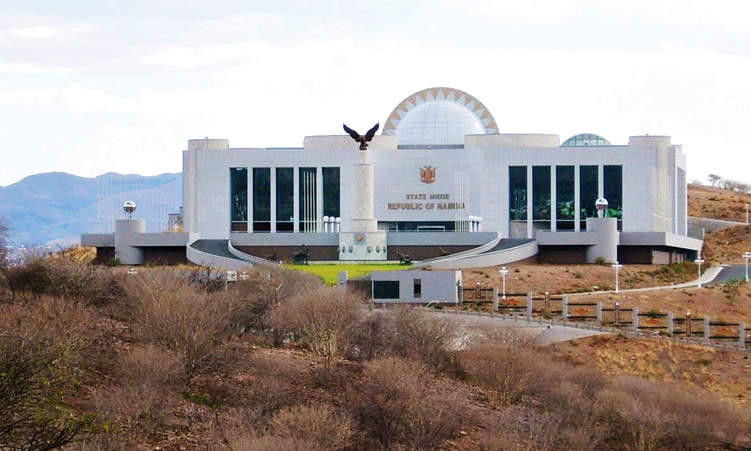
A week later, the same suspect was found naked inside the presidential residence at State House, near the president’s bedroom.
Seibeb appears to have a history of jumping walls. He is said to have jumped the wall of Capricorn Group chief executive David Nuyoma’s home.
Nuyoma confirmed the incident to The Namibian yesterday.
“All I can say is that the same suspect, judging from the pictures in public circulation, jumped the wall of a house in Pioneerspark on 29 April shortly after 19h00.
He was overpowered by my house residents and was taken away by the police.”
SIX DAYS OF FIRE
It appears the suspect was once again released by the police despite two incidents in a space of almost a week after he was reported missing by his family.
Shortly after 15h00 on 30 April, a man allegedly jumped the wall into State House.
Closed-circuit television footage did not capture how he entered, but one camera angle shows him walking towards the president’s guest house.
Cameras are said to show two police booths close to the point of entry.
One was empty – the officer had left his post. The second booth had an officer on duty but appeared to have a blind spot and failed to see the suspect stroll pass.
The intruder is allegedly seen on camera opening the door to the residence, walking in, coming back out, and going in again.
Inside, he left his clothes on the second floor. He then went to the floor that is close to the president’s bedroom.
He was caught by one of the president’s relatives.
When confronted, the suspect reportedly asked one of the president’s sons: “Are you the president’s son?”
While the suspect was being interrogated, senior police officials were making calls, strategising how to inform the president.
It was agreed that inspector general Joseph Shikongo would call to brief her.
Sources say someone in the family got to her first before Shikongo.
President Netumbo Nandi-Ndaitwah was in a security briefing at Opuwo in the Kunene region ahead of Workers’ Day celebrations, when she learned of the incident.
The Presidency declined to provide a detailed account of the events, fuelling speculation about the full reasons behind Shikongo’s removal.
The Namibian, however, reviewed police reports and interviewed senior officials with direct knowledge of the events.
They requested anonymity to discuss confidential matters.
Their accounts paint a pattern of infighting, mistrust and growing concerns that the president is fuelling factional battles in the police, while targeting officials who served under her predecessors.
OSHAKATI MEETING
Having heard what happened in Windhoek, the president summoned her top security officials to a meeting at Oshakati last Friday.
Those present included Shikongo, Namibian Defence Force chief Martin Pinehas, Namibia Central Intelligence Service director general Sinsy Nghipandua, defence and veterans affairs minister Frans Kapofi and home affairs, immigration, safety and security minister Lucia Iipumbu.
During the meeting, the president expressed concern about the security breach and threatened to fire Shikongo and Abraham.
In addition to the two, sources briefed on the meeting say the president also had reservations about former presidential security chief Andreas Nelumbu.
The same source says at that point, the president’s decision was to fire Shikongo outright.
She accused him over what she saw as defiance for not firing officials such as Nelumbu and Abraham.
Shikongo, according to another person briefed on this matter, explained that officers cannot be fired without cause.
It is unclear whether the suspension decision was taken at the meeting itself, but the home affairs minister is understood to have pleaded for Shikongo to stay.
OKANGHUDI
Last Saturday, Nandi-Ndaitwah and former president Nangolo Mbumba travelled to former president Hifikepunye Pohamba’s village for a trip that had been planned months in advance.
Publicly, the president described the visit as a courtesy call to update Pohamba on progress in education and water infrastructure projects across the Ohangwena and Oshikoto regions.
She said the delegation had come to draw from his experience laid by past leaders, and emphasised the importance of national unity and sustained service delivery.
Sources familiar with the meeting say during the talks, Nandi-Ndaitwah told Pohamba she had lost faith in Shikongo and Abraham.
Pohamba is said to have asked why, but she allegedly did not elaborate. The meeting ended and the president left.
Sources claim that Pohamba called Shikongo the next day to find out what had happened. Shikongo allegedly explained the situation and was told that he would be fired.
Pohamba is said to have asked whether the dismissals would happen without due process.
Nandi-Ndaiwah eventually stepped back from firing Shikongo outright.
She opted to replace him with major general Anne-Marie Nainda, who heads administration, bypassing deputy inspector general major general Elias Mutota, who is close to retirement.
THE BEEF
In 2025, Shikongo appointed Nelumbu, a former head of procurement and logistics, as head of presidential security.
The appointment came with a structural problem. Like his predecessors, Nelumbu did not have direct command of the police officers guarding the president.
Those officers reported to the head of the VVIP Protection Unit. Nelumbu could issue commands to them, but they ultimately fell under Abraham’s section.
Nelumbu had reservations about the arrangement and pushed for State House officers to report directly to him rather than through Abraham’s unit. Some of his fellow top cops disagreed.
This disagreement resulted in a stand-off that lasted months, including to date, to an extent that the two officers charged with keeping the president safe were not on speaking terms.
The feud eventually landed on the president’s desk, who then pressed Shikongo repeatedly to sort it out.
At one point she asked him why he assigned the head of presidential security to State House.
She also had separate concerns about Abraham, who was regarded in senior police circles as a “Hage Boy” for serving former president Hage Geingob.
Shikongo started with the move to transfer Nelumbu out of State House last December.
The transfer to Kavango West as regional commander was only finalised two weeks ago.
PURGING GALORE
Nandi-Ndaitwah’s supporters have defended her for taking steps to secure her security and to work with people she trusts.
However, there are concerns that she has been purging police officers who have worked under Geingob.
Most of his presidential security have been shifted from State House, despite requests to first train the incoming security team.
There are also concerns that some State House officers are being promoted at the expense of others with more capacity.
The police hierarchy has long been affected by power struggles and tribal factions. Senior officers are said to gun for each other whenever a new president is elected.
Those hostilities are said to be boiling over, with allegations that State House itself has played a part in fuelling the fights.
The deeper problem, according to sources in the security space, is generational.
A wave of senior officers are approaching retirement at the same time, and the repeated extensions of recent years is said to reflect a skills gap beneath them.
With the police top hierarchy allegedly in turmoil, there is also speculation that the president may strip the Namibian Police of its State House protection mandate and hand it to the military.
In a media statement yesterday, Independent Patriots for Change leader Panduleni Itula urges the president to publicly disclose the recommendations, minutes and attendance record of the security commission meeting.
The Namibian sent questions to Shikongo, Nelumbu, Abraham, Kapofi, Ipumbu, and Pohamba, but no response had been received at the time of publication.
Further questions were also sent to national police spokesperson deputy commissioner Kauna Shikwambi and defence ministry spokesperson Petrus Shilumbu and Public Service Commission chairperson Patrick Nandago and Ministry of Health and Social Services spokesperson Walter Kamaya, but no response had been received by print time.
PRESIDENCY SAYS
Presidential spokesperson Jonas Mbambo has defended the engagements between the president and senior members of the country’s uniformed services, describing them as a normal and necessary part of governance and national security oversight.
Speaking to The Namibian yesterday, Mbambo said meetings between the head of state and senior security officials are conducted at the discretion of the president and are not always open to public communication or media coverage.
“Depending on the nature and sensitivity of the matters being discussed, they are not always for public communication or media coverage,” he said.
Mbambo cautioned against speculation surrounding executive consultations and matters related to national security, saying such issues should be handled responsibly.
He further noted that decisions involving appointments, suspensions, transfers, or dismissals of officials serving at the pleasure or appointment of the president fall within the constitutional authority of the head of state.
“The Presidency, therefore, rejects attempts to politicise or sensationalise routine executive and security engagements, or to attach motives to decisions taken within the lawful exercise of presidential authority,” Mbambo said.
The Presidency also urged the media to continue carrying out its democratic role responsibly by informing the public about the constitutional responsibilities and powers vested in the president.
“We also respectfully encourage the media to continue playing its important democratic role in a manner that helps educate the public on the constitutional responsibilities and powers vested in the Office of the President, rather than contributing to speculation that may create unnecessary public confusion,” he said.
According to Mbambo, the Presidency remains committed to professionalism, constitutional governance, and the rule of law.
“Where matters require formal public communication, the public will be informed through the appropriate official channels,” he added.
The post Inside the fallout: The president versus the police chief appeared first on The Namibian.