Pushing multicultural and immigrant communities to take reconciliation lead
Former Victorian Multicultural Commissioner Shankar Kasynathan speaks out about the role that multicultural and immigrant communities can play in the reconciliation field The post Pushing multicultural and immigrant communities to take reconciliation lead appeared first on Victorian Aboriginal News.
 Black News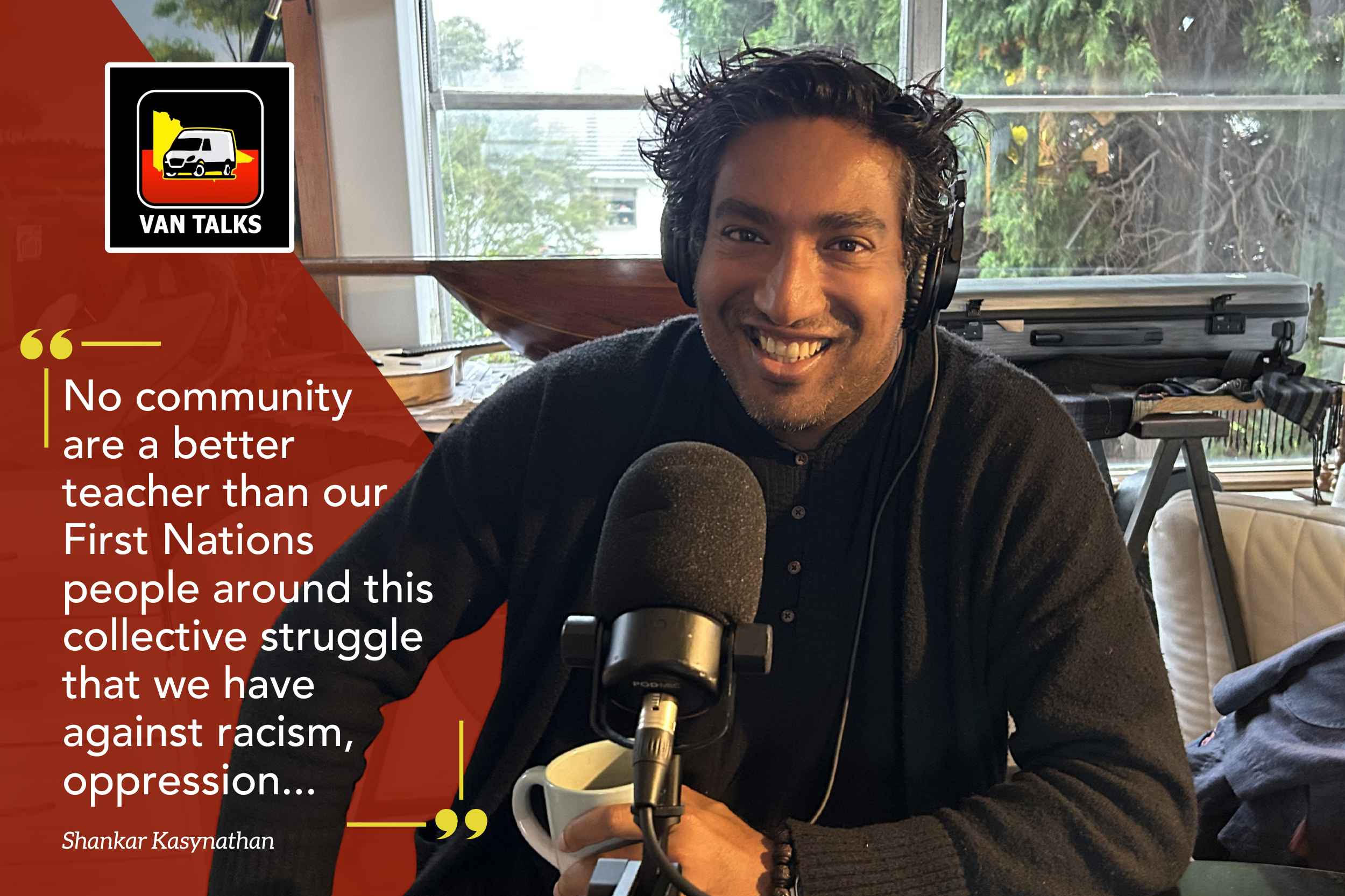
Charles Pakana: Joining me today on the program is a former refugee from Sri Lanka, former Victorian Multicultural Commissioner and an advocate who has worked extensively with First Nations community. His name, Shankar Kasynathan. Shankar, thanks for joining me on the program today.
Shankar Karsynathan: Thank you, Uncle Charles.
Charles: Shankar, [I] really appreciate the opportunity to have a bit of a yarn, because you, for many years, have been instrumental in bringing immigrants and multicultural societies into the world of reconciliation. What I’d really like to hear about first is what you experienced arriving as a refugee in 1987. And you talk about this as the generosity of neighbourhoods. And how does that personal history of being welcomed influence your perspective on how migrants should, in turn, welcome and acknowledge First Nations people in this country?
Shankar: Thanks, Uncle Charles, for the question and thanks for having me here on your program. I think the first thing that I’d share, and I’ve shared this before when we’ve chatted, is that sense of welcome that my family and I remembered when we first arrived here. My earliest memory that I have is of a old white bloke strapping me into a seatbelt and taking me home. And that action, wanting to keep me safe for the ride home from the airport, is one of the earliest memories that I have. That sense of welcome, the sense of community wrapping around, and then that sort of extended as well. And I want to share that my mum’s brother, an accountant from Sri Lanka, couldn’t find work in his country, but found work in Yirrkala in East Arnhem Land as a finance account manager for the Aboriginal Corporation there, then again in Lake Tyers. And Aboriginal communities, played a critical role in building his confidence up and setting up his career. In my 20s [I] was very lost and unsure of what I wanted to do with my life, going and working at Waringarri Aboriginal Corporation in East Kimberly where I actually worked on Aboriginal radio and built my self confidence too. So in an important sense, First Nations communities right across this country have been so instrumental in our family finding our feet. So community for me is not just the white fella community, but First Nations people have been a part of my family across generations in helping us settle, and that’s been very formative. But I do want to stress that that experience, as well as [the] experience of fleeing Sri Lanka, which was a very racist country, continues to be in many ways ethnically in trouble. And those experiences give me the sense that migrants and refugees have experienced racism and conflict between communities, and that doesn’t go away here. Those biases, those unconscious biases and prejudice is something that we do carry with us, and that’s part of the process, I think, when we talk about a thing like reconciliation, when we talk about welcome, when we talk about settling here in this place that is the continuing colony that is Australia, these are things that I think about.
Charles: So how then do we address that particular issue when it comes to involving immigrants and the multicultural community in reconciliation? As you’ve mentioned, and you mentioned previously in conversations we’ve had, that within so many of those multicultural communities there are existing problems. I mean, it’s almost as if many of them need to have Treaty within themselves before they can start working with First Nations and reconciliation. What are the challenges? And how do we address those challenges?
Shankar: Reconciliation, and the pursuit of reconciliation, truth, justice; these are terms and words which speak directly to the lived experience of many diaspora populations. They come to this country, to the shores of this country, armed with that sense of the pursuit of fractured communities, trying to better understand each other. And I think that continues and in an important sense here in Australia. Of course, there are many material needs for migrants and refugees when we come here; needing to find a home, needing to find a job, needing to be able to find a place that we can feel safe and comfortable. But part of that process isn’t necessarily unpacking the bias, the prejudice that we come, that we’re fed from all the other means that much of Australia is fed, the nonsense news, the fake news, the social media and all those things we’re subject to that in the background, the noise in the background. I think that part of the work that I’ve committed to, and a number of us have committed to, is in and amidst settling in this country, in and amidst resettling here and finding home here, is how do we grapple with knowledge? How do we grapple with, and embrace, truth? How do we get a sense of, what does it mean to be settling and creating life on a land that is not at peace? On a land where there are ghosts and memories and stories that we can relate to, many of us who’ve come searching safety in this place, but we’ve also found our safety and our homes on a land that hasn’t been reconciled.
Charles: You also mentioned before when we had a pre-interview yarn about so much similarity with immigrants coming over to Australia and finding themselves almost swapping one colonial system for yet another colonial system. How is that challenge of addressing that, how does that fit in with working towards reconciliation and partnering with First Nations people?
Shankar: Lilla Watson, a Murri woman from Queensland, once said, “If you’ve come here to support me, you’re wasting your time. But if you’ve come here because your liberation is tied up with my liberation, then let’s work together.”
Charles: Oh, wow.
Shankar: And that’s a sentiment that I think about every single day on the road to reconciliation.
Charles: Let’s unpack that for a bit. What does that actually mean to you and the people that you speak with and work with in these communities?
Shankar: Migrants and refugees, by and large, will feel that they have enormous gratitude to being here in Australia and they’ll understand their lives as being successful in many ways. But unpacking what success means and gratitude means, means that we’re not dead, that we’re not destitute, in fear of persecution, and that’s the baseline. But then after that, we’ve been, what? Lucky to get jobs that we deserve with the skills and experience that we have? That we get a roof over our heads? I think in many ways, migrants and refugees have come to Australia and fought very hard for many of the opportunities that they have got. You see many people who are working in roles and positions which are significantly below their expertise and qualification. And I think that there is a sense of the continued colonial project, where they’ve come here and they’re grateful, you know, quote, grateful. And I think that one of the things that we try to do is actually… your sense of gratitude is within this context, that somebody has power, you don’t, and you get [to] have some of it if you get a job and move up in your career. But ultimately your career, your experience of living here, your sense of belonging, is ultimately shaped by what is still this colonial project that is Australia.
Charles: It seems to me that what you’re skirting around is almost a sense of forced assimilation, that immigrants are expected to conform 100%. And we’ve seen this recently in some conservative politicians coming out and saying, “If you don’t adhere and meet our values, then we’ll deport you.” Now, that’s obviously a fairly extreme thing, but do you see that, that forced assimilation, and I’ll just throw that in, there is actually almost a kindred feeling that has been experienced by First Nations people?
Shankar: Being able to get grants to even just run our Sunday schools for kids learning their language to cultural activities. It’s like a Hunger Games. It’s like a Hunger Games against each other in every community to try and get the favour of institutions that have these extremely tight criteria that fits what they need, and not necessarily what we need. So for grants for programs, grants for community, grants for learning, the jobs that we need to apply for… absolutely, we do. Absolutely we need to fit into the box that has been set up which says, “We will recognise you if you fit into this box, and if you don’t fit into this box, in all manners of life, you’re going to be at the margins.” That’s literally the marginalization of racial communities in this country.
Charles: Shankar, let me challenge you then. Why shouldn’t the immigrants and the multicultural communities fight for themselves and fight against this assimilation and fight against this colonial system? Why shouldn’t they prioritize that rather than saying, “okay, well, look, you know, we know we’ve got these problems… now we’re going to go and work with First Nations on reconciliation.” You’re smiling, which means you’ve got a good answer.
Shankar: Well, I mean, wouldn’t it be great if we can learn from people who have been doing this for hundreds of years? Wouldn’t it be great if migrants and refugees could actually just sit down and listen and learn from a community that have been suffering this oppression and have been persisting and have been resisting it, have been walking in strength and collectively and up against all of these barriers for centuries? No community are a better teacher than our First Nations people around this collective struggle that we have against racism, oppression and so forth. And I think that one point that I will make here is that; migrants and refugees don’t stand a chance of a genuine, real, lasting sense of belonging and security in this country if people who’ve lived here for thousands of years have been searching for it for the last couple hundred years. We need to get that business sorted, to give us any chance, those of us who have come afterwards, of being able to find the same peace and reconciliation in our own hearts and lives.
Charles: You’ve hosted programs on the cultural exchange about allyship. So what does authentic allyship look like when it comes from a multicultural community towards First Nations people, as opposed to just- and we’ve heard this term so many times – ticking a box?
Shankar: I think the first thing we can recognise is that; multicultural communities are not homogenous. I think they’re… wide and varied right across this country. The needs and the issues of community in Warrnambool is going to be different to the needs and issues of community, say, in Merri-bek and Coburg And I think part of that process, as allies, is listening to what is it that First Nations communities are grappling with in, say, the Barwon region, or what are First Nations people, and what’s the connection and issues to community in, say Lake Tyers or East Arnhem Land? So it’s really, I think, about, when we talk about reconciliation; what we’re trying to do with this new project that we’re building in Brunswick, which I’d love to tell you about, is about creating that place based anchoring of that listening process of what can we learn at that local level about what’s happening in that community? What are the issues in that community? And what are the different ways in which migrant and refugee communities can lean in, with authenticity, to engage with building relationships, trust and knowledge?
Charles: Shankar, what then about organisations such as the Migrant Workers Centre or an organisation with which you’ve had a great deal of experience or both, in fact, the Victorian Multicultural Commission, how can they better integrate First Nations voices into their daily advocacy?
Shankar: People rarely learn and take knowledge on going forward in the abstract. You don’t sit in the classroom and get taught things like human rights and right to safety and right to this and that at work and then remember it forever. We best learn in the context of stories and experience of others and what that means for us. So being able to, for example, learn about the Wave Hill walk-off.
Charles: Yeah.
Shankar: Being able to hear about the collective action and solidarity that changed country is so important to our learning as workers that are being exploited in places like Warrnambool, in Gippsland, on farms or you see what the gig economy has done to international students and migrant workers. All of us collectively understanding that this does not have to be the way that we need to be.
Charles: And how is that integrated into the work, the day to day operations and the communications of these organisations?
Shankar: At the moment, not very well. And I think that this is where the work that we’ve been trying to do with Roads to Reconciliation and the work that we’re trying to do with these sort of place based gatherings, which we’re starting in Brunswick shortly, which I look forward to talking about. And the Settlement Council of Australia has just put a submission to the Commonwealth which we’ll hopefully find out soon if it’s accepted or not, is being able to look at how do these projects and how does this learning process, how can it stretch across the work that we do with migrants and refugees? And that is the case that has been put to government by people like Maria Dimopoulos and myself, Andrew Gunston, in helping us set up Roads to Reconciliation, which, you know, ran for a few years. So, these exercises have not been – hopefully – just one off things, but have been things that – and the feedback has told us – that people walk away with skills and insights that they can take into their communities. And so it’s one of the difficult challenges of working in the settlement sector, in the multicultural space is you’ve got these competing programs. I suppose what we’re saying is that we need to learn about our history. We need to learn about First Nations resistance and the works of First Nations people. And that context, geographically, historically, spatially, communally is very knowledgeable for migrants and refugees in the most tangible way.
Charles: Now for our audience, when Shankar’s talking about the Roads to Reconciliation, I actually interviewed Shankar and Maria Dimopoulos, who led that particular initiative, the Roads to reconciliation, around about 18 months ago. And you can find that interview on the Victorian Aboriginal news website. Shankar, I want to get back to something that you’ve mentioned and alluded to that you obviously want to talk about. And that is some work that’s going on in Brunswick with Reconciliation Victoria. And it’s obviously important, first of all, that the audience understands you’ve recently been voted onto the board of Reconciliation Victoria, that peak organization that leads the reconciliation charge in Victoria. With regard to the project you’re talking about, expand on that a bit for us.
Shankar: So we took a lot of learnings away from Roads to Reconciliation over three years. And one of the things that communities repeatedly said to us is, “What happens next? Where do we go next for information? How do we continue the conversation?” And we weren’t able to give them a clear answer because right across Australia we don’t have actually a single ongoing place based space or group that grapples with this intersection of new and emerging communities and First Nations history and knowledge. Not one single place that I can think of. There are events, there are one off seminars or conversations which have been wonderful. But what we are seeking in setting up at Reconciliation Victoria’s headquarters in Brunswick, as a starting point, is an ongoing place based space where we can come together and have these conversations, have these workshops, share stories. In the spirit of what we’ve done for the last couple of years, my hope is that, that model that we build there can then be scalable, and that we can grow it across this country. We know that we’ve been having local reconciliation groups across Victoria for some time and there is come and go, but I think that’s where we’re trying to enter, is creating a place based space that community can come and gather and have these conversations. And it’s at the moment totally unfunded and we’ve got a small grant from Merri-bek Council to put on a feed for this event on 15 June during National Refugee Week. But what happens next? We do know.
Charles: The aspirations though? You may not know exactly what’s going to be happening next, but what are the aspirations for this group? You mentioned developing a model that could be rolled out. How realistic are the aspirations?
Shankar: We would love to be able to say in six months after the launch event in Refugee Week, that we have a group that meets at least once every two months that has 15 to 20 community leaders coming and gathering, that we have thematic discussions there, from discussing racism in the community to displacement to what is Treaty and why do we need to engage our communities on understanding what it is to pursue Treaty in Victoria and so forth. So success for us is being able to gather and have a cup of tea and have these conversations and hope that the circle gets a lot larger and larger. And that local governments – and I know that the person I’m chatting with this morning has done a lot of work in local governments – that they can also lean in and create structures to support the scaling of these kinds of conversations and hopefully be able to link that to some of the stuff that we were talking about why this is important and relevant to all kinds of things from migrant worker rights to tackling issues around health inequity in this country.
Charles: You mentioned, before we turned the microphones on, that Voice, Treaty, Truth still ring true and are still critical in achieving this reconciliation within the immigrant and the multicultural communities. Why specifically Voice, Treaty, Truth? Can you put that in perspective for us?
Shankar: The parallel makes perfect logic for the communities that have, one, experienced injustice in their own countries and are seeking justice here in this country. I spoke before about this notion of searching for truth in our own lives, both in terms of the different aspects and challenges of what was the life that we left behind and now is here. As I said, just by the virtue of being brown skinned and coming from migrant reputation backgrounds does not mean that we don’t come with our own history of prejudice and or carry prejudice today. And so being able to understand and grapple with truth and what is true rather than what is imagined, I think is really important. I think that, as I said, searching for justice in our own lives Treaty is about, for me and from my perspective, this notion that if our First Nations community can’t secure this Treaty, then what chance do any of us from migrant refugee communities have in being able to seek and understanding that we can also be, one day, equal partners in this community that we call home in Australia? And I think that’s really foundational is that we have all come here at the mercy of a white administration and that we continue to be, in our lives, however successful we might be by any marker, we are still at the mercy of a white administration on this land that was and always will be Aboriginal land. And so it is in that critical sense that we understand truth, that we understand our search for our own justice, and that we understand the importance of securing Treaty for First Nations people in the hope that this country then gives us a chance to be equal also.
Charles: Shankar, thanks for your time.
Shankar: Thank you, thank you.
The post Pushing multicultural and immigrant communities to take reconciliation lead appeared first on Victorian Aboriginal News.