Institutional Accountability Demanded: Somali Deputy Speaker Accuses Security Officials of Fueling Destructive Unrest in Lower Shabelle Region
Institutional Accountability Demanded: Somali Deputy Speaker Accuses Security Officials of Fueling Destructive Unrest in Lower Shabelle Region
Facebook

Twitter (X)

Instagram

Somali Magazine - People's Magazine
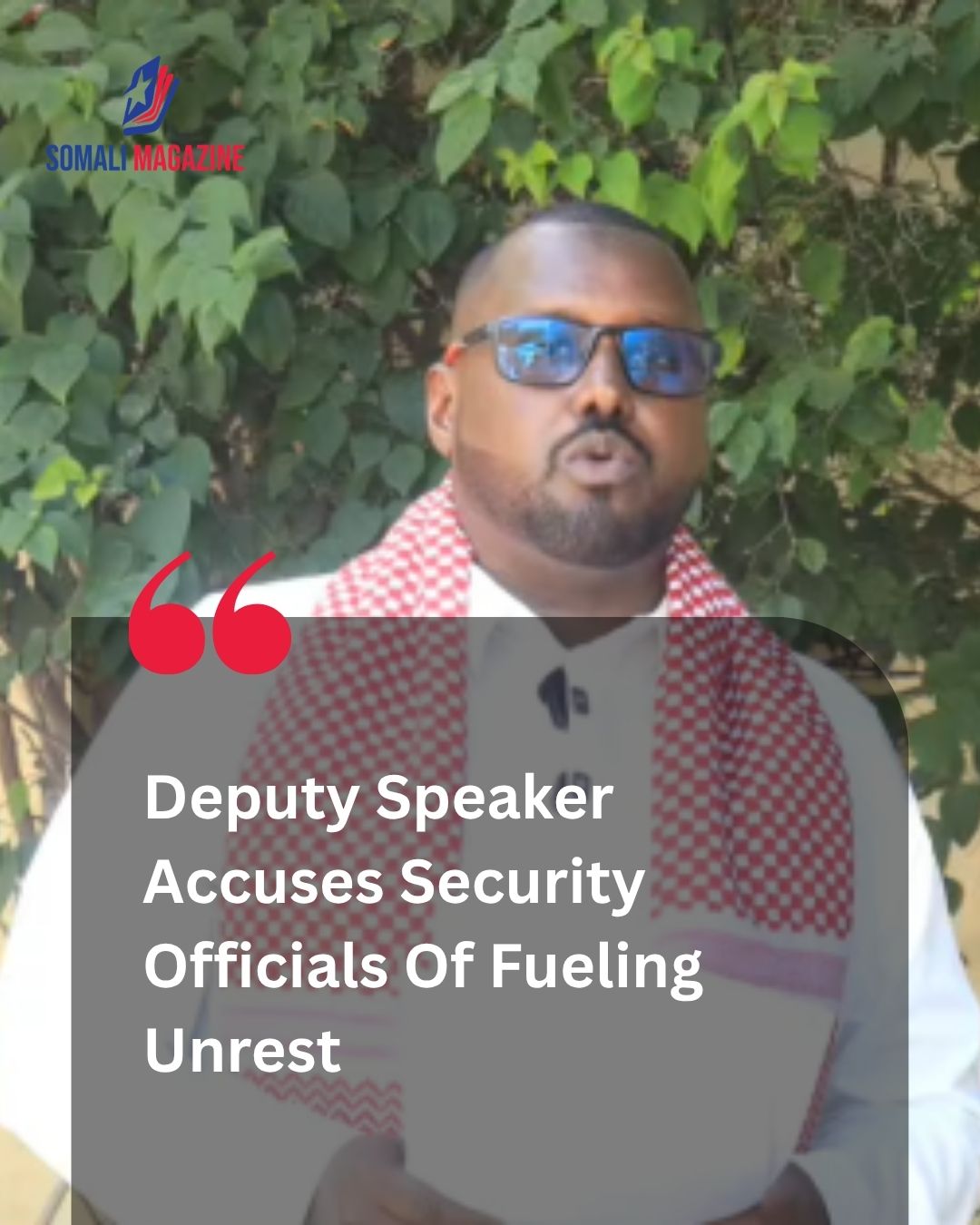
The Somali deputy speaker accuses security officials of fueling unrest in Lower Shabelle region, prompting a major legislative integrity debate over the behavior of national forces stationed within volatile agricultural territories. The public condemnation emerged during a dynamic parliamentary review focused on recurrent armed stand-offs that […]
The post Institutional Accountability Demanded: Somali Deputy Speaker Accuses Security Officials of Fueling Destructive Unrest in Lower Shabelle Region first appeared on Somali Magazine.
The Somali deputy speaker accuses security officials of fueling unrest in Lower Shabelle region, prompting a major legislative integrity debate over the behavior of national forces stationed within volatile agricultural territories. The public condemnation emerged during a dynamic parliamentary review focused on recurrent armed stand-offs that continue to destabilize local populations outside Mogadishu. According to legislative statements, senior commanders tasked with enforcing peace have instead been directly implicated in exacerbating localized disputes for factional advantage. This high-profile legislative intervention adds intense pressure on the Ministry of Defense to enforce strict internal military oversight and dismantle corrupt networks operating beneath the chain of command.
The deteriorating security dynamic across the territory focuses heavily on complex administrative boundary friction and historical agrarian grievances. Local independent monitors report that instead of remaining neutral peacekeepers, specific security units have actively backed rival factions during outbreaks of resource-driven violence. The Deputy Speaker emphasized that such partisan actions severely undermine the federal government’s credibility, making comprehensive localized clan stabilization nearly impossible to achieve. The parliamentary leadership warned that when state-issued uniforms and weapons are co-opted to influence local boundary dynamics, it directly fractures public trust in national judicial and defensive structures.
Compounding the problem, external risk analysts indicate that these internal structural divisions severely stall the state’s broader fragile regional pacification campaigns against insurgent networks like Al-Shabaab. When federal army units dissolve into infighting or align with local political blocks, they create dangerous tactical vacuums that extremist actors quickly exploit to recapture valuable supply corridors. Parliamentary representatives from the region have demanded the immediate relocation of compromised field officers, calling for the deployment of completely neutral external forces to manage checkpoints and secure critical transit networks linking local agricultural markets to coastal shipping ports.
Ultimately, the parliamentary challenge highlights a crucial push for total operational transparency as international stabilization missions transfer defensive duties over to the domestic state. Lawmakers have formally requested the immediate creation of an independent military tribunal to investigate the exact supply chains and commands driving the unrest. They insist that without definitive disciplinary actions against rogue security headers, local communities will continue to face unnecessary displacement. As the legislative assembly prepares a formal investigative commission, the executive branch faces growing pressure to execute immediate structural changes to protect the fragile security of the territory.


 Black News