Israel’s new pipeline unlocks next phase of its largest-ever $35 billion gas export deal with Egypt
Despite decades of conflict, deep political mistrust and wider tensions across the Middle East and Africa, Egypt and Israel are expanding a $35 billion gas partnership, showing how energy security can outweigh regional rivalry.
 Black News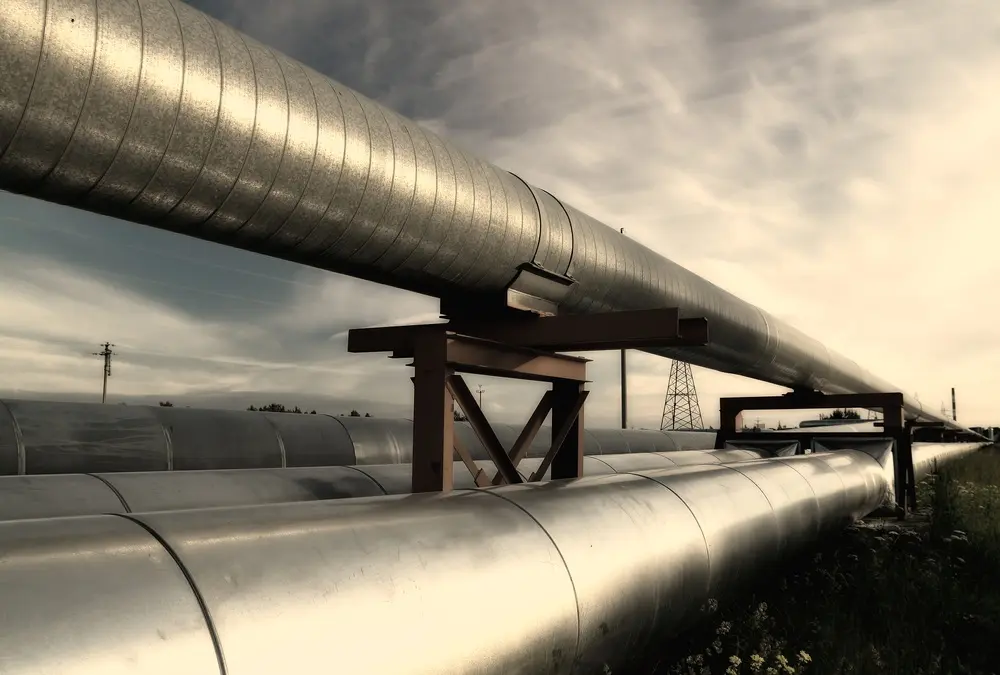

Despite decades of conflict, deep political mistrust and wider tensions across the Middle East and Africa, Egypt and Israel are expanding a $35 billion gas partnership, showing how energy security can outweigh regional rivalry.
- Egypt and Israel are expanding a $35 billion gas partnership despite longstanding political tensions and the conflict in Gaza.
- A new subsea pipeline increases Israel's natural gas export capacity to Egypt from 6.5 to 8.5 billion cubic metres annually, with further expansions planned.
- This arrangement helps Egypt offset declining domestic gas production by providing a cheaper and faster alternative to LNG imports.
- The deal is described as a commercial transaction, allowing Egypt to separate energy cooperation from political disagreements with Israel.
Israel Natural Gas Lines has completed a 45-kilometre subsea pipeline linking Ashdod and Ashkelon, clearing a major infrastructure bottleneck that had limited natural gas exports to Egypt.
The pipeline connects the Leviathan gas reception facility in Ashdod to the East Mediterranean Gas pipeline near Ashkelon, from where gas will flow to facilities in El-Arish, Egypt.
Its completion allows Chevron, NewMed Energy and Ratio Energies, the partners in the Leviathan gas reservoir, to increase supplies to Egypt’s Blue Ocean Energy under an export agreement valued at about $35 billion over roughly 10 years.
Pipeline expands export capacity
The new connection is expected to raise the East Mediterranean Gas route’s annual capacity from about 6.5 billion cubic metres to 8.5 billion cubic metres.
As a result, Leviathan’s annual supply to Blue Ocean Energy could increase from about 4.7 billion cubic metres to 6.7 billion cubic metres during the first phase of the expanded agreement.
The project follows the installation of a third pipeline between the Leviathan reservoir and its offshore production platform. Together, the projects will allow the field’s partners to produce and transport larger volumes of gas.
In the next phase, annual deliveries to Egypt could rise to nearly 13 billion cubic metres. Chevron and its partners are also expanding Leviathan’s production capacity, which is expected to reach about 21 billion cubic metres annually by 2029.
Egypt prioritises energy security
Egypt has continued with the agreement despite political differences with Israel because of its growing energy needs.
The country’s domestic gas production has declined while demand from power stations, factories and households has increased. Consequently, Cairo has resumed expensive liquefied natural gas imports and faced a greater risk of electricity shortages.
Israeli pipeline gas provides a cheaper and faster alternative to LNG shipped from distant suppliers.
Egypt has described the $35 billion agreement as a commercial transaction rather than a political endorsement of Israel.
Cairo said private energy companies negotiated the deal under market conditions, although it still depends on public infrastructure and regulatory approvals.
The arrangement allows Egypt to criticise Israeli actions, particularly in Gaza, while maintaining energy trade that supports power generation and industrial production.
Supply disruptions expose risks
Egypt’s dependence on Israeli gas became clear during regional fighting in 2025, when Israel temporarily reduced exports.
Egyptian fertiliser plants suspended operations, while the government increased fuel oil use and arranged billions of dollars in LNG purchases.
At the time, Israeli gas accounted for about 20% of Egypt’s total consumption and as much as 60% of its gas imports.
However, the growing dependence also carries risks. Future conflict could force Israel to halt production or prioritise its domestic market, leaving Egypt exposed to supply shortages and higher import costs.
Deal strengthens regional energy ties
Egypt and Israel have maintained formal relations under their 1979 peace treaty despite recurring diplomatic tensions. Egypt also remains an important mediator in negotiations involving Israel and the Palestinians.
Meanwhile, energy cooperation has become one of the strongest commercial links between the two countries. Israel gains access to a large export market, while Egypt secures relatively affordable gas.
Egypt can also process imported Israeli gas at its Idku and Damietta LNG plants when domestic demand allows. It can then export the gas to international markets, supporting Cairo’s ambition to become a regional energy hub.