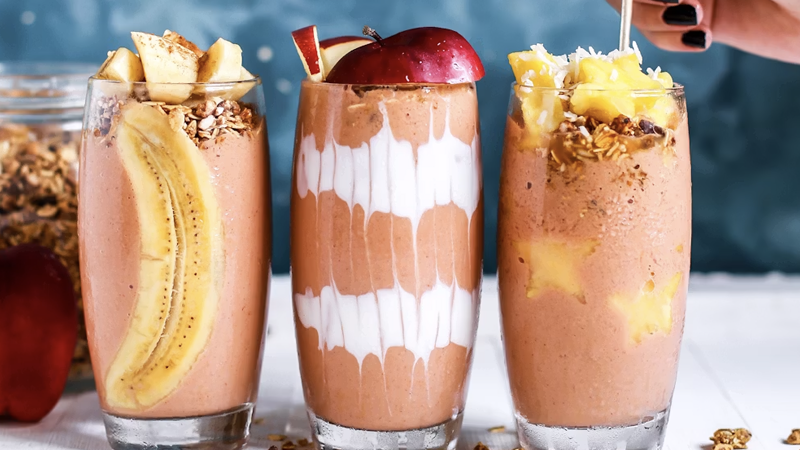
Judge Orders Halt to SNAP’s Ban on Sugary Foods
A federal judge has halted the U.S. Department of Agriculture’s use of food-choice waivers that allow states to restrict purchases of soda, energy drinks, candy, and other foods for people who receive SNAP benefits. “Congress defined what ‘food’ is supposed to be, and it did not authorize the agency to amend or waive the definition […] The post Judge Orders Halt to SNAP’s Ban on Sugary Foods appeared first on Word In Black.
 Black News

A federal judge has halted the U.S. Department of Agriculture’s use of food-choice waivers that allow states to restrict purchases of soda, energy drinks, candy, and other foods for people who receive SNAP benefits.
“Congress defined what ‘food’ is supposed to be, and it did not authorize the agency to amend or waive the definition it enacted,” Judge Amy Berman Jackson wrote in her ruling. “It did not authorize the agency to cut types of food out of SNAP entirely.”
“It set out clearly the type of experimental projects that could be tested to address the unquestionably serious health issues attributed to the rise of obesity in the population in general and particularly the low-income population,” Jackson said.
Last year, the agency announced it considered the products to have little nutritional value and removed them from its definition as food items. This change allowed states to get waivers from USDA so they could declare the items no longer SNAP eligible. Since then, more than 22 states have rolled out restrictions on the items.
The states having the widest range of restricted items include Iowa, followed by states like Tennessee, which restricts any items defined as “processed foods and beverages,” and South Carolina, which bars several categories of sweetened products, including prepared desserts.
Another Changed Caused by the “Big, Beautiful” Bill
The restrictions are part of the changes required by the “One Big, Beautiful Bill Act,” which also cuts roughly $187 billion from SNAP over the next ten years. Almost 42 million people use the monthly benefits to feed their families, and almost 26% of SNAP participants are Black. This is just over 10 million people who receive an average of $187 a month, or just over $6 per day.
Between April and August of 2025, five states—Colorado, Iowa, Nebraska, Tennessee, and West Virginia—got permission from the USDA “to conduct pilot projects” that would allow them to ban the items from SNAP eligibility. Five SNAP recipients from those states sued the USDA over its implementation of waiver restriction pilot projects.
The National Center for Law and Economic Justice, a nonprofit focused on advancing justice for low-income families, represented the families. In a prepared statement, the organization said the USDA is trying to curb ”the freedom of SNAP participants to choose the food they and their families need.”
Several of the states implementing restrictions also have some of the largest Black populations in the country, including Texas, Florida, Louisiana, Oklahoma, Tennessee, and South Carolina. Those states are phasing in rules throughout 2026.
Texas’s rules alone could affect more than 3.5 million recipients.
“The Court’s ruling is a major step in restoring essential food assistance to the millions of families that rely on SNAP nationwide,” said Katie Deabler, senior attorney at NCLEJ. “This decision makes clear that the USDA cannot bypass the legal guardrails that establish how SNAP must operate across the country. It affirms that families deserve a program that works without confusion.”
The USDA rule also dismantled the previous uniform federal standard and created a state-by-state patchwork system. The changes have caused confusion among recipients and retailers alike.
Previously, most food items intended for home consumption were SNAP-eligible. But the changes meant that grocers, including grocery store cashiers, had to enforce state-specific restrictions—often at the cash register during checkout.
“This has caused significant confusion for SNAP recipients and retailers, and has harmed SNAP recipients who rely on certain sugary beverages to manage their chronic health conditions like diabetes,” NCLEJ noted.
RELATED: Lawsuit Challenges New SNAP Food Limits
The post Judge Orders Halt to SNAP’s Ban on Sugary Foods appeared first on Word In Black.