Magicsticks Is Still Reimagining Afropop
Despite his success, Magicsticks is still actively resisting the urge to take his foot off the gas. The post Magicsticks Is Still Reimagining Afropop appeared first on The NATIVE.
 Black News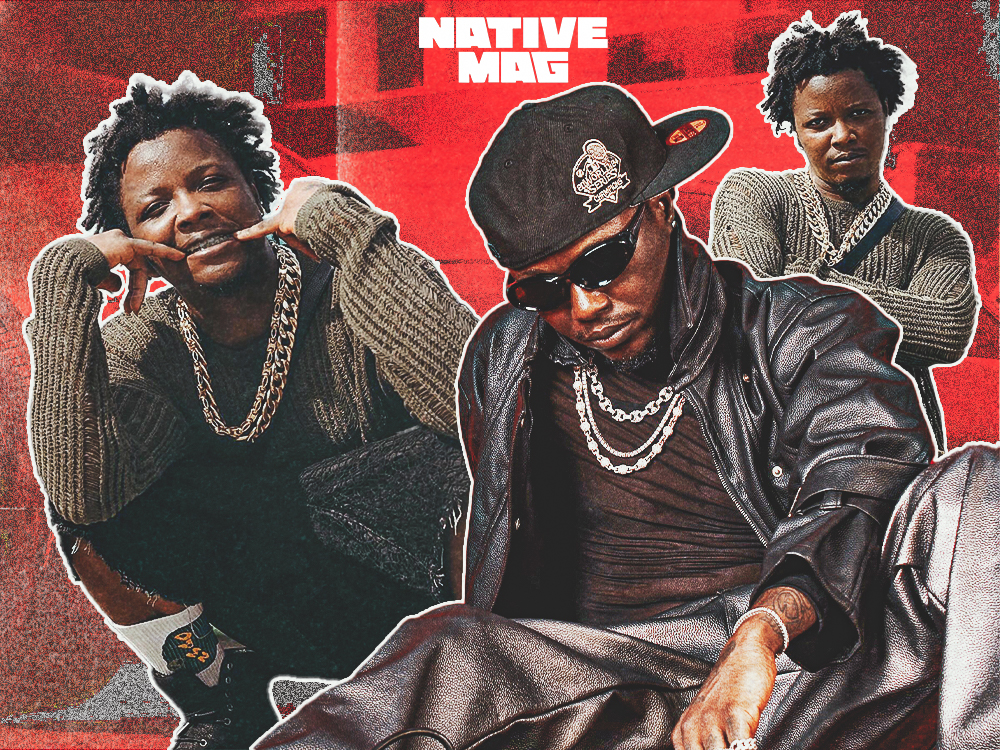
For Magicsticks, music was preordained and an inevitable part of his destiny, “All my life, I’ve never really been interested in anything else,” he warmly says over a Zoom call on a sunny Wednesday in May, his voice tinged with nostalgia as he reflects on his journey. “I was born into a musical home. My dad is an instrumentalist who plays guitar, bass, and piano, and he’s also a DJ. So everything came from him.”
His initial interest was further piqued by Alakuko’s vibrance. A suburb of Agbado in Lagos, Alakuko’s intersection with neighbouring city, Abeokuta, forms a huge part of his story. However, his experience with the latter still carries harrowing trauma that is difficult to express verbally. “I moved to Ogun State at some point and then to Abeokuta, where I worked at a block factory,” he reveals, his voice drooping. “It’s a very long story and there are sad parts I don’t want to delve into too deeply.”
Rather than wallow in the hurt, Magicsticks revels in the beautiful beginnings of the area that trained his heart and ears to appreciate the atmospheric warmth that music provides. “I grew up in a community where music was everywhere in the streets, in people’s homes,” he recounts. “You’d walk two houses and find a cassette seller or music distributor.” These primary experiences became tiny seeds planted in him and have been germinating for a decade and a half, fueling an incessant desire to be exceptional. In 2011, he embraced the challenges of growth, took a bet on himself and started his music production journey with the resources available to him.
Since recording studios weren’t popular at the time, he utilised home theatre speakers, church microphones, his laptop and a soundcard to produce his first set of beats. When he gained admission to study Computer Science at Lagos State Polytechnic, he connected with like-minded individuals, including Mystro and his revered role model, Jay Pizzle, who gifted him his first studio equipment that set a professional baseline for his career.
However, Magicsticks’ rise to stardom wasn’t instant. He had been creating for 10 years before his fruitful relationship with one of Afropop’s greatest hitmakers, Asake saw him solo-produce his acclaimed debut album ‘Mr Money With the Vibe.’ Now a successful cultural figure, Magicsticks spends his days as a studio rat, free of the pressure to prove himself, thanks to a hit-studded catalogue that has made him a role model for burgeoning producers. Despite his success, he’s still actively resisting the urge to take his foot off the gas. “It’s either I make it or I die trying,” he admits. “There’s no in-between for me.”
This interview has been edited for clarity.
Looking back at your origins and childhood, what forged you into the person you are today?
The impact of my dad. He’s a music person, an instrumentalist who plays guitar, bass, and piano, and he’s also a DJ. I was born into a musical home, so everything came from him. My mom is a fashion designer and doesn’t know much about music, so all my musical influence came from my dad.
Were you certain from a young age that you wanted to pursue music?
All my life. I’ve never really been interested in anything else. Growing up, I wanted to be a DJ, but I felt like that wasn’t enough. I wanted to understand how music is created and the whole production process, so I decided to go into production.
What were some of your earliest influences in music and production?
My environment played a huge role. I grew up in a community where music was everywhere, in the streets, in people’s homes. You’d walk two houses and find a cassette seller or music distributor. I grew up listening to all types of music: Juju, Fuji, Apala and later producers like Kanye West. I also listened to Nigerian producers like Sarz, Jay Pizzle, and Mystro. These were all major influences.
When did you start music production professionally?
I started production professionally around 2010 or 2011.
Did you have your own studio back then?
No, there was no studio. It was just me, my laptop, my sound card, and home theatre speakers. I remember using some home theatres like that before I got my first studio speakers from Jay Pizzle. He was the first person who gave me studio equipment. I was using church microphones instead of proper condenser microphones. Very basic equipment, but the recordings came out pretty decent for that time.
Now that you’re a professional producer, what skills do you think are essential to the job?
Hard skills include production knowledge, piano skills, the ability to produce music itself, mixing, sometimes writing, and mastering. For soft skills, it’s about understanding the artist, their personality and how to interpret the relationship between us. Different artists have different ways that work for them. Some don’t enjoy people being around. Most of the time, they don’t have to say it; you can tell from their aura and facial expressions.
You mentioned songwriting. Are you a songwriter as well?
I do a little bit of songwriting. I have written actual songs, but I won’t be giving titles for now. I think when my personal projects come out, people will get to hear more of that aspect of me. I believe all producers basically write melodies. Even if they don’t come up with lyrics, they can create melodies.
What’s the role of Nigerian producers in reshaping the global perspective of Afrobeats and African music?
Producers are the bridge between the artist and the listener. We’re like instrumentalists on a live stage. The artist could sing acapella and the audience would still get it, but it doesn’t come in full. When you have your guitarist and everything there, the audience understands you better. We’re the bridge. We play an important role that people are now beginning to see more clearly. There’s no artist without a producer. The artist vocalises, but the emotion and feeling that people derive from the music, that’s what the producer offers.
You’ve fostered an amazing artist-producer synergy with Asake. How did your relationship start and how have you maintained it?
I met Asake back in 2019 through a friend called Sydney Talker. We’ve been working ever since. Knowing somebody and being able to manage the relationship works because this man is down to earth, he’s not somebody who will stress you in your field. He lets you do what you need to do, and at the same time, I understand where to let him come in with his creativity. That balance has been very helpful to the relationship and creativity. It has kept us going at a very good speed.
Let’s talk about genres. Nigerian Pop has borrowed from several genres in recent years. How do you bridge African influences and other genres in a way that appeals to the Nigerian sonic palette?
Being a musician, you’re like a preacher. You’re not preaching just to Nigerians, you’re preaching to the world. We adapt by wanting to communicate our music to different people and different aspects of the world. To do that musically as a producer, I infuse different sounds without losing my own self, which is Afrobeats.
What’s the core signature that defines Afrobeats as a producer?
I may miss it sometimes because I don’t always bring all the instruments in production. But most of the time I really enjoy my saxophones. If I don’t do that, I use violins, but violin isn’t really an Afrobeat instrument. It’s not about the instruments themselves, but about the progression of the instruments. How the instrument is being played determines whether what you’re playing is Afrobeats or not. I can use a sax to play a melody and it sounds Afrobeat. I can play something else with it and it sounds different.
Which genres are you most excited about right now?
Because of my personal projects coming up, I’m doing a lot of AfroHouse and AfroTech experiments at the moment. I’m not saying that will necessarily be the next thing people will be listening to, but these are things I’m experimenting with.
What’s your take on the burgeoning EDM and rave scenes?
Every genre has a role to play. There’s a moment when you want to be at a rave, and the next moment you may want to be at a local bar. All these genres have major roles to play. I don’t have a specific take, but I really like what Group Therapy is doing with the rave [culture].
You mentioned having personal projects coming. What’s this about?
It’s a producer-led DJ album. It’s a project where the artists express themselves and I express myself as well. It’s a kind of project where the artist doesn’t do too much and I don’t do too much either, but it’s still appealing to the audience. There’s going to be a lot of body movement, people are going to be moving their bodies a lot. With the way the country is now, this music is to put people in their good pockets.
As someone shaping the future of sound, what do you think music production in Nigeria will look like a few years from now?
Music production will still be music production. The sounds might keep changing as producers try to find new sounds and experiment, but it’s still going to be a couple of guys working their ass off trying to bring out the best in production. I’m not sure yet, but I hope it’s in its best form. If you asked me this question ten years ago, I wouldn’t have known either. But there will always be guys trying to keep it going, and hopefully we’re still here doing the job.
Tell me about your producer tag. How did you coin it?
A friend of mine made the tag for me. I was using a different one at first, a very local one. It was like “Magic lo se beat” back then. I was in school at Lagos State Polytechnic, studying Computer Science. At some point, I just knew that the dream I wanted was international, and I needed to come up with something way better and nicer. So I trashed that and opted for “Tune in to the King of Sounds and Blues” because I realised that these melodies are not ordinary, they are ordained by God Almighty.
What advice would you give to upcoming producers?
I’d tell them to double the pace at which they’re working. If they’re at 50%, they should make it 100% and keep it original. You don’t necessarily have to do what everybody is doing just because that’s what people are listening to. If I had been leaning into what people were listening to, I may not have found my own sound. There’s a personality within you that wants to be expressed. Don’t deny that. Execute it every time it comes to mind.
What personal philosophy have you based your life on?
God is the greatest. People close to me really know that I post this on my WhatsApp story everyday. It’s not just to post, but to let them know that he is indeed the greatest. I don’t want to talk much but I’m going to touch on it a little bit. I’ve worked in a block factory. I’ve done different stuff before this. God can make everything align. I believe in the talent God gave me, and I have one other belief: it is a must that I make it in life. It’s either I make it or I die trying. There’s no in-between for me.
The post Magicsticks Is Still Reimagining Afropop appeared first on The NATIVE.