Russia rushes specialists to Uganda amid Ebola alarm
Uganda is set to receive a team of Russian health specialists to help strengthen the country’s response to the ongoing Ebola outbreak, as fears grow over the virus spreading across the Great Lakes region. The support comes amid heightened regional surveillance following confirmed Ebola cases in both Uganda and the neighbouring Democratic Republic of Congo […] The post Russia rushes specialists to Uganda amid Ebola alarm appeared first on The Observer.
 Black News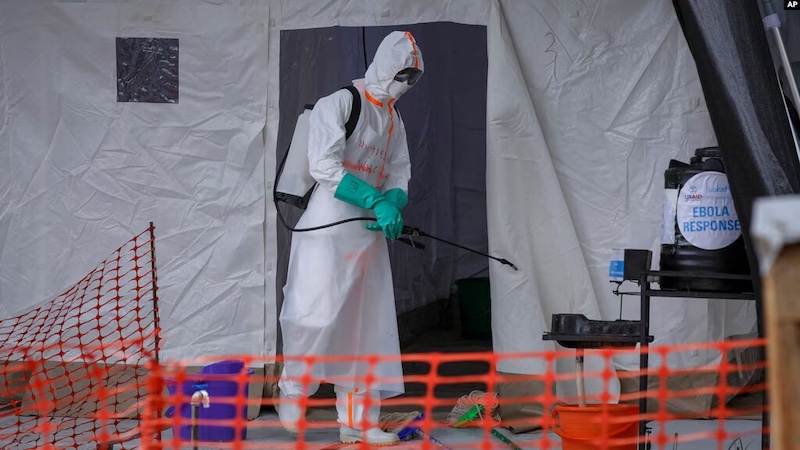

Uganda is set to receive a team of Russian health specialists to help strengthen the country’s response to the ongoing Ebola outbreak, as fears grow over the virus spreading across the Great Lakes region.
The support comes amid heightened regional surveillance following confirmed Ebola cases in both Uganda and the neighbouring Democratic Republic of Congo (DRC), where health authorities say cross-border movement is increasing the risk of transmission.
According to Russian news outlet Izvestia, quoting Russia’s consumer protection agency Rospotrebnadzor, the Russian team will travel to Kampala to assist Ugandan authorities with epidemiological investigations and outbreak response measures.
“In connection with the outbreak of Ebola caused by Bundibugyo ebolavirus in the Democratic Republic of the Congo and cases of this disease in the capital of neighbouring Uganda, Rospotrebnadzor, at the request of the Ugandan side, will send a team of specialists to Kampala to conduct an epidemiological investigation,” the agency reportedly said.
Epidemiological investigations involve tracing how a disease spreads, identifying infected individuals and analysing transmission patterns in order to contain outbreaks quickly.
Russia also pledged technical and material support, including Ebola diagnostic test kits developed by Russian scientific organisations. The aim, officials said, is to improve Uganda’s ability to detect infections rapidly and contain further spread.
Ebola is a highly dangerous viral disease spread through direct contact with infected bodily fluids or contaminated materials. Symptoms commonly include fever, weakness, vomiting and diarrhoea.
In severe cases, patients may experience internal and external bleeding. Health experts say early detection, isolation and supportive treatment remain critical to improving survival chances and preventing community transmission.
The latest assistance builds on earlier health cooperation between Uganda and Russia. According to the report, Russia donated a mobile anti-epidemic laboratory to Uganda in 2024, which was later deployed during previous Ebola containment efforts.
More than 80 Ugandan specialists have also reportedly undergone training in laboratory diagnostics, biosafety and infectious disease monitoring through partnerships with Russian scientific institutions.
Regional health agencies are increasingly concerned about the outbreak’s cross-border implications. On May 15, the Africa Centres for Disease Control and Prevention warned that the outbreak in eastern DRC’s Ituri Province posed a significant regional threat because of intense population movement between DRC and neighbouring countries, particularly Uganda.
Africa CDC Director General Dr Jean Kaseya said insecurity and constant movement across borders were increasing transmission risks. In response, Africa CDC convened an emergency meeting involving more than 130 representatives from affected countries, donor governments, humanitarian agencies and global health organisations to coordinate a continental response strategy.
Uganda has already introduced tighter public health measures. President Yoweri Museveni recently postponed this year’s Martyrs’ Day celebrations, citing fears that mass gatherings could accelerate the spread of Ebola.
The annual June 3 pilgrimage at Namugongo Martyrs Shrine typically attracts millions of worshippers from Uganda and neighbouring countries, including eastern DRC.
“After consultations with the national epidemic response task force and religious leaders, we have decided to postpone the Martyrs’ Day to a later date,” Museveni said in a national address.
Uganda’s Ministry of Health has since intensified contact tracing, strengthened screening at border points and increased surveillance at health facilities as authorities race to contain the outbreak before it spreads further.
The post Russia rushes specialists to Uganda amid Ebola alarm appeared first on The Observer.