Sowing of a grandmother’s legacy
A young Kavango East farmer is continuing her grandmother’s four-decade-old vegetable growing legacy, despite water shortages and ageing infrastructure threatening production. For Magdalena Jose (30), farming is about more than just growing vegetables. It is about continuing the work her grandmother, Joakina Andreas, started more than 40 years ago. Every day, Jose heads to a […] The post Sowing of a grandmother’s legacy appeared first on The Namibian.
 Black News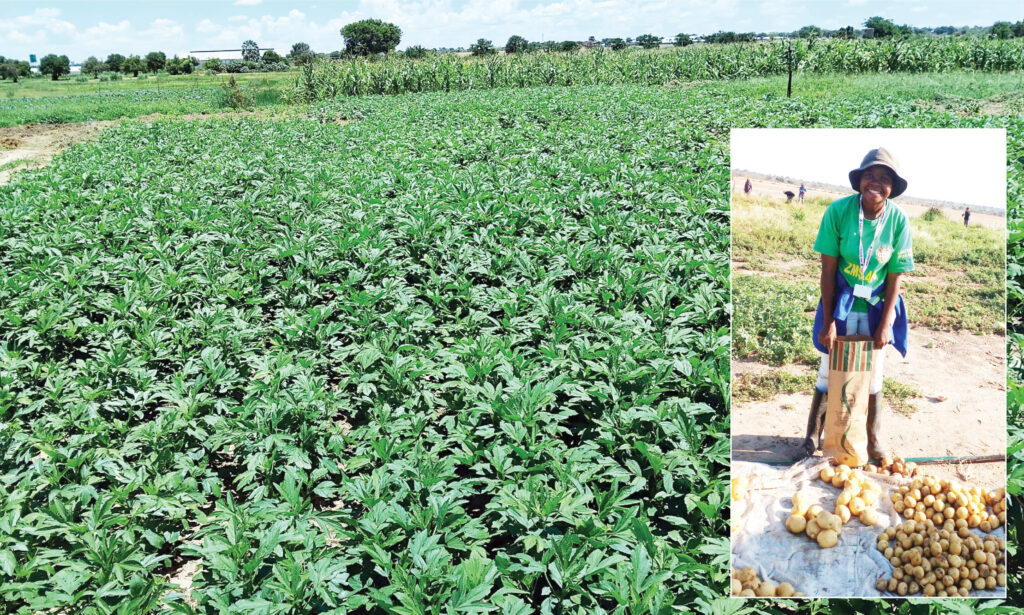
A young Kavango East farmer is continuing her grandmother’s four-decade-old vegetable growing legacy, despite water shortages and ageing infrastructure threatening production.
For Magdalena Jose (30), farming is about more than just growing vegetables.
It is about continuing the work her grandmother, Joakina Andreas, started more than 40 years ago.
Every day, Jose heads to a one-hectare vegetable plot on the outskirts of Kaisosi in the Kavango East region, where she farms alongside Andreas.
Andreas has worked the land since 1985 after the late Sambyu Traditional Authority leader, Maria Mwengere, allocated it to the Kaisosi community so families could support themselves.
“I think my love for agriculture started at a young age. I used to help my mother in the garden at home. Then, when I moved to my grandmother’s house, I started accompanying her to the garden,” says Jose.
She says watching her grandmother work the land inspired her to follow the same path.
“I started helping my grandmother in 2020, and in 2023 I became a farmer too. She gave me a small portion where I could also work. We now share the garden,” Jose says.
She says she later completed a level 3 qualification in crop production at Rundu Vocational Training Centre to strengthen her farming skills.
Today, Jose and Andreas grow cabbages, spinach, onions, tomatoes, green peppers, beetroot, watermelons, butternuts and local crops such as mutete.
After harvesting, they sell their produce to street vendors, open markets, retailers and the Agro Marketing and Trade Agency.
“The market is there. People usually buy a lot from us,” Jose says.
She says the cabbages and onions currently growing should be ready for harvest next month.
“We expect to harvest at least a tonne,” she says.
HOPEFUL DESPITE CHALLENGES
Although demand for their produce is strong, Jose says farming comes with many challenges.
“It’s challenging. Financially, it’s hectic because one of our biggest problems is water,” she says.
She says the garden relies on water pumped from a nearby river using solar power and electricity, adding that the ageing solar system no longer provides enough power, making irrigation difficult.
Jose says they use sprinkler irrigation, which requires strong water pressure.
“We share the 34-hectare farming area with other farmers and everyone follows a watering schedule. In our block, we water only on Tuesdays and Fridays,” she says.
The sandy soil makes production even more difficult because it dries out quickly.
“Our production is limited because we’re only watering twice a week. We’re not producing as much as the land is capable of,” Jose says.
Despite the challenges, she remains hopeful. “The future is bright. The obstacles are just a bit tough. We’re hoping to solve our water issue in the next year or two so we can produce at the next level,” she says.
Jose says farming has taught her commitment and resilience, but it is not a business people should enter into without careful planning.
“I wouldn’t advise anyone to leave their job to start farming, because that’s very risky, costly and intense.”
She encourages young people to create opportunities for themselves instead of waiting for employment.
Jose believes people should use whatever skills they have to earn a living.
“It doesn’t matter whether you are a teacher or a nurse. While you are waiting for opportunities, do something with your hands or something you are good at.”
The post Sowing of a grandmother’s legacy appeared first on The Namibian.