The blood that bought the ballot
Before the Voting Rights Act existed, before the Civil Rights Movement had a name, Black Americans were fighting — and dying — for the right to vote. The AFRO was there keeping the record. Here's what it cost to get to 1965. The post The blood that bought the ballot appeared first on AFRO American Newspapers.
 Black News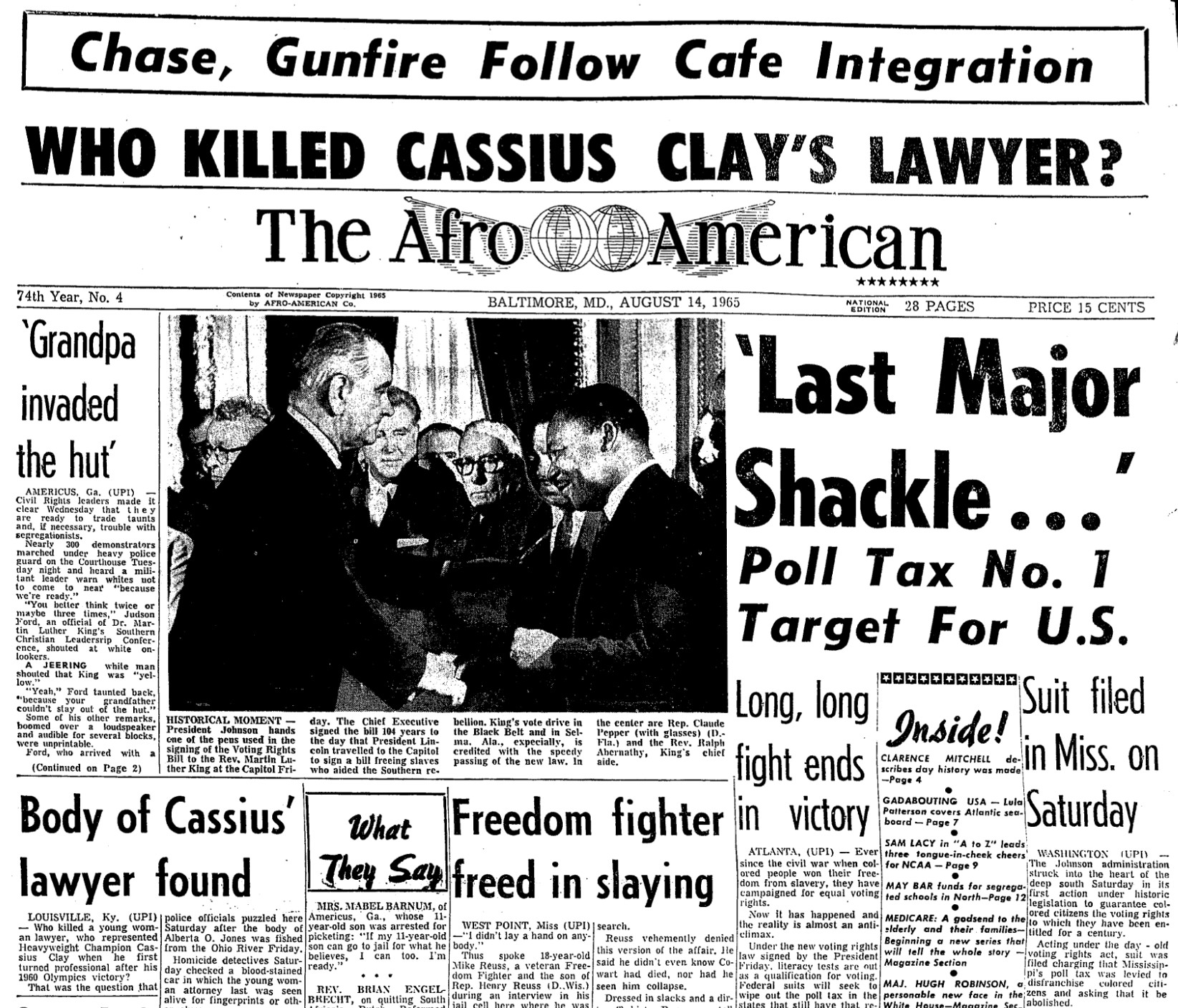

The Voting Rights Act: Part Two of a Five-Part Series
By Portia Wood
Special to the AFRO
In 1892, a man named John Henry Murphy Sr. borrowed $200 from his wife — money from land her father had left her — bought the printing presses of a failing Black newspaper at auction, and started over. He had been born into slavery in Baltimore in 1840. He had served as a sergeant in the United States Colored Troops during the Civil War. He had watched Reconstruction rise and collapse within his own lifetime. He understood that the fight for Black freedom is also a fight over whose version of events gets written down.

He built a newspaper so Black people would have their own record. That newspaper was the AFRO-American. It has been in publication since Aug. 13, 1892. It is still here.
Murphy built his newspaper at exactly the right — and exactly the wrong — moment. The 15th Amendment had passed in 1870. For about 15 years, Black men across the South had voted in significant numbers, held congressional seats, built schools, and begun accumulating land and political standing. Then the Redeemers came back, and the country spent the next century trying to undo what Reconstruction had briefly made possible.
What they built to replace slavery at the ballot box
Poll taxes. Literacy tests administered arbitrarily by White registrars who could pass a White applicant after reading one sentence while failing a Black applicant on constitutional interpretation. Grandfather clauses that tied voting eligibility to whether your grandfather had voted — which excluded virtually every Black citizen in the South. And when the laws weren’t enough, there was organized terror: the Ku Klux Klan, the Red Shirts, the White League. Lynchings and massacres. The deliberate destruction of the political infrastructure Black communities had built during Reconstruction.
By 1900, Black voter registration in Mississippi had fallen from over 90 percent to roughly 6 percent. Alabama went from more than 180,000 registered Black voters to fewer than 3,000 in three years. That isn’t political drift. That is a coordinated project, executed through law and violence together.
The AFRO was covering it while it was happening. In 1905, Murphy used the newspaper’s editorial pages to urge readers to organize against the Poe Amendment — Maryland legislation designed specifically to strip Black citizens of the vote. They organized. Maryland did not follow the rest of the South into wholesale disenfranchisement. The AFRO was not just covering the news. It was part of why the outcome was different here.
Under Carl Murphy — John’s son, who took over after his father’s death in 1922 and led the paper for 45 years — the AFRO grew into the largest circulating Black newspaper on the Atlantic coast. It sent reporters to document lynchings the White press wouldn’t name. It deployed correspondents to cover Black units in World War II from Europe and the Pacific. Its sports editor, Sam Lacy, spent decades fighting for the integration of professional sports. Its reporter Clarence Mitchell Jr. — who spent so many years lobbying Congress on civil rights legislation that senators called him ‘the 101st Senator’ — used the AFRO as his platform. The paper partnered with the NAACP on the legal work that led to Brown v. Board of Education.
This was an institution that understood its purpose as organizing and informing a community under sustained political attack, not just publishing news.
The road to 1965
By the early 1960s, in Selma, Ala.— which would become the geographic center of the voting rights movement — less than 2 percent of eligible Black citizens were registered to vote. Not because they hadn’t tried, but because every time they tried a registrar turned them away, or an employer fired them for making the attempt, or someone burned a cross in their yard. The machinery of exclusion was running exactly as designed.
On March 7, 1965, John Lewis and Hosea Williams led 600 marchers across the Edmund Pettus Bridge in Selma. State troopers and deputies met them with billy clubs and tear gas. Lewis’s skull was fractured. He was 26 years old. That day became known as Bloody Sunday.

The footage was broadcast nationally. Eight days later, President Johnson addressed Congress and quoted the movement’s anthem: “We shall overcome.” Five months after that, on Aug. 6, 1965, he signed the Voting Rights Act into law. The AFRO covered every step.
The Act outlawed literacy tests and the other bureaucratic instruments of suppression. Section 5 required states with a documented history of discrimination to get federal preclearance before changing any voting law. Section 2 prohibited, everywhere in the country, any voting practice that denied or abridged the right to vote on account of race. These were not aspirational principles. They were enforcement mechanisms with teeth, and they worked. Black voter registration in Mississippi went from 6.7 percent in 1965 to 60 percent within a decade. In Alabama, from 19.3 percent to 55.7 percent.

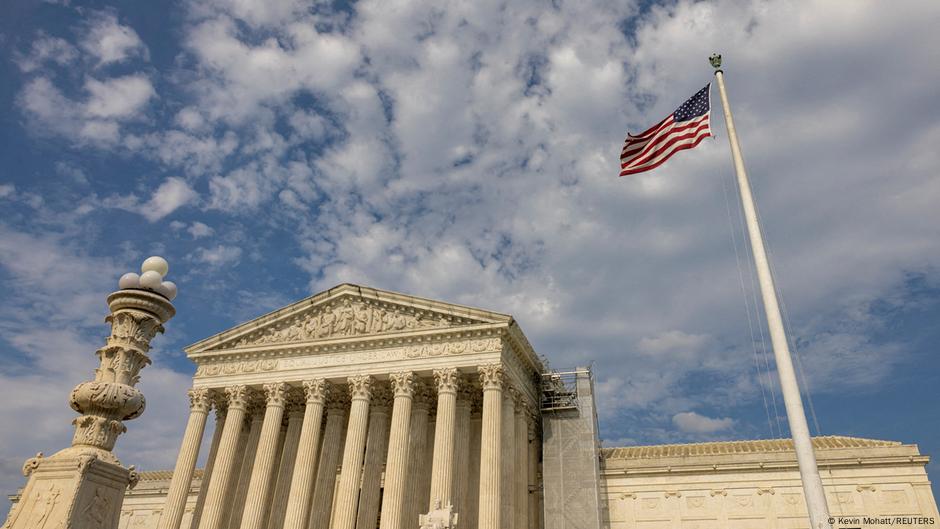
“It was born of the literal blood of Union soldiers and civil rights marchers. It ushered in awe-inspiring change, bringing this Nation closer to fulfilling the ideals of democracy and racial equality,” wrote Justice Elena Kagan, dissenting in Louisiana v. Callais (April 29, 2026)
Congress reauthorized the VRA in 1970, 1975, 1982 and 2006. The 2006 vote was 390 to 33 in the House and 98 to 0 in the Senate — after 10 months of hearings and more than 15,000 pages of evidence documenting that racial discrimination in voting had not ended, it had just changed shape. That bipartisan record mattered. And as the next article covers, it wasn’t enough.
The opponents had been working on the legal architecture to dismantle the VRA since 1966. By the time the 2006 Congress was building its record, the case against the coverage formula was already being drafted. The AFRO covered the reauthorization. It has covered every attack since.
— — —
The AFRO has been covering the fight for Black voting rights since before the Voting Rights Act existed — since before the Civil Rights Movement had a name. When Murphy urged readers to fight the Poe Amendment in 1905, when his son Carl sent reporters to document what was happening in Montgomery and Little Rock, and when the AFRO covered Bloody Sunday in 1965, this newspaper was doing exactly what it was built to do. Subscribe, donate, and share at afro.com/donate.
The opinions expressed in this commentary are those of the writer and not necessarily those of the AFRO.
The post The blood that bought the ballot appeared first on AFRO American Newspapers.