Trump administration puts Nigeria’s 2027 election under close watch as US weighs tougher ties
The Trump administration has signalled that Nigeria’s 2027 general election will come under close US scrutiny, as Washington considers measures that could reshape parts of its relationship with Africa’s largest economy.
 Black News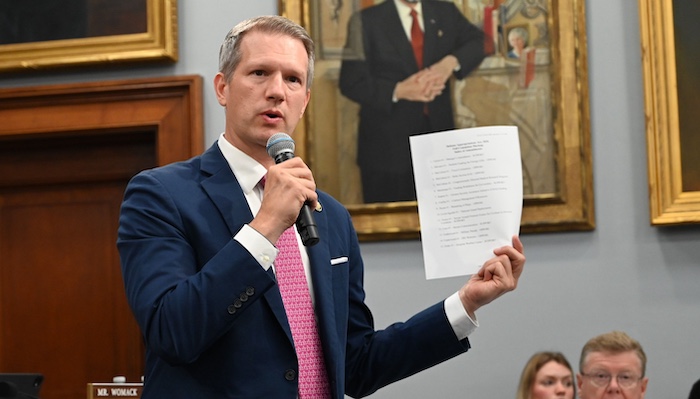

The Trump administration has signalled that Nigeria’s 2027 general election will come under close US scrutiny, as Washington considers measures that could reshape parts of its relationship with Africa’s largest economy.
- The Trump administration says it will closely monitor Nigeria’s 2027 general election as Congress pushes for a tougher approach to relations with Abuja.
- US Congressman Riley Moore said Washington is also considering legislation that could place new conditions on security assistance to Nigeria.
- The developments come as the US deepens trade and investment ties with Africa’s largest economy while raising concerns over governance and religious freedom.
- How Nigeria conducts its next election could influence future diplomatic, security and economic engagement with Washington.
The message comes at a time when the United States is weighing stricter conditions on security cooperation with Nigeria while deepening commercial ties with one of its most important African partners.
Together, the developments underscore how governance, security and economic interests are becoming increasingly intertwined in US policy towards Nigeria.
Speaking in an interview with NoireTV, US Congressman Riley Moore, a Republican representing West Virginia, said the Trump administration would be paying “very close attention” to how Nigeria conducts its next presidential election.
“What I’d say is that we’re certainly going to be watching these results and how these elections unfold and how they’re executed. And that’s something that myself and the administration are going to be paying very close attention to,” Moore said.
Although the United States has historically supported election observation missions around the world, Moore’s remarks stand out because they come alongside efforts in Congress to attach tougher conditions to future US engagement with Nigeria, particularly on security assistance and religious freedom.
DON'T MISS THIS: U.S. reopens $15bn Nigeria trade channel with revived farm credit scheme
Why it matters
Nigeria is Africa’s most populous nation and one of the continent’s biggest economies, making political stability there important far beyond its borders.
The country is a major regional security partner in West Africa, plays a key role in counterterrorism efforts against extremist groups, and is attracting renewed foreign investment following sweeping economic reforms introduced by President Bola Tinubu.
A credible election in 2027 is expected to be closely watched by investors, multinational companies and development partners looking for policy continuity in one of Africa’s largest consumer markets.
The United States has also been expanding its commercial engagement with Nigeria. Bilateral trade between both countries reached nearly $15 billion in 2025, making Nigeria Washington’s second-largest trading partner in sub-Saharan Africa.
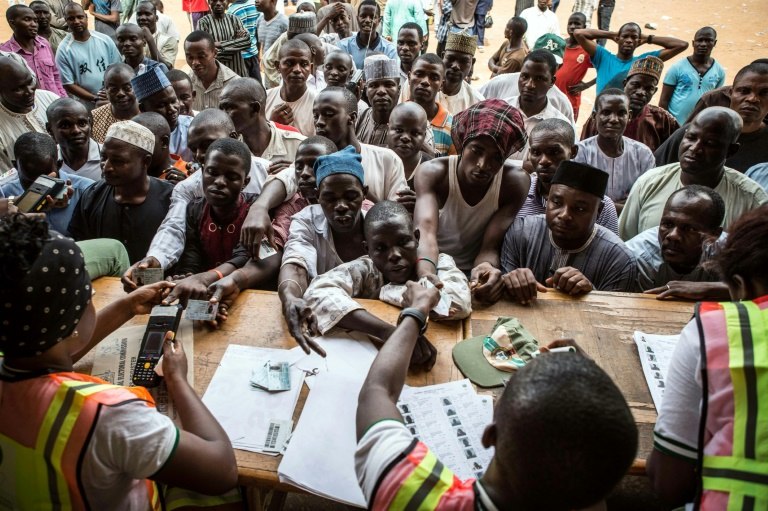
Recent US engagement has increasingly focused on investment, digital innovation, energy and critical minerals, even as security and governance remain key pillars of the relationship.
Congress pushes tougher conditions
Moore said lawmakers are advancing legislation that could influence future US policy towards Nigeria.
He pointed to legislation sponsored by fellow Republican Congressman Chris Smith, which he co-sponsors, as well as a broader appropriations bill containing provisions related to Nigeria.
“We’re working on Chris’s bill… But I’d say, more importantly, what people need to pay attention to is the appropriations bill that we’re going to have on the floor,” Moore said.
According to him, the proposed spending legislation includes provisions relating to religious freedom and restrictions on US security assistance unless certain conditions are met.
“There’s a lot of language that I put on that bill… that relates to Nigeria and the persecution of Christians and restrictions on security assistance to the government of Nigeria,” he said.
Moore added that the legislation contains “pretty strong and aggressive language” that could shape future US engagement with Nigeria if enacted.
DON'T MISS THIS: Nigeria could face sanctions from Trump for allegations of ‘religious cleansing’
The comments follow renewed calls by some members of Congress for stronger US action over religious violence and insecurity in Nigeria.
Earlier this year, Moore joined Smith in supporting legislation that would require more detailed reporting on religious freedom conditions in Nigeria and the effectiveness of US assistance programmes.
The bill also revives debate over Nigeria’s designation under the US International Religious Freedom framework. In 2020, the first Trump administration designated Nigeria as a Country of Particular Concern (CPC) over severe violations of religious freedom.
The designation was removed in 2021 by the administration of former President Joe Biden, a decision that has continued to draw criticism from some US lawmakers and advocacy groups.
A relationship with growing strategic importance
Despite occasional disagreements over governance and human rights, Washington and Abuja remain important strategic partners.
DON'T MISS THIS: Prince Adewole Adebayo: Nigeria's youth hold the key to the country's success
The two countries cooperate on counterterrorism, healthcare, energy, education and regional security.
American companies continue to invest across Nigeria’s technology, financial services and energy sectors, while US development agencies remain among the country’s largest international partners.
Moore said he intends to continue discussing Nigeria with President Donald Trump.
“I continue to work with the administration on next steps that we’re going to take,” he said. “I’m actually going to see President Trump tonight… I continue to talk to him about these issues, and it’s very important to him.”
While US foreign policy towards Nigeria is ultimately shaped by both Congress and the White House, Moore’s comments suggest that the conduct of the 2027 election could become an important factor in how Washington approaches one of its most strategically significant relationships in Africa.