Trump Administration Reclassifies Medical Marijuana As A Schedule III Drug
The move to reclassify medical marijuana was started under the Biden administration. A June hearing may lead to cannabis being broadly reclassified.
 Black News


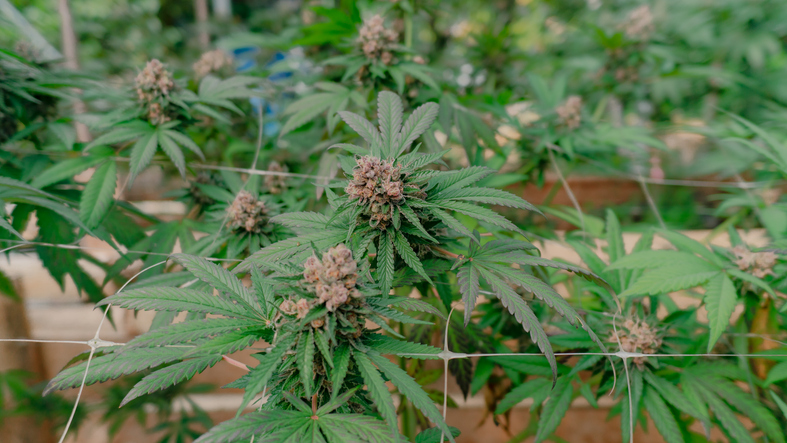
On Tuesday, the Trump administration reclassified medical marijuana from a Schedule I to a Schedule III drug.
According to AP, the order was signed by President Donald Trump’s acting Attorney General Todd Blanche. The reclassification doesn’t legalize marijuana on the federal level, but it does label it as a less dangerous drug. “This rescheduling action allows for research on the safety and efficacy of this substance, ultimately providing patients with better care and doctors with more reliable information,” Blanche said in a statement.
Michael Bronstein, the president of the American Trade Association for Cannabis and Hemp, released a statement calling the reclassification “the most significant federal advancement in cannabis policy in over 50 years.”
“This action recognizes what Americans have long known, cannabis is medicine,” Bronstein added.
Reclassifying medical marijuana to a Schedule III drug provides significant financial benefits for cannabis researchers.
From AP:
Blanche’s action largely legitimizes medical marijuana programs in the 40 states that have adopted them. It sets up an expedited system for state-licensed medical marijuana producers and distributors to register with the U.S. Drug Enforcement Administration.
It makes clear that cannabis researchers won’t be penalized for obtaining state-licensed marijuana or marijuana-derived products for use in their work, and it grants state-licensed medical marijuana companies a windfall by allowing them, for the first time, to deduct business expenses on their federal taxes.
Any marijuana-derived medicine approved by the Food and Drug Administration is similarly listed in Schedule III, it said.
Over the last decade, the federal government has struggled to keep pace with changing laws regarding both recreational and medical cannabis. All but 10 states allow medical marijuana, 24 states have legalized recreational cannabis, and another eight allow the sale of medical products that contain CBD or low levels of THC. The effort to reclassify medical marijuana was started during the Biden administration in 2024. The Drug Enforcement Administration (DEA) was still in the review process when Trump won the election later that year.
In December, President Donald Trump signed an executive order intended to expedite the reclassification process. “It is the policy of my Administration to increase medical marijuana and CBD research to better inform patients and doctors,” Trump’s executive order read. “It is critical to close the gap between current medical marijuana and CBD use and medical knowledge of risks and benefits, including for specific populations and conditions.”
Blanche noted in his statement how expansive medical marijuana has become throughout the states. “Today the vast majority of States maintain comprehensive licensing frameworks governing cultivation, processing, distribution, and dispensing of marijuana for medical purposes,” Blanche wrote. “Taken as a whole, they demonstrate a sustained capacity to achieve the public-interest objectives … including protecting public health and safety and preventing the diversion of controlled substances into illicit channels.”
The Justice Department released a statement, saying the reclassification decision “recognizes the longstanding regulation of medical marijuana by state governments and the need for a common-sense approach to this reality.”
The Trump administration’s move to reclassify medical marijuana is a break from the GOP stance, which largely wants federal cannabis laws to remain the same. It was only last year when 20 Republican senators signed an open letter urging Trump not to reclassify medical marijuana.
While, as of now, the reclassification only applies to medical marijuana, the Justice Department and DEA have set a hearing for June to potentially reclassify cannabis altogether, according to CBS News. Advocates have long argued that cannabis shouldn’t be classified on the same level as heroin and cocaine. While not quite legalization, the reclassification is a notable step that could hopefully lead to the legalization of cannabis.
SEE ALSO:
What Does 420 Mean For Black People Shut Out Of The Cannabis Industry?
420: Why It’s Time to Celebrate Cannabis and Black Advocacy