US General says Africa has become ‘Putin’s purse’ as Russia, China and ISIS expand influence
Africa is rapidly becoming one of the world’s most contested geopolitical battlegrounds, with Russia, China and extremist groups exploiting instability and shrinking Western influence to expand their reach across the continent, the head of U.S. Africa Command has warned.
 Black News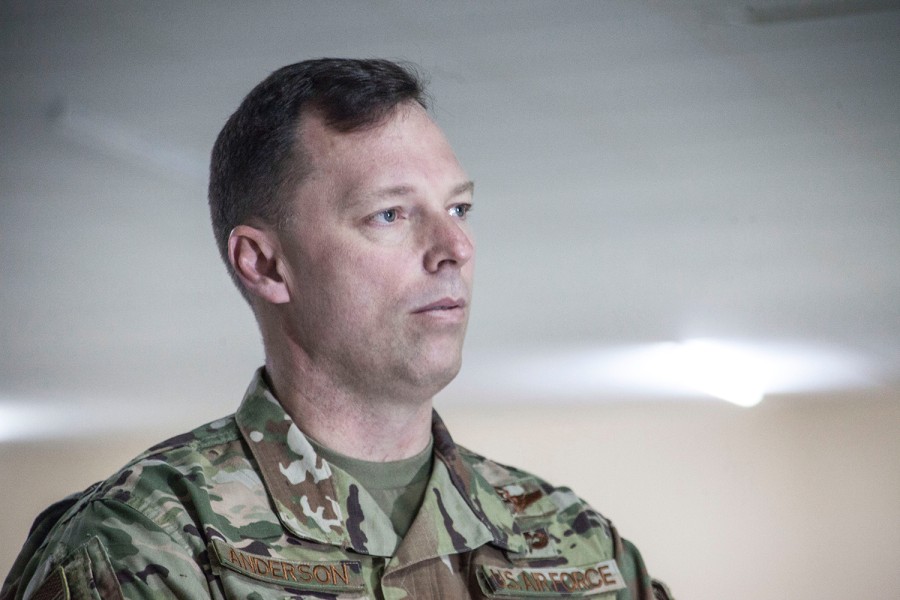
![AFRICOM commander Gen. Dagvin Anderson testifies before the U.S. House Armed Services Committee on rising security threats across Africa. [AP]](https://ocdn.eu/pulscms/MDA_/2e4ad9c7520b3d5bf7d9a779ee5ff4e6.jpg)
Africa is rapidly becoming one of the world’s most contested geopolitical battlegrounds, with Russia, China and extremist groups exploiting instability and shrinking Western influence to expand their reach across the continent, the head of U.S. Africa Command has warned.
- The head of U.S. Africa Command has warned Congress that Africa is becoming central to Russia’s war effort, China’s mineral ambitions and the global terrorism threat.
- Gen. Dagvin Anderson said years of Western military drawdowns have created an “intelligence black hole” across parts of the continent.
- He accused Moscow of exploiting African instability, resources and even manpower to sustain its war in Ukraine.
- The warning comes as extremist violence surges across the Sahel and global powers intensify competition for Africa’s strategic minerals and influence.
Speaking before the U.S. House Armed Services Committee on Tuesday, AFRICOM commander Gen. Dagvin Anderson delivered a stark assessment of the continent’s growing importance in global security, terrorism and strategic competition.
“Africa also serves as Putin’s purse, where Russia exploits instability to extract resources, including human lives, to fuel its war machine,” Anderson told lawmakers, referring to Moscow’s expanding footprint across several African countries.
The AFRICOM chief warned that a decade of U.S. and allied troop reductions across Africa has weakened Washington’s intelligence capabilities at a time when militant groups and rival global powers are becoming more aggressive.
“With a 75% reduction in our regional posture over the past decade, compounded by the drawdown of our allies, we struggle with an intelligence black hole,” Anderson said. “You cannot surge trust.”
His testimony shows growing concern in Washington that the United States is losing strategic ground in Africa as coups, insurgencies and economic instability reshape parts of the continent, particularly in the Sahel, where Western influence has sharply declined in recent years.
Russia has been among the biggest beneficiaries of that shift.
Following the withdrawal of French and other Western forces from countries such as Mali, Burkina Faso and Niger, Moscow has deepened military and political ties with several governments through arms deals, security partnerships and resource agreements.
Much of that influence was initially driven by the Wagner Group, the Russian mercenary network that became deeply embedded in parts of Africa through combat operations and regime protection contracts.
After the death of Wagner founder Yevgeny Prigozhin in 2023, many of those operations were reorganized under the Kremlin-backed Africa Corps, which continues to expand Russia’s security presence across the continent.
Anderson told lawmakers that Moscow is now using Africa not only as a strategic foothold but also as a source of manpower and resources for the war in Ukraine.
Lawmakers questioned the AFRICOM commander over reports that African nationals are being recruited through Russian-linked networks with promises of jobs and economic opportunities before some are transported to fight on the Ukrainian front lines.
Republican Congressman Mike Turner cited reports claiming that up to 1,000 Kenyans may have been recruited through such channels.
“It is disturbing how many Africans from across the continent are being recruited by Russia to fight in Ukraine,” Anderson said.
Beyond Russia, Anderson warned that extremist groups are rapidly gaining strength across Africa, describing the continent as the new center of global terrorism.
“Today, the epicenter of global terrorism is in Africa,” he told lawmakers. “ISIS leadership is African. Al Qaeda’s economic engine is in Africa.”
The warning reflects the worsening security crisis across the Sahel, where jihadist violence has spread across Mali, Burkina Faso and Niger, displacing millions and destabilizing governments.
According to global terrorism assessments, the region now accounts for more terrorism-related deaths than any other part of the world.
Anderson said al Qaeda affiliates are increasingly capable of seizing and governing territory in fragile states, warning that the fall of a capital city to extremists would hand such groups “all the trappings of a nation state.”
China’s growing influence across Africa also featured prominently during the hearing.
According to Anderson, Beijing increasingly views Africa as critical to its long-term economic and strategic ambitions, particularly as competition intensifies over minerals needed for advanced technologies and defense systems.
“China views Africa as a second continent,” he said, pointing to Beijing’s aggressive push into mining, transport infrastructure and logistics networks across the region.
Over the past two decades, China has become Africa’s largest bilateral trading partner and a dominant financier of roads, railways, ports and energy infrastructure through its Belt and Road Initiative.
Chinese companies have also secured major stakes in cobalt, lithium, copper and rare earth mining projects across countries including the Democratic Republic of Congo, Zambia and Zimbabwe.
Those minerals are increasingly viewed as strategic assets because they are essential for electric vehicle batteries, semiconductors, artificial intelligence systems and military technologies.
The hearing highlighted how Africa is becoming central to a wider global struggle over security, resources and political influence as major powers race to secure strategic advantages on the continent.
For Washington, Anderson warned, rebuilding lost partnerships may prove difficult if the U.S. continues reducing its long-term engagement in Africa.
“Africa’s vast resources, strategic geography, and growing population make it critical to U.S. national security,” Anderson said in his official posture statement to Congress.