War clouds over diplomacy U.S. again strikes Iran and Israel continues attacks on Lebanon
Amid ongoing diplomatic talks with on-again, off-again optimism about reaching an agreement, the United States resumed airstrikes inside Iran, triggering reciprocal Iranian strikes on a U.S. military base in Kuwait, where Tehran said the attacks originated. In addition, while the U.S. and Iran traded blows of missiles and drones in the escalating exchange, Israel launched […] The post War clouds over diplomacy U.S. again strikes Iran and Israel continues attacks on Lebanon appeared first on Final Call News.
 Black News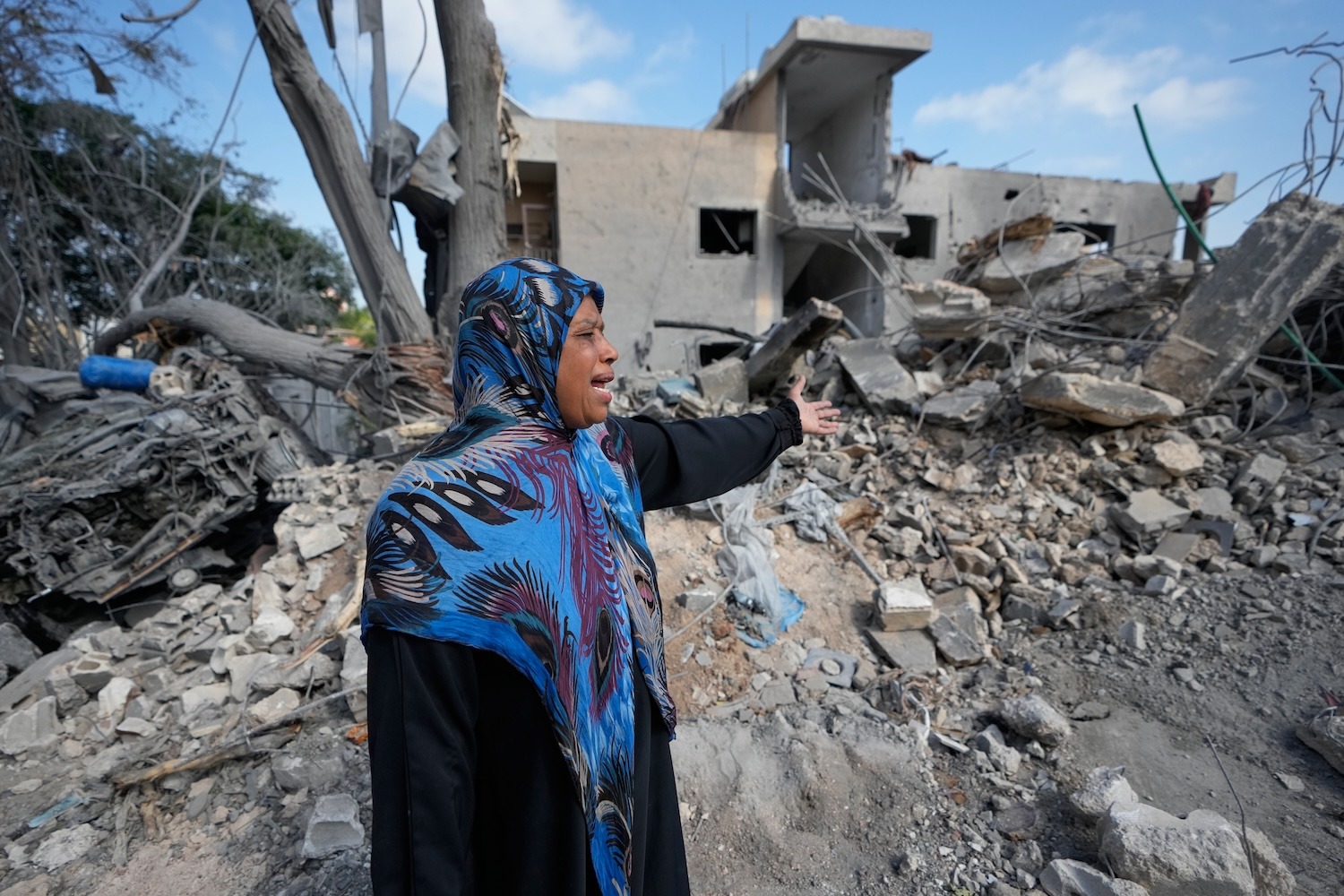
Amid ongoing diplomatic talks with on-again, off-again optimism about reaching an agreement, the United States resumed airstrikes inside Iran, triggering reciprocal Iranian strikes on a U.S. military base in Kuwait, where Tehran said the attacks originated.
In addition, while the U.S. and Iran traded blows of missiles and drones in the escalating exchange, Israel launched deadly bombardments into Lebanon, which has been increasing by the day.
Iranian officials warned Tehran will deliver a “proportionate response” to any continued U.S. provocations, after its Islamic Revolution Guards Corps (IRGC) hit back against the U.S. projectile attack on the Bandar Abbas airport in southern Iran on May 28, reported Iran’s PressTV.
“The response delivered by the IRGC demonstrated the full readiness of Iran’s Armed Forces,” Deputy Foreign Minister for Legal and International Affairs Kazem Gharibabadi said. “Should such actions continue, the Islamic Republic of Iran will respond proportionately.”
“Enemies must understand that Iran will show an appropriate and proportionate response to any repetition of threats or acts of aggression,” Mr. Gharibabadi warned.
The U.S. and Iran agreed to a so-called ceasefire mediated by Pakistan on April 8; however, the fighting has not paused. At the same time, America’s war partner Israel has tripled down on attacks into Lebanon, despite a Washington-brokered ceasefire in April.
One of the demands in the 14-point Iranian proposal to end the war was for Israel’s aggression to cease in Lebanon. According to the United Nations Interim Force in Lebanon (UNIFIL), approximately 670 projectile movements were recorded on May 27—the highest number since the supposed cessation of hostilities took effect on April 17.
The mission also reported increased ground and air activity by the Israeli military, including armored vehicle movements and strikes north of the Litani River—the strategic boundary line in southern Lebanon.
“We again urge all to respect the cessation of hostilities and stop any further attacks,” said UN Spokesperson Stéphane Dujarric. “We reiterate that civilians and civilian infrastructure must never be targeted. We condemn the loss of civilian lives,” he said.
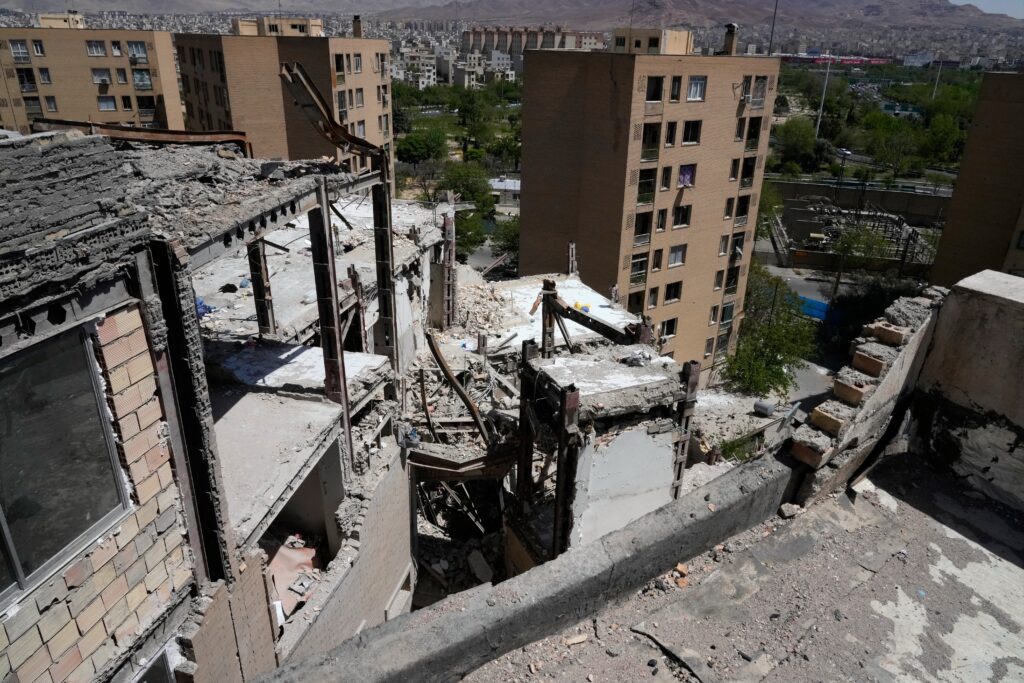
Mounting bloodshed and carnage
By Final Call presstime, according to the UN, nearly one million people in Lebanon have been displaced, and according to Lebanon’s Ministry of Health website, 3,200 people were slain, with nearly 10,000 people injured from Israeli strikes. Observers see the severity of Israel’s onslaught as potentially a second Gaza and a field of destruction.
While talks continue for a U.S.-Iran deal and Israeli bloodshed mounts in Lebanon, carnage has also been ongoing in Occupied Palestine. According to media outlets, Israeli Prime Minister Benjamin Netanyahu announced on May 28 that he ordered occupation forces to expand Israel’s 60% control of Gaza to take 70% of the enclave.
The Occupied Palestinian Territory remains heavily fragmented, with people not allowed to move between the Gaza Strip and the West Bank, and movement within each of those areas further restricted by military divisions, physical barriers, and closed zones, combined with ongoing violence claiming civilian lives.
In its May 25 situation report, the United Nations Office for the Coordination of Humanitarian Affairs (OCHA) said more than 150 families were displaced from eastern Khan Younis and eastern Gaza City between May 16–17 due to Israeli tank movements and bombardment, with at least 40 families requiring emergency aid.
Israeli strikes also hit residential areas and shelters, including a May 18 airstrike in Jabalya Camp that damaged tents belonging to 35 families and displaced dozens, said OCHA’s report.
In the West Bank between May 12–18, Israeli forces and settlers killed five Palestinians, including a child, and injured nearly 60 others, including six children, across the West Bank and East Jerusalem.
More than half of the injuries occurred during settler attacks. OCHA documented over 50 settler attacks causing casualties or property damage during the same period, bringing the 2026 total to more than 870 attacks across over 220 communities—an average of six per day.
“The repeated targeting of densely populated residential areas reflects a deliberate policy aimed at maximizing human loss,” said the Gaza City-based Al Mezan Center for Human Rights, in an email statement on May 28.
The center strongly condemned the continued escalation by Israeli occupation forces of grave violations against civilians in the Gaza Strip, coinciding with the Islamic Eid al-Adha holiday.
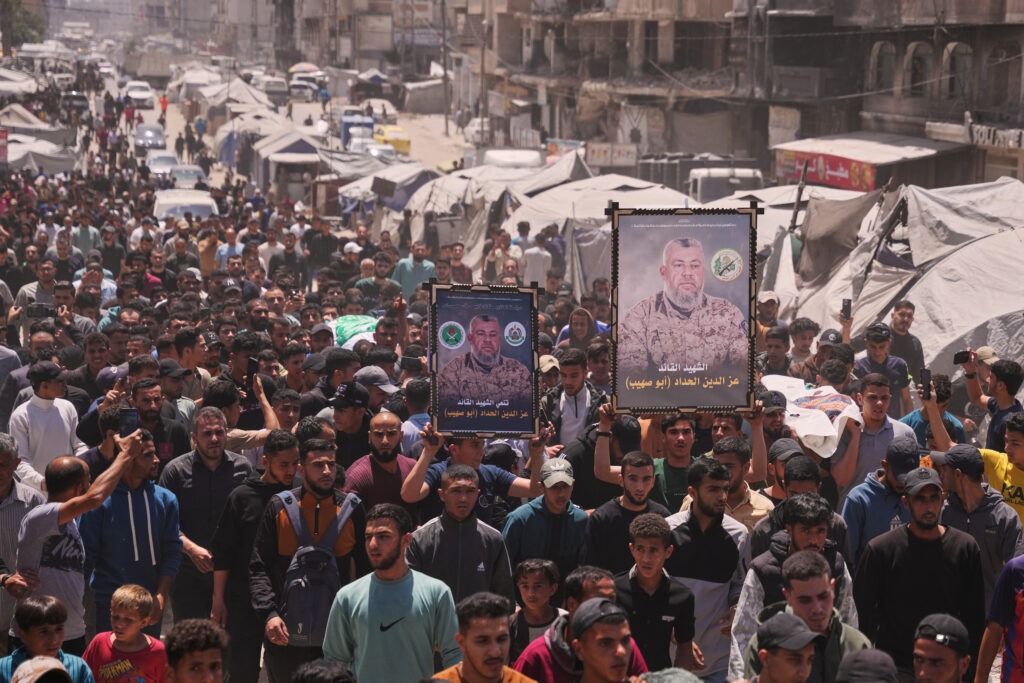
Over a span of 48 hours (May 26-28), these attacks have resulted in the killing of 21 Palestinians and the injury of dozens more, including 10 civilians who were killed in a nighttime airstrike targeting a residential home near Al-Israa Tower on Omar Al-Mukhtar Street in central Gaza City.
The attacks reflect an “accelerated expansion” in the systematic targeting of civilians, and mass atrocities in the ongoing genocidal campaign against the Palestinian population, said the center.
Peace eludes the peace-breakers
Israel, with the complicit backing of America have remained war criminals in the region. On Iran, observers argue that America, along with Israel, is conducting an unjust, unsanctioned war. Despite negotiations and claiming “peace” as the endgame, America and Israel’s actions undermine peace.
The Most Honorable Elijah Muhammad, the Eternal Leader of the Nation of Islam, and His National Representative, the Honorable Minister Louis Farrakhan, have warned about why peace escapes the peace-breakers.
Both Divine Warners explained that global conflicts are rooted in injustice, hypocrisy, and the refusal of powerful nations to pursue peace on equal terms and justice. On multiple occasions, Minister Farrakhan has pointed out that they want so-called peace, but peace on their terms.
He has cautioned that there can be no peace without justice and accountability for destructive foreign policies imposed on the peoples of the Earth.
“What is the recompense for those who administer ‘suffering’ and ‘loss’?” Minister Farrakhan asked, in Part 15 of his yearlong lecture series, The Time and What Must Be Done, delivered in 2013.
“Jesus mentioned this ‘Law of Requital’ in these words found in the Book of Galatians, Chapter 6, verse 7: ‘Be not deceived; God is not mocked: for whatsoever a man soweth, that shall he also reap,’” Minister Farrakhan said, referencing the scriptures.
“Also, in the Book of Hosea, Chapter 8, verse 7, Jesus said that if you ‘sow the wind’ you will ‘reap the whirlwind’— because Nature never gives you ‘exactly’ what you gave. Nature always gives you more; so, if you’ve done ‘good,’ God will give you more than the good that you have done.
But for the ‘evildoer’: God will bring recompense on your head. And for The Wicked who persist in evil: Oh, this ‘whirlwind’ is now blowing at your door,” said Minister Farrakhan.
In Part 16 of the same lecture series, Minister Farrakhan explained: “They are the world’s meddlers and snoopers. They are not contented to live alone without ‘snooping’ around and meddling in other people’s affairs. [And] even though you divide the earth equally with them, they want your part or try to run your own business for you the way that they think best.”
Minister Farrakhan’s guidance is just as true in 2026, describing America and Israel.
The wage of war
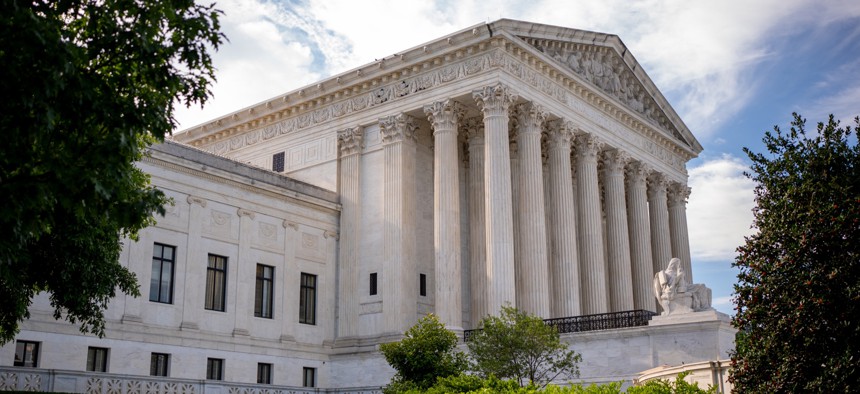
Currently, U.S. lawmakers are deciding on a record-setting trillion-plus-dollar Pentagon budget. But some analysts argue the exorbitant price for war extends far beyond the Trump administration’s proposed $1.5 trillion defense budget.
It includes the human, political and moral consequences of prolonged conflict and instability, said Middle East expert Phyllis Bennis, director of the New Internationalism Project at the Institute for Policy Studies, in remarks to The Final Call.
“It’s way beyond just the money,” said Ms. Bennis, adding, “but the money is staggering.”
“The amounts of money that are being spent on these wars in the interest of promoting and maintaining global hegemony, that’s what this war is fought for. This war isn’t for nothing; it’s to make sure that the world knows that this country is the global hegemonic power,” reasoned Ms. Bennis.
America relies on military force because that is where its dominance over other countries and blocs is strongest. It exerts power politically, diplomatically and economically as well, but its military dominance surpasses all the rest by a wide margin.
“So that’s their first choice. This was not just a war of choice; it was an illegal war. It was not just immoral, it was illegal and wrong,” said Ms. Bennis. “It’s all those things that have been true of, in my view […] every war this country has fought since World War II,” she said.
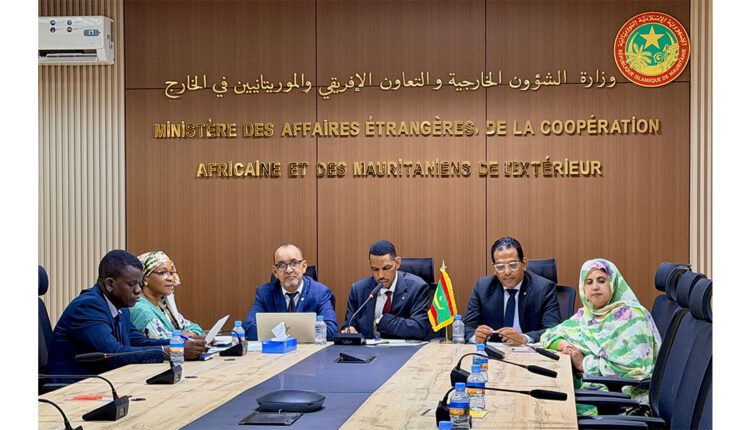
In the meantime, on the ongoing diplomatic talks, President Trump says a deal has been reached. Iranian officials maintain that no final understanding has yet been reached and caution that similar American claims about being “close to a deal” have been repeated many times before without producing tangible results.
Press TV reported Iran’s Foreign Ministry spokesman responded to President Trump’s remarks on his Truth Social platform that Iran “must agree” that they will never have a nuclear weapon or bomb and the Hormuz Strait “must be” immediately open.
“We said goodbye to the language of ‘must’ 47 years ago,” Esmaeil Baghaei told state television on May 29, referring to the Islamic Revolution of 1979.
“None of the Western parties can use the language of ‘must’ when they talk about the Islamic Republic of Iran. We make our own decisions based on the interests and rights of the Iranian nation,” he said.
The post War clouds over diplomacy U.S. again strikes Iran and Israel continues attacks on Lebanon appeared first on Final Call News.