Why does the Zimbabwe government see development only through the lens of enriching tenderpreneurs?
There is something fundamentally sick about a leadership that is obsessed with stealing.
 Black News
Tendai Ruben Mbofana
The glitz and glamour of high-profile ribbon-cutting ceremonies have become a wearying staple of Zimbabwean political life, yet they rarely mask the structural decay that continues to claim lives across our nation.
If you value my social justice advocacy and writing, please consider a financial contribution to keep it going. Contact me on WhatsApp: +263 715 667 700 or Email: mbofana.tendairuben73@gmail.com
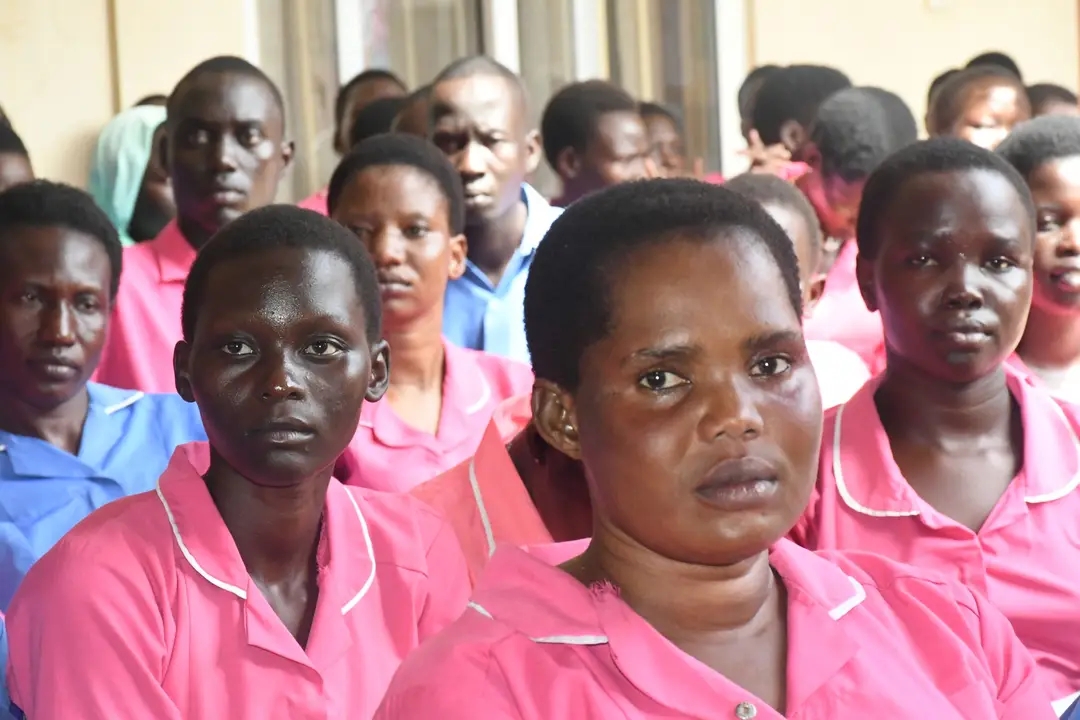
Today’s official opening of refurbished hostels at Parirenyatwa Group of Hospitals by President Emmerson Mnangagwa is being framed as a milestone in healthcare development.
On the surface, providing 353 student nurses and residents with a habitable place to stay is a positive step.
For too long, the living conditions of those tasked with the nation’s health have been a visual metaphor for the decay of our social services.
To finally provide these practitioners with a habitable environment is, undeniably, a necessary step toward restoring the basic functionality of our flagship referral center.
However, if we are to be honest about the trajectory of Zimbabwe’s healthcare, we cannot allow the smell of fresh paint to mask the stench of systemic rot.
A deeper look reveals a disturbing pattern of state-sanctioned plunder masquerading as progress.
We must ask ourselves: is this genuine development, or is it merely another lucrative opportunity for a select group of tenderpreneurs to enrich themselves at the expense of a dying populace?
The fundamental crisis in our healthcare system is not merely a lack of renovated walls; it is a systemic failure to prioritize human life over the pockets of the ruling elite.
While we are expected to celebrate a few refurbished hostel blocks, our hospitals remain desperate environments where basic medication is a luxury and lifesaving equipment, such as cancer and radiotherapy machines, are perpetually “out of order” or simply non-existent.
Patients do not go to Parirenyatwa or Sally Mugabe Central Hospital to be healed; all too often, they go there to die because the state has failed to provide the tools necessary to save them.
The cost of one inflated tender could likely equip every major clinic in this country with the dialysis machines and oncology units they so desperately need, yet those in power consistently choose the path that yields the highest personal return.
This brings us to the shadowy world of procurement and the individuals who seem to have a monopoly on state contracts.
The people of Zimbabwe deserve to know the exact cost of the Parirenyatwa renovations.
Was this contract awarded through a transparent, competitive bidding process, or was it another “closed-door” arrangement?
The involvement of the Prevail Group, led by ZANU-PF Central Committee member Paul Tungwarara, raises serious red flags.
This is the same entity that a Parliamentary Committee recently flagged for its staggering US$16,000-per-borehole price tag—a figure that is astronomically higher than the market rate.
In Rushinga, the committee found that dozens of Village Business Units were non-operational a year after being “drilled,” and in Chivi, villagers were reportedly forced to pay for connections that the government claimed to have fully funded.
When “development” results in photo opportunities for the elite but no actual water for the community, it is not development—it is a heist.
The obsession with high-cost, low-impact projects is a hallmark of this administration.
We saw it with the Trabablas Interchange, where the unclear costs exceeding US$114 million left many wondering how many interchanges could have been built for that same amount if the procurement were honest.
The same logic applies to the Parirenyatwa hostels.
How much was Prevail Group paid?
Could those millions have built three new hospitals from scratch?
We are being forced to applaud a facade while the foundation of our social services crumbles.
Furthermore, the government’s approach to our medical practitioners is fundamentally flawed.
Providing a resident nurse or doctor with a room at their workplace is a logistical convenience, but it is not empowerment.
Real empowerment would be paying our healthcare workers a living wage that reflects their expertise and dedication—a wage that allows them to buy their own homes, afford their own vehicles, and live a life of dignity without having to beg the state for the basics of survival.
By keeping workers dependent on government-provided transport and housing, the state maintains a level of control that stifles the very dignity these professionals deserve.
A doctor who cannot afford to feed their family is a doctor the state has failed, regardless of how freshly painted their hostel room might be.
This lack of genuine interest in uplifting the common person is a betrayal of the taxpayer.
Every worker in Zimbabwe, from the nurse in the ward to the teacher in the classroom, deserves the autonomy that comes with financial stability.
Instead, we see a government that is only interested in “development” when there is a personal benefit for those aligned with power.
What manner of progress is it when the cost of one borehole could have drilled three?
What manner of development is it when the refurbishment of five hostels costs enough to have modernized the entire country’s cancer treatment infrastructure?
As the cameras flash and the speeches are delivered at Parirenyatwa today, the true beneficiaries are likely not the nurses who will sleep in those rooms, but the tenderpreneurs who have once again successfully milked the national purse.
We have every right to be firm in our demands for accountability.
We must demand to see the receipts.
We must demand to know why our relatives are still dying from preventable illnesses while millions of dollars are channeled into projects with inflated budgets and opaque contracts.
Genuine development is measured by the number of lives saved and the independence of the workforce, not by the wealth accumulated by a few politically connected individuals.
Until the government prioritizes the lives of Zimbabweans over the bank accounts of the ruling elite, these commissioning ceremonies remain nothing more than a cruel mockery of our collective suffering.
The people of Zimbabwe are tired of being told to celebrate their own plunder.
We deserve a healthcare system that works, a government that is transparent, and a nation where dignity is not a gift from the state, but a right earned through honest labor.
- Tendai Ruben Mbofana is a social justice advocate and writer. To directly receive his articles please join his WhatsApp Channel on: https://whatsapp.com/channel/0029VaqprWCIyPtRnKpkHe08