World’s second-largest container carrier avoids Strait of Hormuz again as U.S.-Iran tensions drive more global trade through Africa
Africa’s maritime corridor around the Cape of Good Hope is continuing to benefit from growing instability in the Middle East after shipping giant Maersk confirmed it will continue avoiding the Strait of Hormuz, further reshaping global trade routes and boosting Africa’s importance in global shipping and fuel supply chains.
 Black News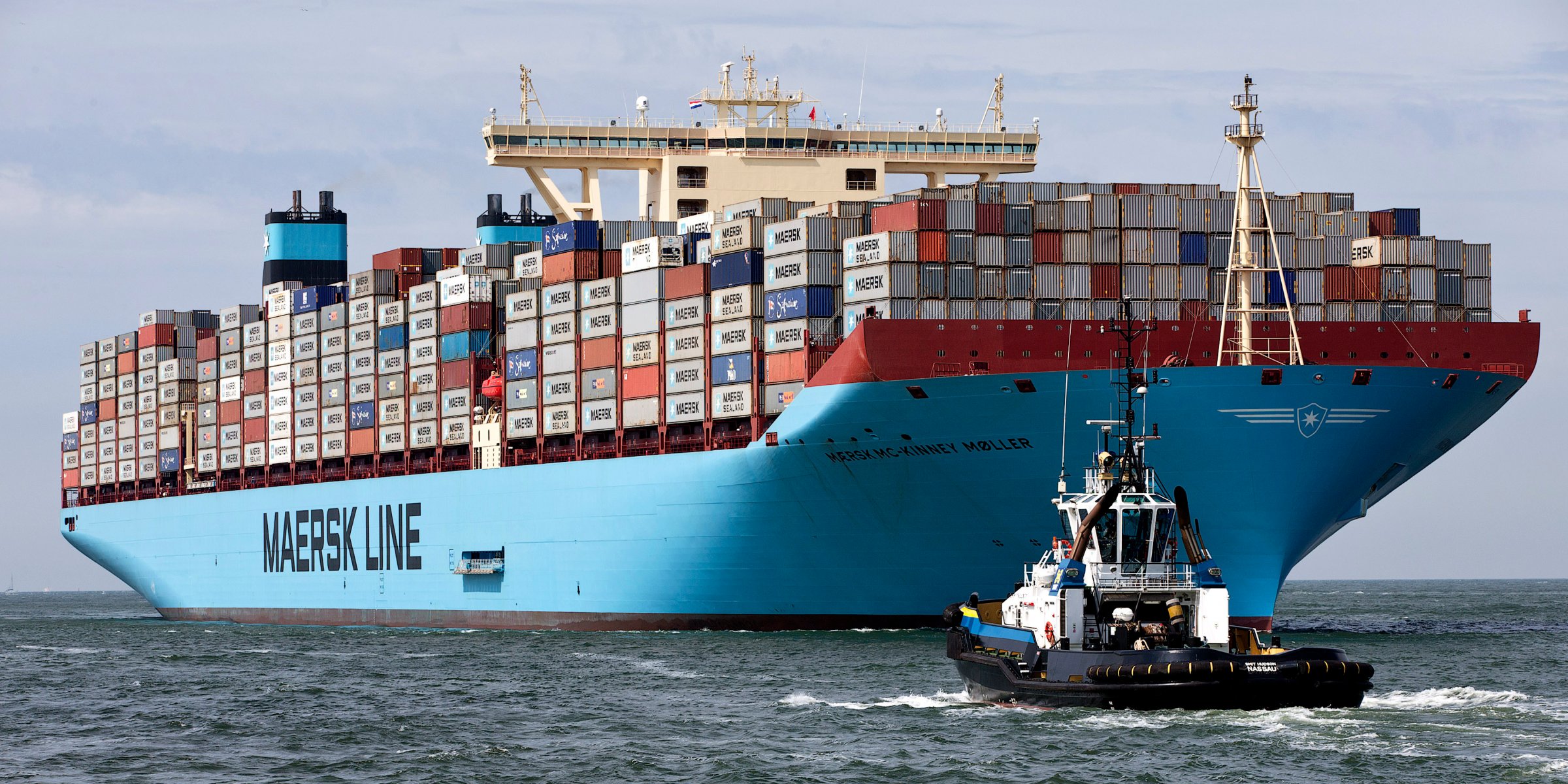
Africa’s maritime corridor around the Cape of Good Hope is continuing to benefit from growing instability in the Middle East after shipping giant Maersk confirmed it will continue avoiding the Strait of Hormuz, further reshaping global trade routes and boosting Africa’s importance in global shipping and fuel supply chains.
- Maersk is continuing to avoid the Strait of Hormuz due to ongoing regional instability, reshaping global trade routes.
- Growing Middle East tensions have prompted shipping companies to reroute vessels around Africa's Cape of Good Hope.
- Nearly 11% of global seaborne oil trade now moves around the Cape, with much of it destined for Asian markets, especially China.
- Despite diplomatic efforts, shipping firms remain cautious about returning to Middle East routes without stronger security guarantees, making Africa's role in global shipping increasingly permanent.
In its latest Middle East operational advisory issued Tuesday, Maersk said the regional security environment remains “highly volatile” and “deeply dynamic,” warning that “full maritime certainty” has not yet returned despite recent ceasefire efforts involving the United States and Iran.
“Volatility persists in the situation. In coordination with our security partners, we have assessed that as of now, transit through the Strait should be avoided,” the company said.
The world’s second-largest container carrier added that any decision to resume Hormuz crossings would depend on continued security assessments and guidance from authorities and industry partners.
Middle East Conflict Reshapes Global Shipping
Maersk’s latest advisory extends a strategic shift that began earlier this year after escalating military tensions across the Middle East disrupted key global shipping lanes.
In March, the company announced it would pause future Trans-Suez sailings through the Bab el-Mandeb Strait due to worsening regional security conditions linked to the U.S.-Iran conflict and attacks on Red Sea shipping by Yemen’s Houthi rebels.
“Due to the deteriorating security situation in the Middle East region following the escalating military conflict, we have decided – in close coordination with our security partners – to pause future Trans-Suez sailings through the Bab el-Mandeb Strait for the time being,” Maersk said at the time.
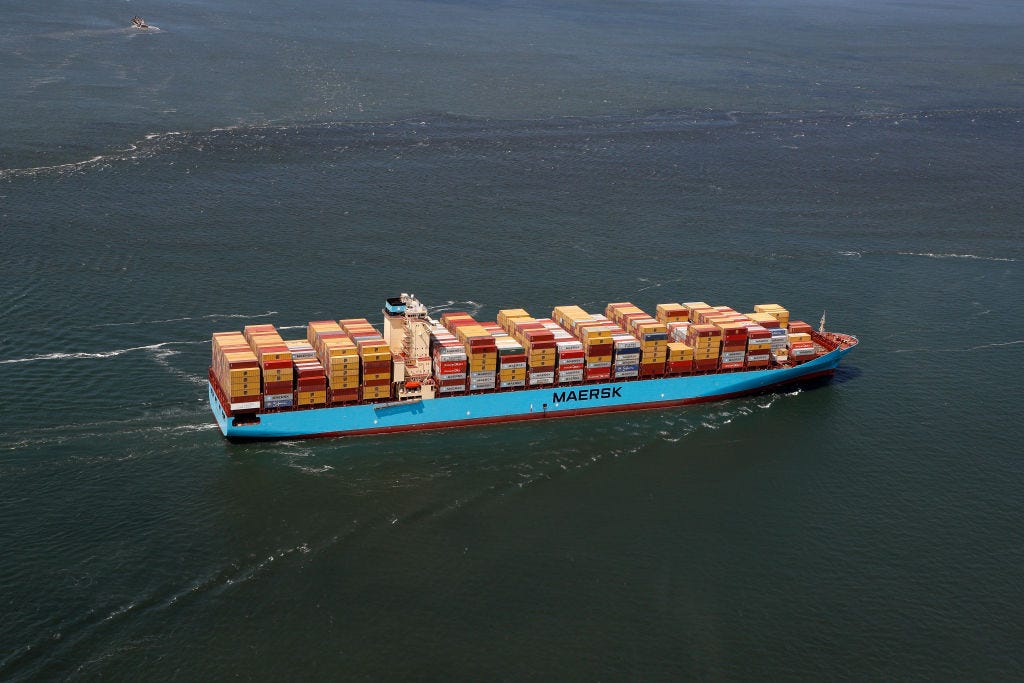
The company rerouted ME11 and MECL services around the Cape of Good Hope while suspending vessel crossings through the Strait of Hormuz until further notice.
Although Maersk had announced a gradual return of some services to the Suez route earlier this year after two years of disruption, renewed tensions involving Iran have once again forced major shipping operators to redirect vessels around southern Africa.
Africa Emerges as Key Maritime Hub
The prolonged rerouting is strengthening Africa’s role in global shipping and marine fuel supply networks.
According to the United States Energy Information Administration’s March chokepoint report, about 9.1 million barrels per day of crude oil and petroleum products currently move around the Cape of Good Hope, representing roughly 11% of global seaborne oil trade.
Unlike chokepoints such as the Strait of Hormuz or the Strait of Malacca, the Cape route remains an open-ocean corridor that is difficult to blockade or disrupt.
Most crude oil moving around the Cape heads toward Asian markets, with shipping data showing that more than 40% is destined for China.
Similarly, Reuters reported that ship-refuelling companies across Africa’s coastline are experiencing a surge in demand as carriers increasingly avoid the Suez Canal and Red Sea routes.
The Cape Chamber of Commerce and Industry said shipping diversions around the Cape had risen 112% by early March.
“After nearly two years of operating under these conditions, it is increasingly hard to describe our setup as a temporary measure. It has instead become an adaptation to a new operational reality,” said Bhavan Vempati, head of Asia Market for Ocean at Maersk.
He added that Maersk now conducts routine bunkering operations at ports in West Africa and Tangiers.
Shipping Industry Remains Cautious
Despite U.S.-led diplomatic and military efforts to stabilize the region and restore freedom of navigation, major shipping firms remain cautious about returning to traditional Middle East trade routes.
Industry organizations including BIMCO and the International Chamber of Shipping have warned that military de-escalation alone is insufficient to restore commercial confidence without stronger security guarantees and mine-clearance assurances.
Maersk has also suspended ocean cargo bookings tied to several Upper Gulf markets, including Iraq, Kuwait, Qatar, Bahrain and parts of the UAE, while expanding alternative cargo corridors across Saudi Arabia, Jordan, Oman and the UAE.
For Africa, the continued disruption is increasingly transforming the continent from a temporary detour into a critical logistics and maritime trade hub within the evolving global shipping network.