African rights forum opens in Banjul amid calls for stronger civic space protection
Speakers at the opening ceremony called for stronger collaboration, accountability and renewed commitment to democracy, peace and sustainable development in Africa. Delivering the opening remarks, Programs Officer Ms. Ellen Ann stressed the urgent need for governments, civil society organisations and regional institutions to work together in addressing Africa’s growing human rights and development challenges, particularly access to safe water and sanitation. “This Forum is more than just a meeting space. It is a platform of solidarity, reflection, accountability, and action,” she said, while welcoming delegates from across the continent. Speaking on behalf of the Chairperson of the African Commission on Human and Peoples’ Rights, Commissioner Litha Musyimi-Ogana reaffirmed the Commission’s commitment to strengthening cooperation with civil society in promoting democracy, human rights and sustainable development. “The NGO Forum is not merely a precursor to the sessions of the Commission,” Commissioner Musyimi said. “It is, in many ways, the conscience of our human rights system.” She described the forum as an indispensable space for engagement between the Commission and civil society actors working across Africa. Representing the United Nations Office for West Africa and the Sahel (UNOWAS), Mr Malamin Tamba reiterated the UN body’s commitment to supporting peacebuilding, human rights and good governance initiatives in the region. Delivering remarks on behalf of the Special Representative of the UN Secretary-General and Head of UNOWAS, Mr. Leonardo Santos Simão, Mr Tamba said the organisation would continue collaborating with civil society and regional actors in conflict prevention and crisis response. “UNOWAS remains committed to working with all stakeholders in the search for preventive solutions to conflicts and crises, while promoting good governance, the rule of law, and respect for human rights in West Africa and the Sahel,” he stated. One of the strongest interventions during the opening ceremony came from Dr. Naji Moulay Lahsen, member of the Governing Council and Steering Committee of the NGO Forum, who warned that worsening insecurity and restrictions on civic freedoms are threatening democracy across Africa. Addressing delegates, lawyers, journalists, bloggers and activists, Dr. Lahsen described the forum as a critical platform for accountability and fearless dialogue on pressing human rights concerns. “There is no taboo in this NGO Forum,” he declared. “Here, we speak truth without fear, hold power accountable, and work toward advancing human dignity across our continent.” He expressed concern over what he described as growing attacks on human rights defenders and freedom of expression, alleging that activists and journalists across Africa are increasingly being silenced, detained and targeted. Dr. Lahsen also criticised the misuse of anti-terrorism laws by some governments, saying such legislation is being used to suppress freedoms of assembly, association and expression instead of addressing genuine security threats. “This is not acceptable,” he stressed. Highlighting crises across the continent, he cited the suspension of the Tunisian League for the Defense of Human Rights as a sign of shrinking civic space in Tunisia and expressed solidarity with civil society organisations facing repression in Cameroon. On Sudan, he described the ongoing conflict as a humanitarian catastrophe and accused both the Sudanese Armed Forces and the Rapid Support Forces of committing grave abuses against civilians. “The international community’s silence is deafening, and we must not look away,” he said. He further warned about the spread of violent extremism across the Sahel region, noting that insecurity continues to displace millions of people, destroy livelihoods and weaken public institutions. Dr Lahsen cautioned against narratives promoting the fragmentation of African states into smaller entities, arguing that political division would worsen instability across the continent. “Division is not a solution; it is a further risk,” he warned, while referencing insecurity in Mali, eastern Democratic Republic of Congo, northern Mozambique, the Horn of Africa and the Lake Chad Basin. He also criticised the weakness of regional peace and security mechanisms, including early warning and mediation systems, saying they have failed to adequately protect civilians in conflict situations. Calling for stronger African ownership of advocacy and development processes, Dr Lahsen urged Africans to lead conversations affecting the continent. “We need the localization of the voice of African civil society,” he said. “Africans must speak for themselves, define their priorities, and lead their own advocacy.” Also addressing the gathering, Mr. Mabassa Fall, Vice Chair of the Governing Council of the African Centre for Democracy and Human Rights Studies (ACDHRS), underscored the importance of international cooperation and multilateral
 Black News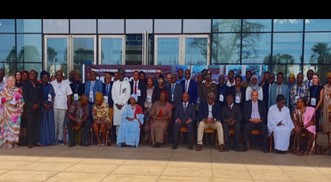
Speakers at the opening ceremony called for stronger collaboration, accountability and renewed commitment to democracy, peace and sustainable development in Africa.
Delivering the opening remarks, Programs Officer Ms. Ellen Ann stressed the urgent need for governments, civil society organisations and regional institutions to work together in addressing Africa’s growing human rights and development challenges, particularly access to safe water and sanitation.
“This Forum is more than just a meeting space. It is a platform of solidarity, reflection, accountability, and action,” she said, while welcoming delegates from across the continent.
Speaking on behalf of the Chairperson of the African Commission on Human and Peoples’ Rights, Commissioner Litha Musyimi-Ogana reaffirmed the Commission’s commitment to strengthening cooperation with civil society in promoting democracy, human rights and sustainable development.
“The NGO Forum is not merely a precursor to the sessions of the Commission,” Commissioner Musyimi said. “It is, in many ways, the conscience of our human rights system.”
She described the forum as an indispensable space for engagement between the Commission and civil society actors working across Africa.
Representing the United Nations Office for West Africa and the Sahel (UNOWAS), Mr Malamin Tamba reiterated the UN body’s commitment to supporting peacebuilding, human rights and good governance initiatives in the region.
Delivering remarks on behalf of the Special Representative of the UN Secretary-General and Head of UNOWAS, Mr. Leonardo Santos Simão, Mr Tamba said the organisation would continue collaborating with civil society and regional actors in conflict prevention and crisis response.
“UNOWAS remains committed to working with all stakeholders in the search for preventive solutions to conflicts and crises, while promoting good governance, the rule of law, and respect for human rights in West Africa and the Sahel,” he stated.
One of the strongest interventions during the opening ceremony came from Dr. Naji Moulay Lahsen, member of the Governing Council and Steering Committee of the NGO Forum, who warned that worsening insecurity and restrictions on civic freedoms are threatening democracy across Africa.
Addressing delegates, lawyers, journalists, bloggers and activists, Dr. Lahsen described the forum as a critical platform for accountability and fearless dialogue on pressing human rights concerns.
“There is no taboo in this NGO Forum,” he declared. “Here, we speak truth without fear, hold power accountable, and work toward advancing human dignity across our continent.”
He expressed concern over what he described as growing attacks on human rights defenders and freedom of expression, alleging that activists and journalists across Africa are increasingly being silenced, detained and targeted.
Dr. Lahsen also criticised the misuse of anti-terrorism laws by some governments, saying such legislation is being used to suppress freedoms of assembly, association and expression instead of addressing genuine security threats.
“This is not acceptable,” he stressed.
Highlighting crises across the continent, he cited the suspension of the Tunisian League for the Defense of Human Rights as a sign of shrinking civic space in Tunisia and expressed solidarity with civil society organisations facing repression in Cameroon.
On Sudan, he described the ongoing conflict as a humanitarian catastrophe and accused both the Sudanese Armed Forces and the Rapid Support Forces of committing grave abuses against civilians.
“The international community’s silence is deafening, and we must not look away,” he said.
He further warned about the spread of violent extremism across the Sahel region, noting that insecurity continues to displace millions of people, destroy livelihoods and weaken public institutions.
Dr Lahsen cautioned against narratives promoting the fragmentation of African states into smaller entities, arguing that political division would worsen instability across the continent.
“Division is not a solution; it is a further risk,” he warned, while referencing insecurity in Mali, eastern Democratic Republic of Congo, northern Mozambique, the Horn of Africa and the Lake Chad Basin.
He also criticised the weakness of regional peace and security mechanisms, including early warning and mediation systems, saying they have failed to adequately protect civilians in conflict situations.
Calling for stronger African ownership of advocacy and development processes, Dr Lahsen urged Africans to lead conversations affecting the continent.
“We need the localization of the voice of African civil society,” he said. “Africans must speak for themselves, define their priorities, and lead their own advocacy.”
Also addressing the gathering, Mr. Mabassa Fall, Vice Chair of the Governing Council of the African Centre for Democracy and Human Rights Studies (ACDHRS), underscored the importance of international cooperation and multilateralism in safeguarding peace and fundamental freedoms.
“The strong relationship and interaction among the NGOs Forum, African civil society, and the African Commission have contributed immensely to the advancement of human rights across the continent,” he stated.
“We must return to multilateralism, which guarantees peace, stability, and respect for the rights of peoples and nations,” he added.
The Executive Director of ACDHRS, Mrs Hannah Forster, said the forum was taking place at a critical moment when Africa continues to grapple with conflict, displacement, inequality and insecurity.
“Our discussions are taking place at a time when Africa continues to face widespread inequity, conflict, displacement, and insecurity,” she said.
Mrs Forster noted that limited access to quality healthcare, inadequate education systems and deepening inequalities continue to affect millions across the continent, making the role of civil society more important than ever.